Dudley Time Portal

Items tagged: Doughnut
Localising Material Accessibility
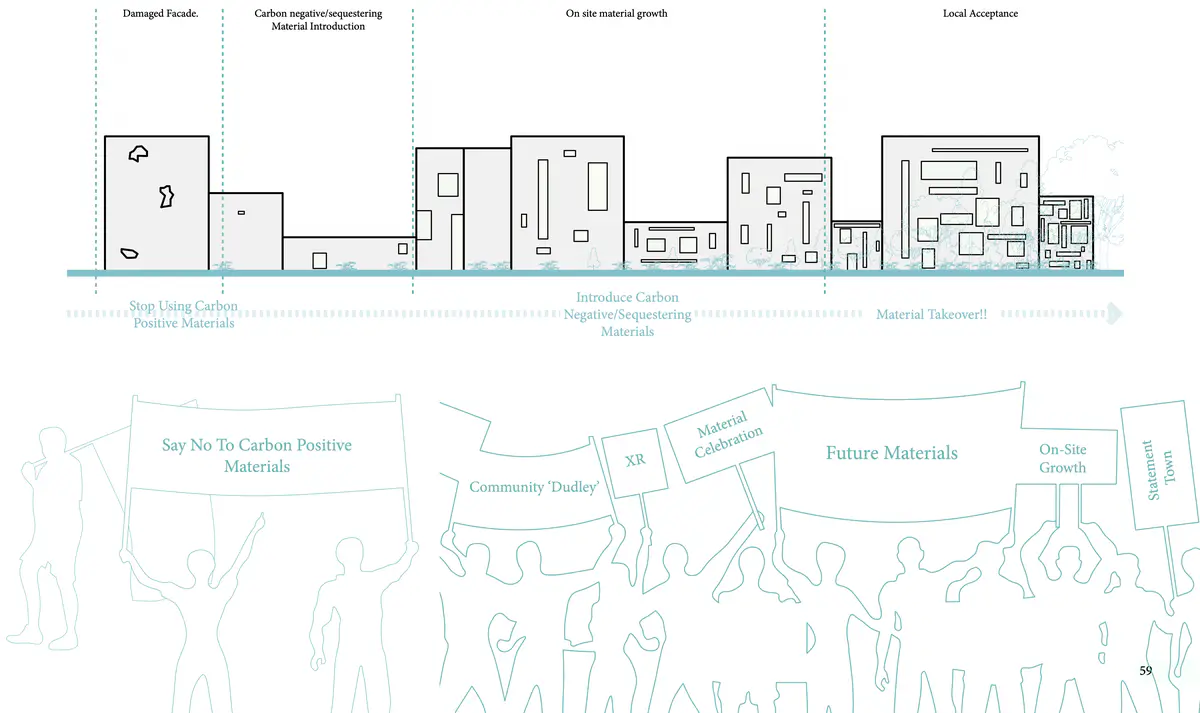
During my initial walk through the High Street of Dudley, I noticed an inevitable decline in the area. There were vacant shops, but those open had apparent facade damage. For the area to thrive, there needs to be an aesthetical uplift. Here I began to question how to make the repairs. On the one hand, one could complete a like for like repair with a deep clean to provide a new lease of life to achieve an aesthetical value. Alternatively, the repairs could be a status of where the street aims to be in the future. To achieve a statement, the implementation of repair work needs to stand out. It needs to be futuristic, a bold contrast to the existing.

At this point, I decided that after being informed of the damage the built environment has on the climate crisis, only carbon zero/ carbon sequestering materials would be present during repairs. This does not aim to destroy existing buildings but instead carefully implement repairs creating a patchwork effect across the street. This would then grow over time as more repair work is required.

Over time, the high street would transform into a zero-carbon environment. The manufacturing and growth of these materials need to be local, so consideration is vital. This provides an opportunity for the site to be a material producer itself. - Ryan Cooksey Ban Materials.png
Localising Material Accessibility During my initial walk through the High Street of Dudley, I noticed an inevitable decline in the area. There were vacant shops, but those open had apparent facade damage. For the area to thrive, there needs to be an aesthetical uplift. Here I began to question how to make the repairs. On the one hand, one could complete a like for like repair with a deep clean to provide a new lease of life to achieve an aesthetical value. Alternatively, the repairs could be a status of where the street aims to be in the future. To achieve a statement, the implementation of repair work needs to stand out. It needs to be futuristic, a bold contrast to the existing. At this point, I decided that after being informed of the damage the built environment has on the climate crisis, only carbon zero/ carbon sequestering materials would be present during repairs. This does not aim to destroy existing buildings but instead carefully implement repairs creating a patchwork effect across the street. This would then grow over time as more repair work is required. Over time, the high street would transform into a zero-carbon environment. The manufacturing and growth of these materials need to be local, so consideration is vital. This provides an opportunity for the site to be a material producer itself.
Diagram Map Aesthetic Architecture Biodiversity Change Climate Community Connection Creatures Decay Doughnut Future Growing Identity Imagination Industry Material Nature Opportunity Pollution Potential Regenerative Sustainable System Transport
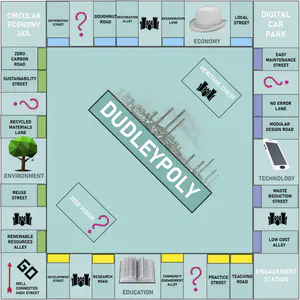
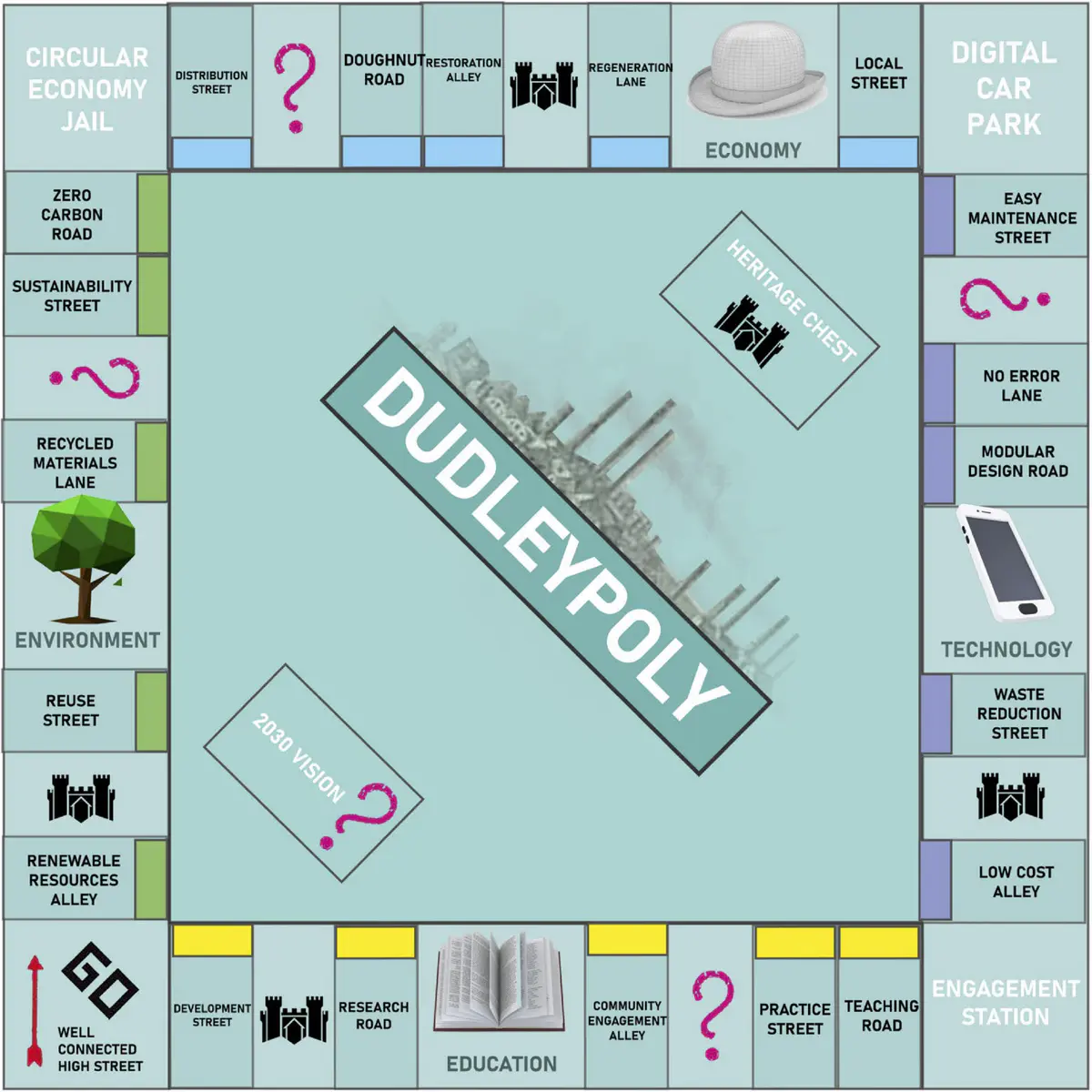
We created a visual representation of the main factors and sectors we came across in our research and explored individually: environment, economy, technology and education. It also summarises our goal of creating a connected High Street, and the steps we took to achieve this goal. - 1_7s93a2RG5Ut3waM0oEJExw.png
We created a visual representation of the main factors and sectors we came across in our research and explored individually: environment, economy, technology and education. It also summarises our goal of creating a connected High Street, and the steps we took to achieve this goal.
Imagining Other visual delight Community Connection Doughnut Economics Fairness Future Industry Learning Material Past Play Regenerative Sustainable Technology Waste
Our collective vision for Dudley is to support a creative community that is connected through our internet of things; creating spaces that allow for the collection and redistribution of materials that locals can use to construct products with. Community engagement is central to this design network with local businesses encouraged to get involved in manufacturing. 

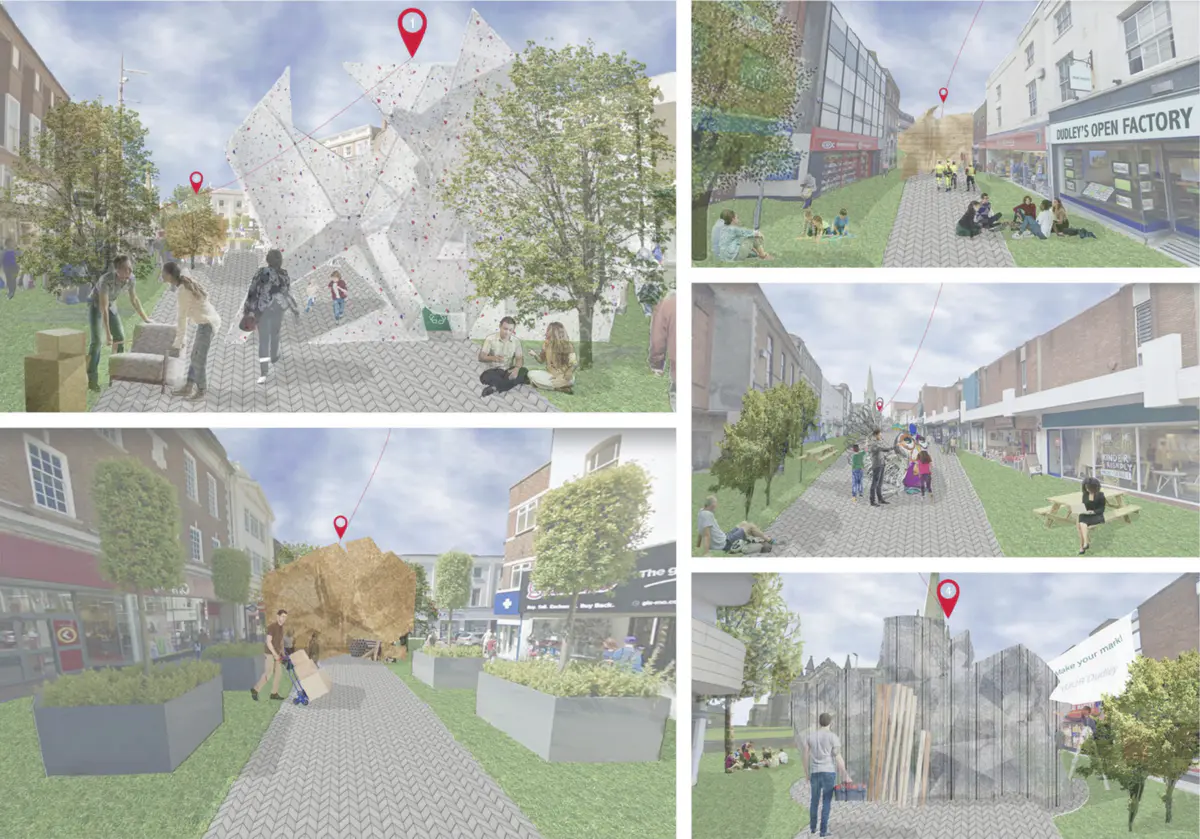
We decided to bring alive this vision through a series of pavilions positioned through the High Street, following a process through recycling, storing constructing and manufacturing. To take this idea further, we allocated several empty units along the High Street to become spaces involved in the open factory, from workshops, educational centres and co-working hubs. Since we wanted to show the journey people would be able to take, we decided to create a storyboard for our final visual.

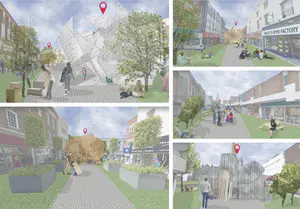
These visuals show how the pavilions could sit in the High Street, starting at the market place, past CoLab Dudley’s base, and ending up at Top Church. We wanted to show how people would be able to interact with these different spaces and navigate between them. - 1_VMp1Jai-Vr7tZ4pe8U752Q.png
Our collective vision for Dudley is to support a creative community that is connected through our internet of things; creating spaces that allow for the collection and redistribution of materials that locals can use to construct products with. Community engagement is central to this design network with local businesses encouraged to get involved in manufacturing. We decided to bring alive this vision through a series of pavilions positioned through the High Street, following a process through recycling, storing constructing and manufacturing. To take this idea further, we allocated several empty units along the High Street to become spaces involved in the open factory, from workshops, educational centres and co-working hubs. Since we wanted to show the journey people would be able to take, we decided to create a storyboard for our final visual. These visuals show how the pavilions could sit in the High Street, starting at the market place, past CoLab Dudley’s base, and ending up at Top Church. We wanted to show how people would be able to interact with these different spaces and navigate between them.
Collage Drawing Imagining Map Abundance Actions Agency Architecture Change Community Connection Creativity Difference Doughnut Economics Future Imagination Industry Interacting Invitations Learning Making Material Opportunity Ownership People Potential Regenerative Shelter Technology Unused