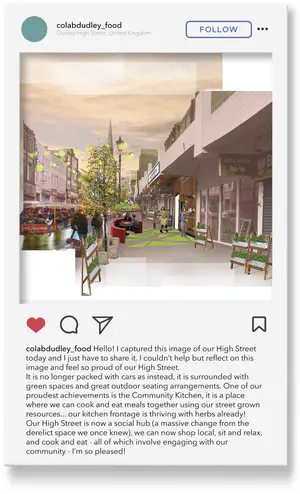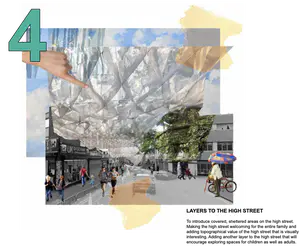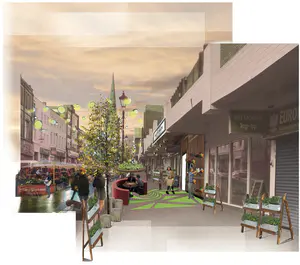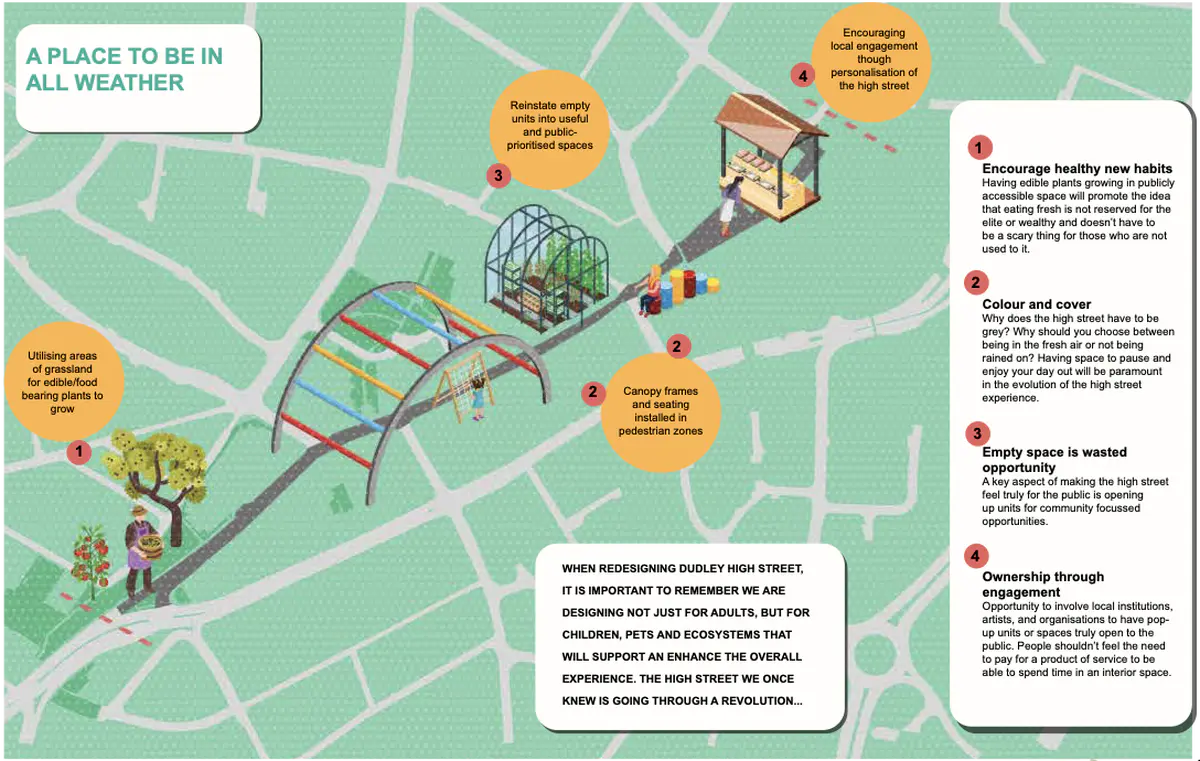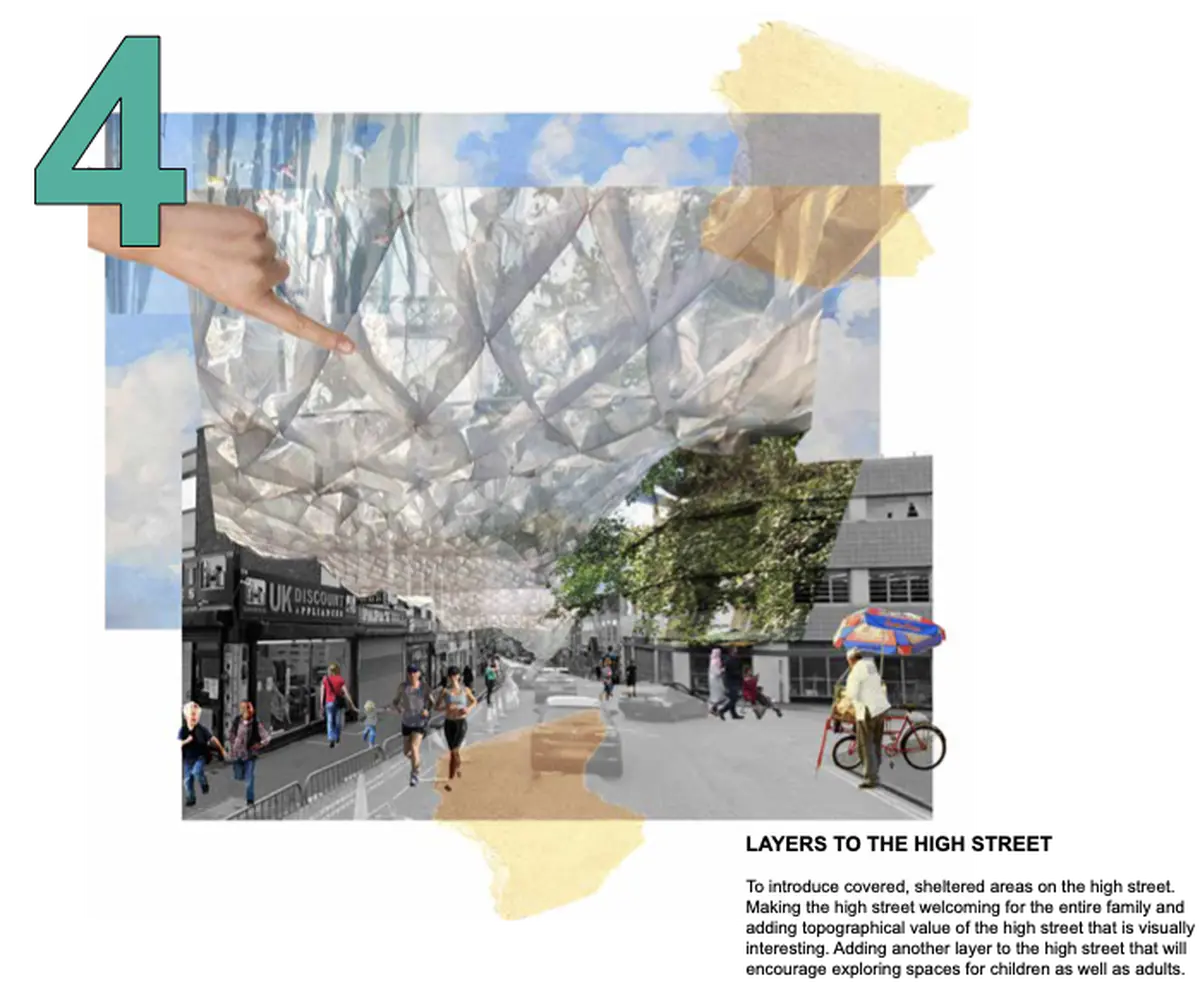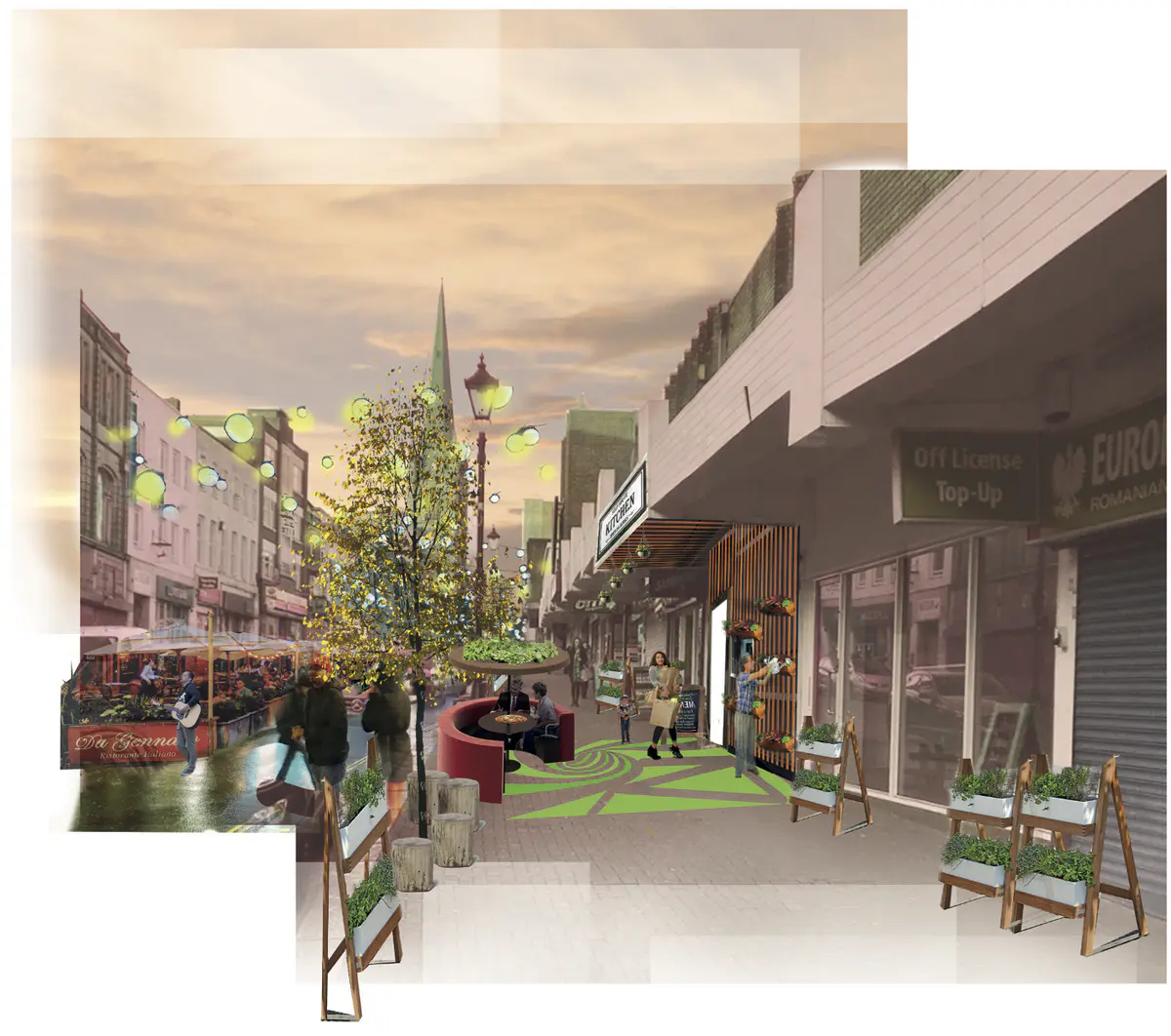
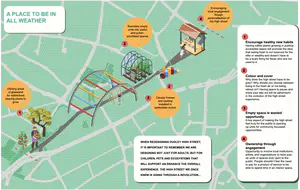
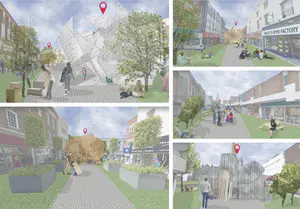
Stepping Stone 4 adds layers to the High Street. Like the other visions, we wanted to use CoLab Dudley’s principles ‘use nature as a guidebook’ and ‘create conditions for curiosity and experimentation’. The main way we proposed to do this was adding a green canopy to provide shelter, create a hybrid indoor outdoor space welcoming to families and a more communal open space, and support ecosystems.
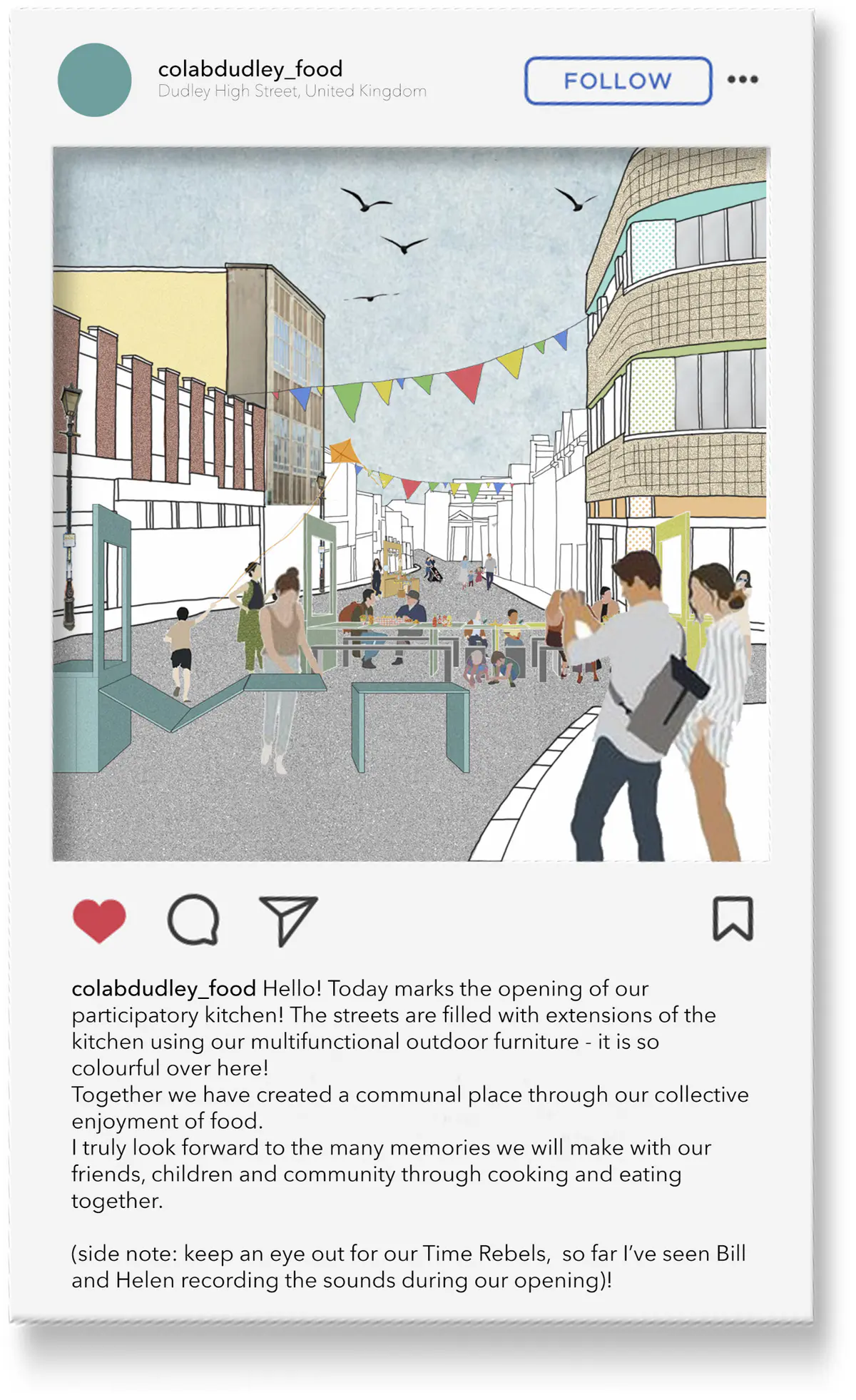
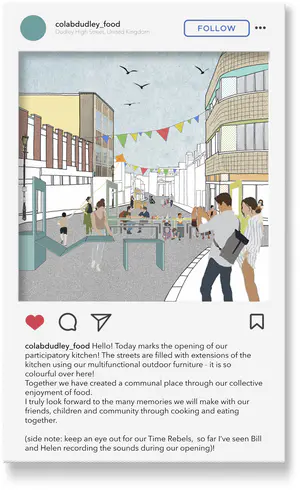
In this post, we captured the street’s atmosphere filled with colour, activity, and pedestrianised streets.
(We decided to present our narrative through social media and instagram posts as we wanted to showcase what individual experiences might be like when experiencing the future High Street. Each of our posts captures a different element of experience on the High Street to form a collective scenario.)
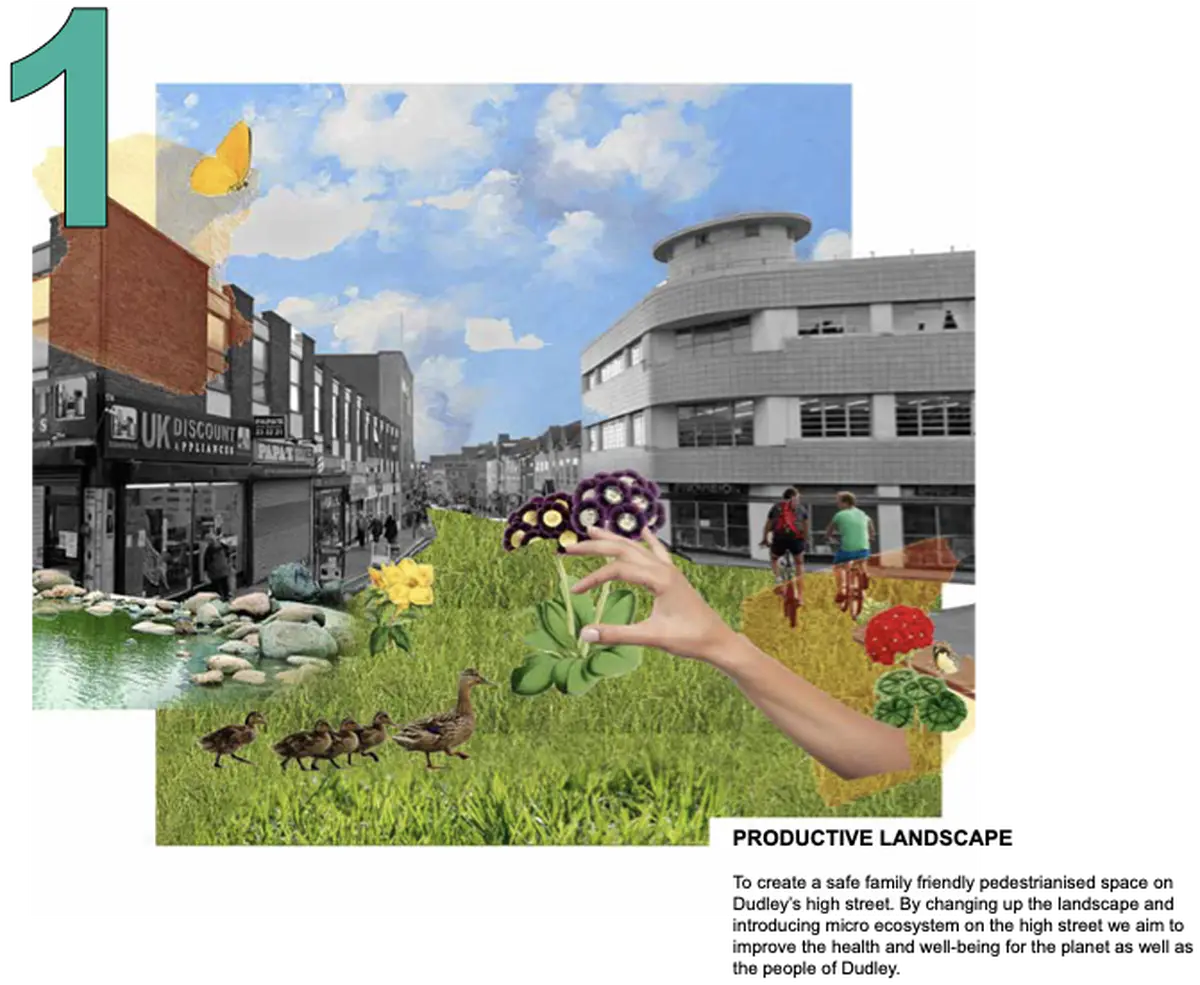
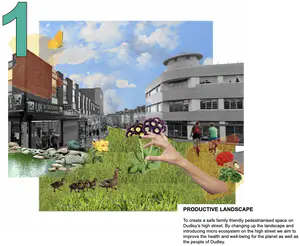
PRODUCTIVE LANDSCAPE
To create a safe family friendly pedestrianised space on Dudley's high street. By changing up the landscape and introducing micro ecosystem on the high street we aim to improve the health and well-being for the planet as well as the people of Dudley.
Our collective vision for Dudley is to support a creative community that is connected through our internet of things; creating spaces that allow for the collection and redistribution of materials that locals can use to construct products with. Community engagement is central to this design network with local businesses encouraged to get involved in manufacturing.
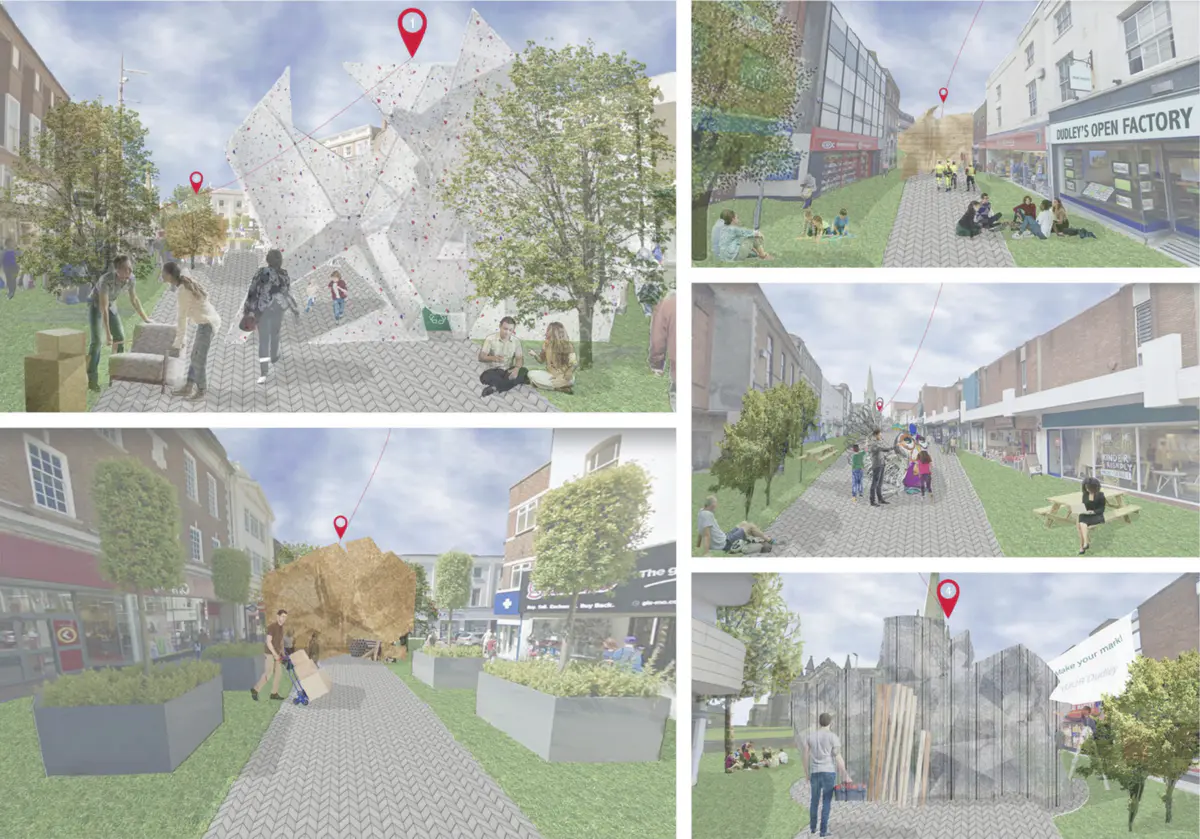
We decided to bring alive this vision through a series of pavilions positioned through the High Street, following a process through recycling, storing constructing and manufacturing. To take this idea further, we allocated several empty units along the High Street to become spaces involved in the open factory, from workshops, educational centres and co-working hubs. Since we wanted to show the journey people would be able to take, we decided to create a storyboard for our final visual.
These visuals show how the pavilions could sit in the High Street, starting at the market place, past CoLab Dudley’s base, and ending up at Top Church. We wanted to show how people would be able to interact with these different spaces and navigate between them.
Atifa lives nearby. During her free time, Atifa takes part in social work and welcomes the visitors of the High Street. Her main responsibility involves managing the food produced on street garden. A group of out of town visitors seemed lost on the street as they were wondering about what to do after shopping. Atifa suggested to participate in a workshop in the community kitchen. They plucked some berries and veggies from street and made a quick salad with a locally developed recipe that they had never tried. They thanked Atifa for the new recipe.
Nationwide
Millions of members strong
Building society
Nationwide
Staffordshire
Portman
Nationwide
Since ’67 in Dudley town
Nearly sixty years serving a community
People love a building society don’t they
Not quite a bank
More like a club
They come clutching blue passports
A steady trickle
Popping in to do their financials
There’s bunting over the office door
Radio through the speakers
Comfy chairs to rest awhile
Friendly
Homely
Familiar
Certificates recognise commitment
From one to thirty years
Ashleigh, Sarah, Isla
Lisa, Samantha
Displayed on shelves alongside photographs
Pride of place
The buzzer brings a rush for the door
Scurrying footsteps on laminate floor
Jangle of keys on a lanyard
Always a thank you and a kind welcome
As chat starts up
About Covid
Hearing aids
Lost keys
Shopping up the town
Holidays
Pulled back muscles
Schools going back
Family
The drive to Cornwall
The cash machine whirs in the background
Dispensing spendies for the Full Moon next door
As an old couple
In matching purple fleeces
Shuffle up to the counter together
I look at the Community Board
Wonder if my wife is up for knitting
Bonnets and booties
For Russells Hall
Or if I know a charity that
Might benefit from the community fund
Or if I have some spare tins
For the food bank
There’s a lot going on
A lot to support
I see stability
Even though the future of the High Street
Is hard to call
Not sure where it’s going
Without investment in the shops
Which they watch come and go
Having looked out the window for six decades
Seen it all
In all its glory
This place is about people
Conversation
Continuity
Permanence
In a world that’s shifting fast
Leaving some behind
Who come here
To remember what helpful feels like
Connection
Belonging
Inclusion
The couple are at the door now
Saying their goodbyes
See you next week
Take care of yourselves
Tarabit
As they link arms and
Waltz out into the sunshine
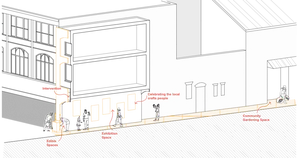
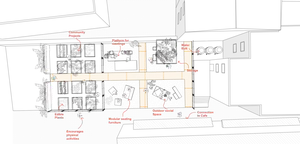
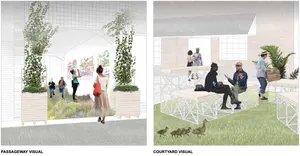
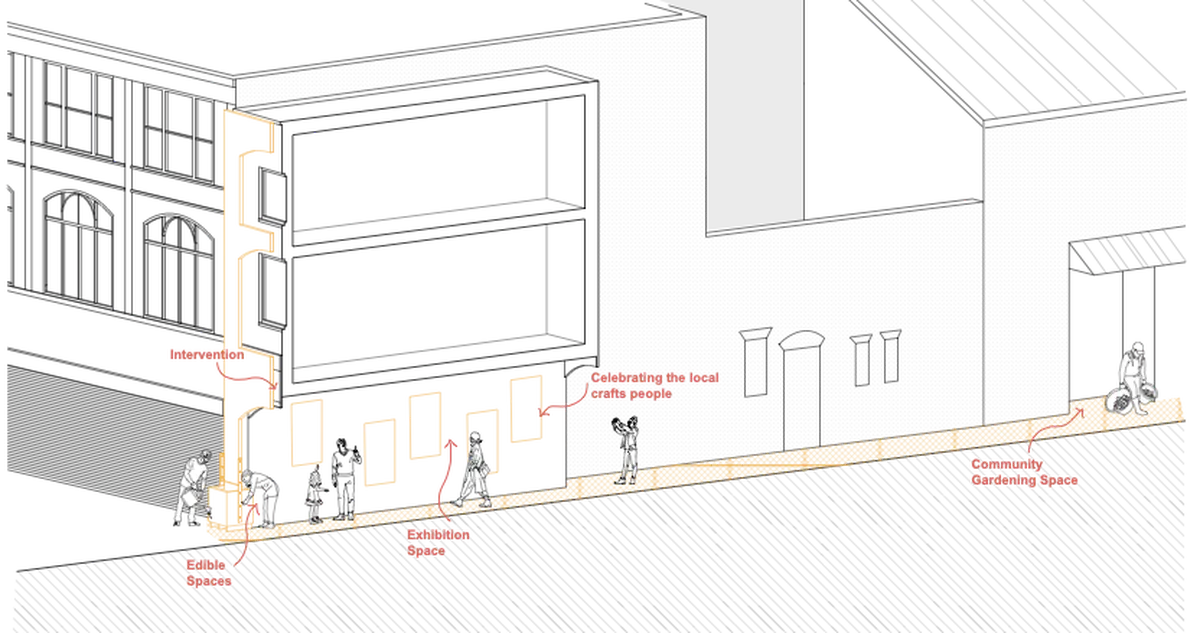
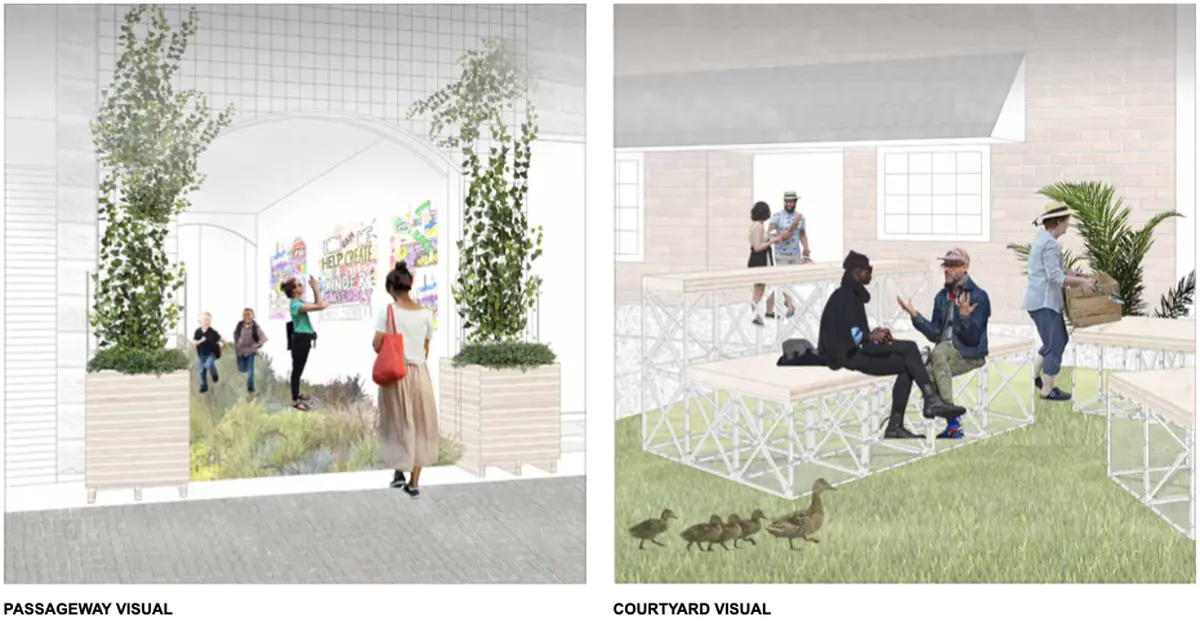
By utilising the passageway to display exhibition work from local institutions it would not only encourage them to create their crafts, it will celebrate their work and the range of crafts that Dudley has.
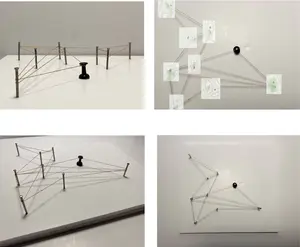
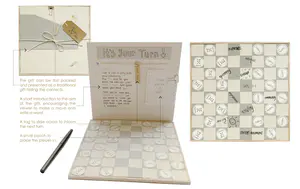
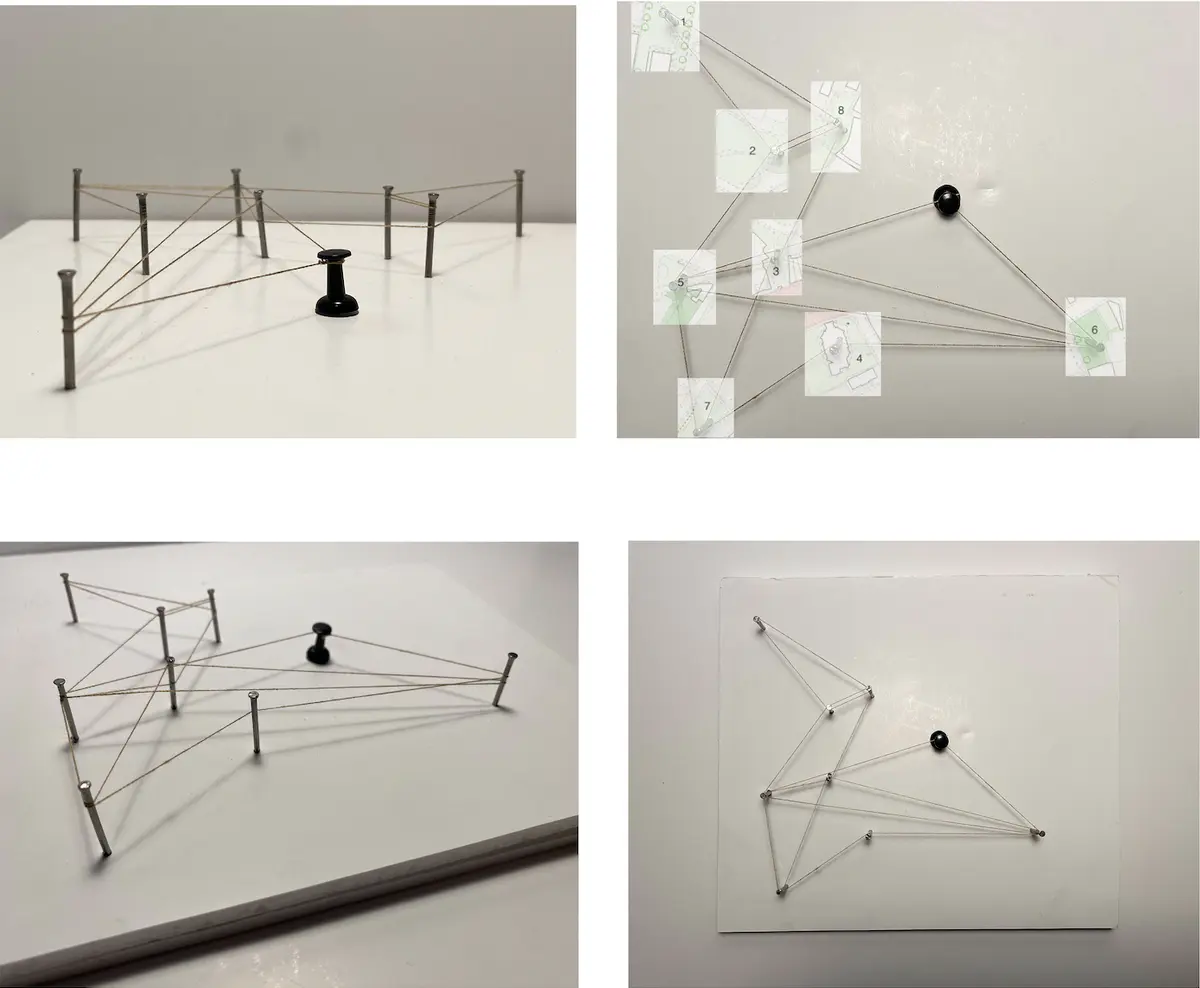
This gift represents the green spaces around CoLab Dudley and the connections they have to the high street. The black point marks the location of the High Street and the other pins mark each green space within the High Street’s immediate location. The lines act as a travel route that you may take in order to get from one green space to another. From this we can establish that there is a lack of greenery in some spaces. This then impacts the High Street as people do not need to use it as a travel route. By simply creating more of these green spaces like in the top right it will add more connections to the High Street which will draw more people to this particular location.
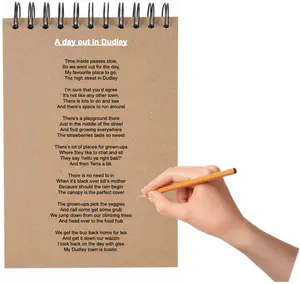
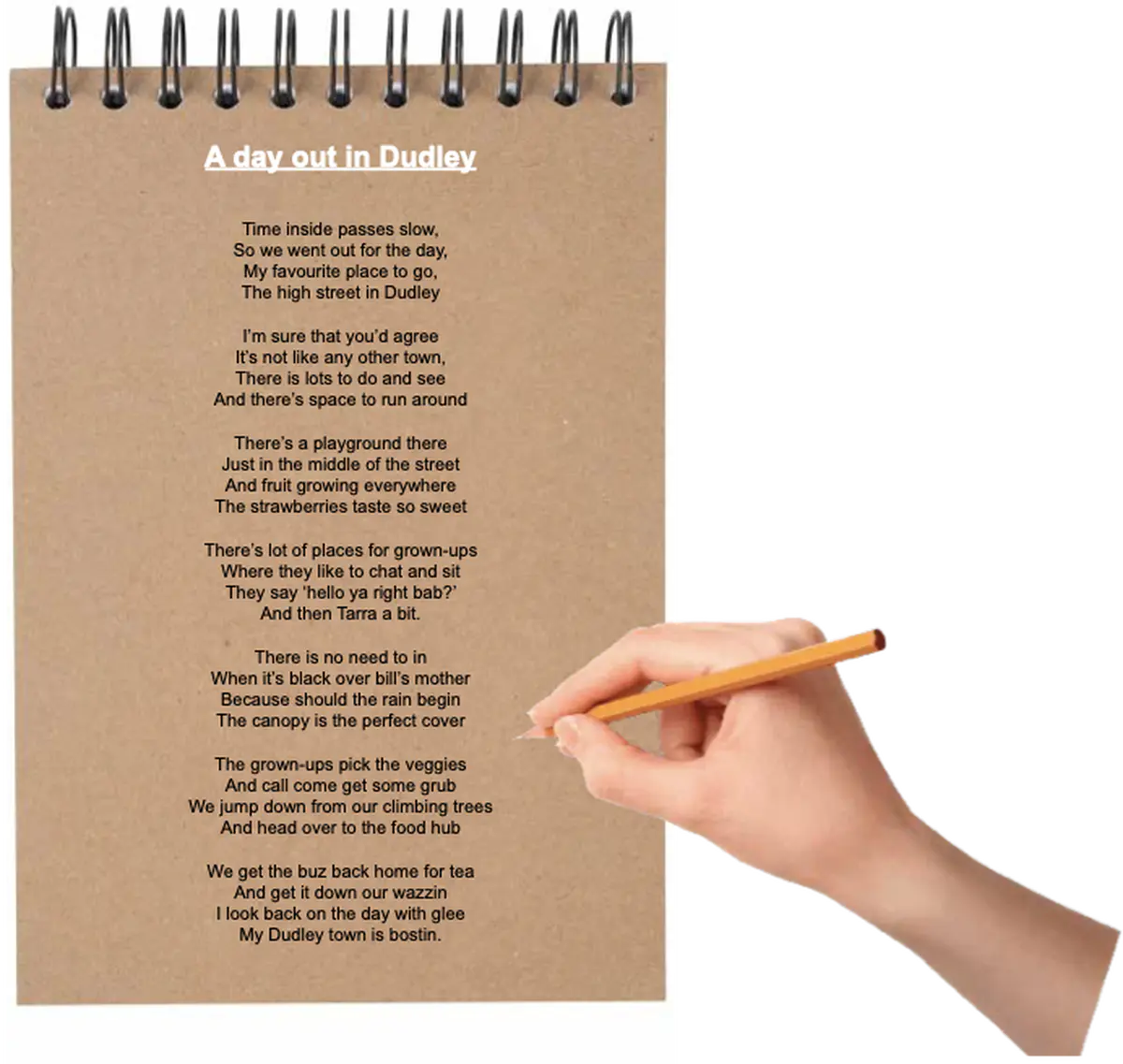
A day out in Dudley
Time inside passes slow,
So we went out for the day,
My favourite place to go,
The high street in Dudley
I'm sure that you'd agree
It's not like any other town,
There is lots to do and see
And there's space to run around
There's a playground there
Just in the middle of the street
And fruit growing everywhere
The strawberries taste so sweet
There's lots of places for grown-ups
Where they like to chat and sit
They say 'hello ya right bab?'
And then Tarra a bit.
There is no need to in
When it's black over bill's mother
Because should the rain begin
The canopy is the perfect cover
The grown-ups pick the veggies
And call come get some grub
We jump down from our climbing trees
And head over to the food hub
We get the buz back home for tea
And get it down our wazzin
I look back on the day with glee
My Dudley town is bostin.
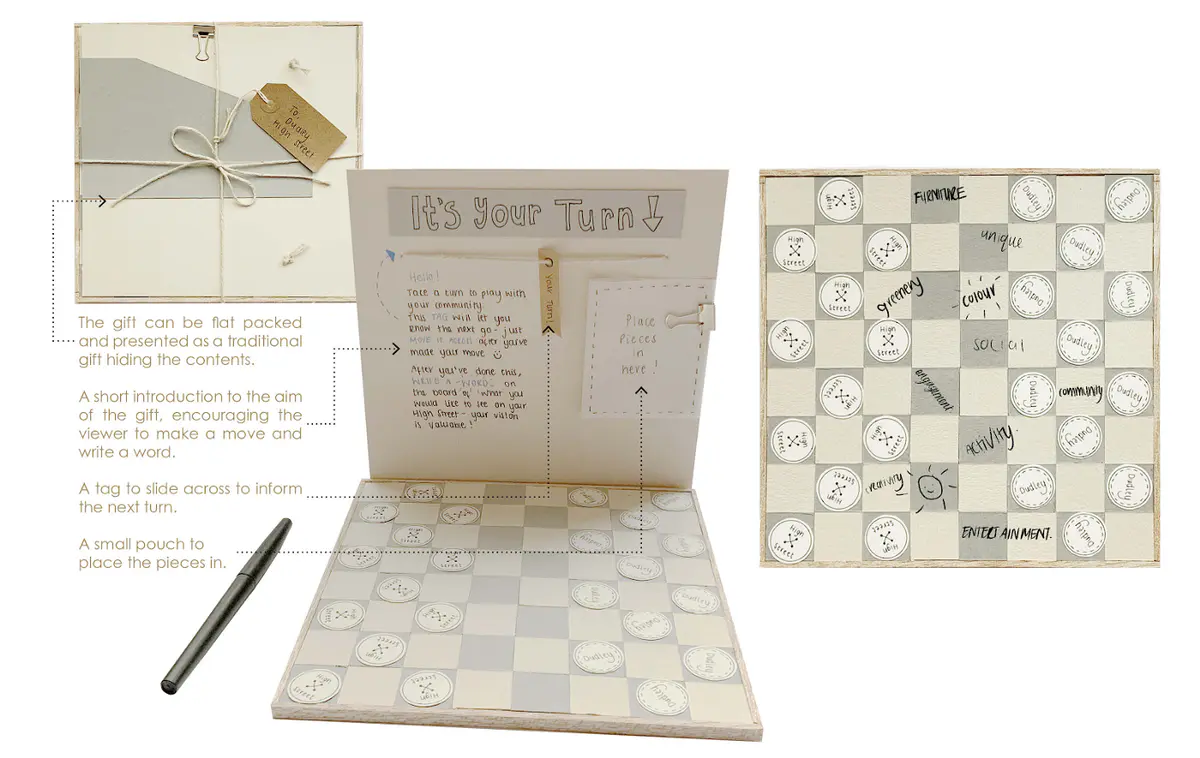
My purpose of my Gift to Dudley High Street is to encourage the users to become involved in the changes that occur in a place they use. The aim is to gain feedback from the users of the game to inform any progress made, this way, the focus of regeneration can come from the users themselves, becoming a collective collaboration. Through the users interacting with each other on the High Street using this game, the presence of users can be recognised, reminding the people of a sense of community to promote and celebrate going forward.
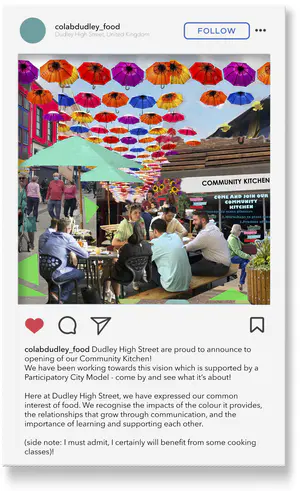
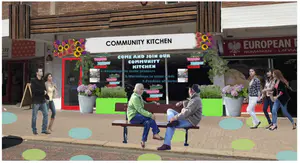
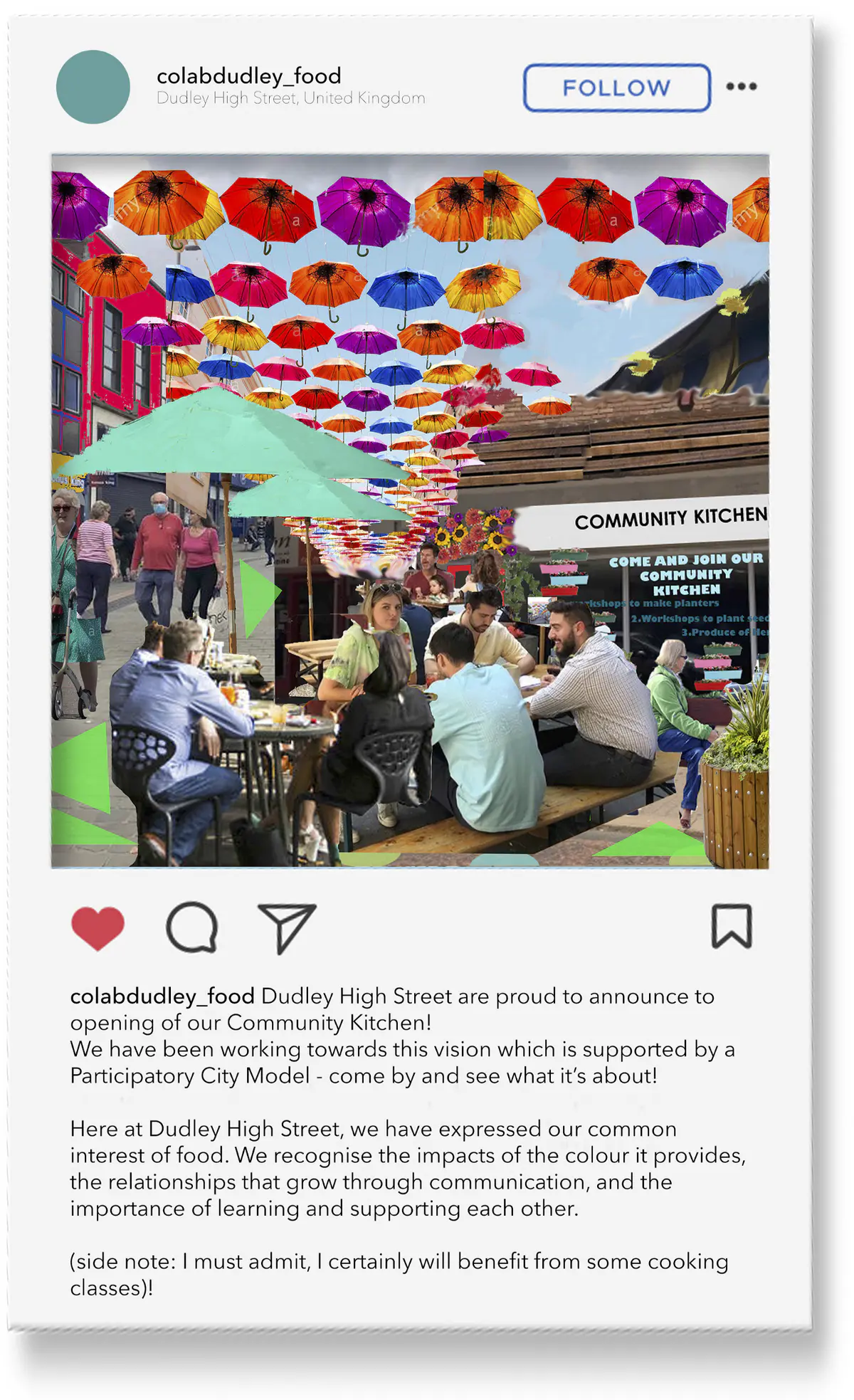
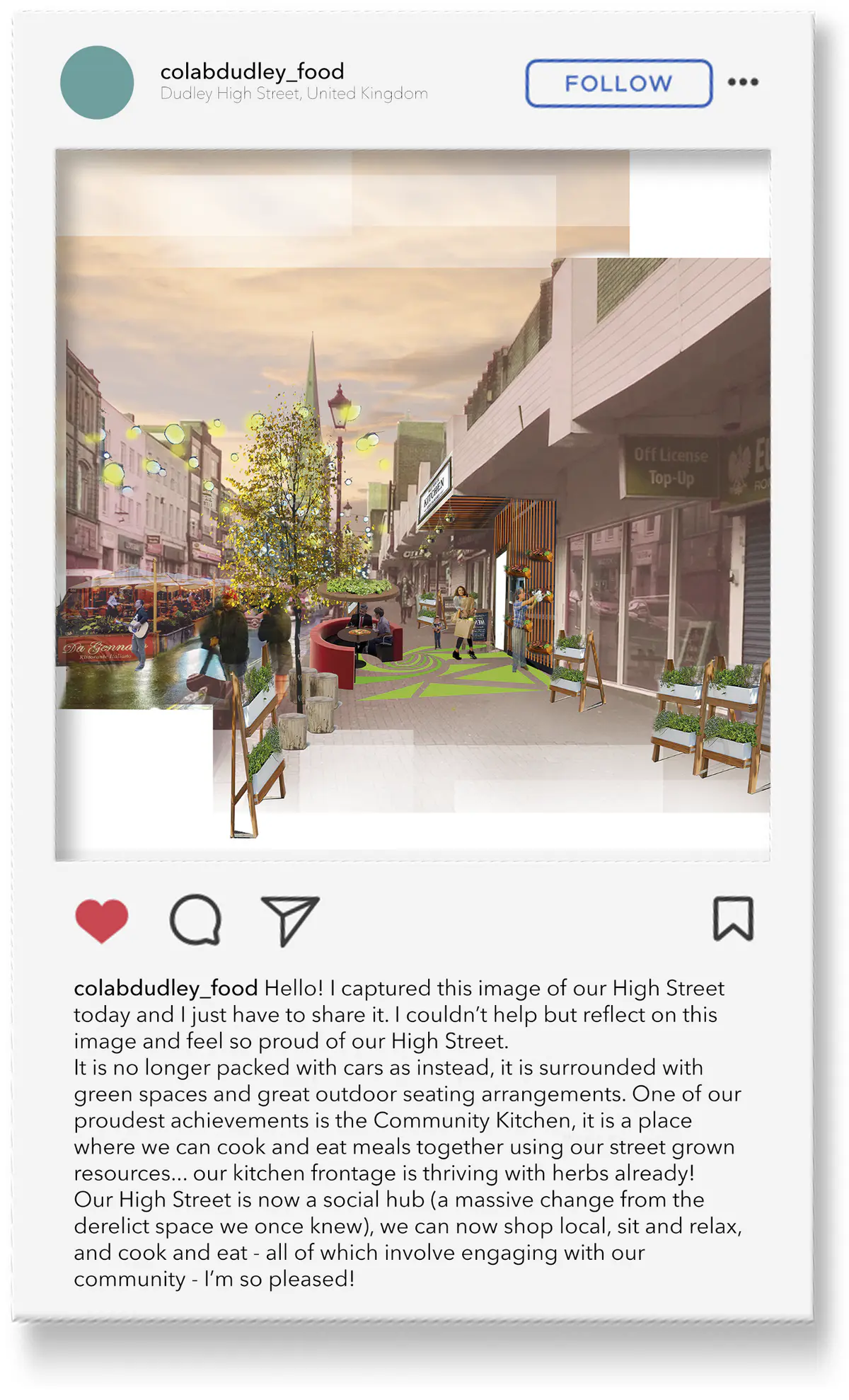
This post promotes the opening of a community kitchen, supported by the Participatory City model.
(We decided to present our narrative through social media and instagram posts as we wanted to showcase what individual experiences might be like when experiencing the future High Street. Each of our posts captures a different element of experience on the High Street to form a collective scenario.)
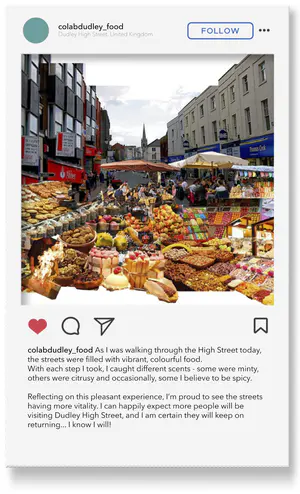
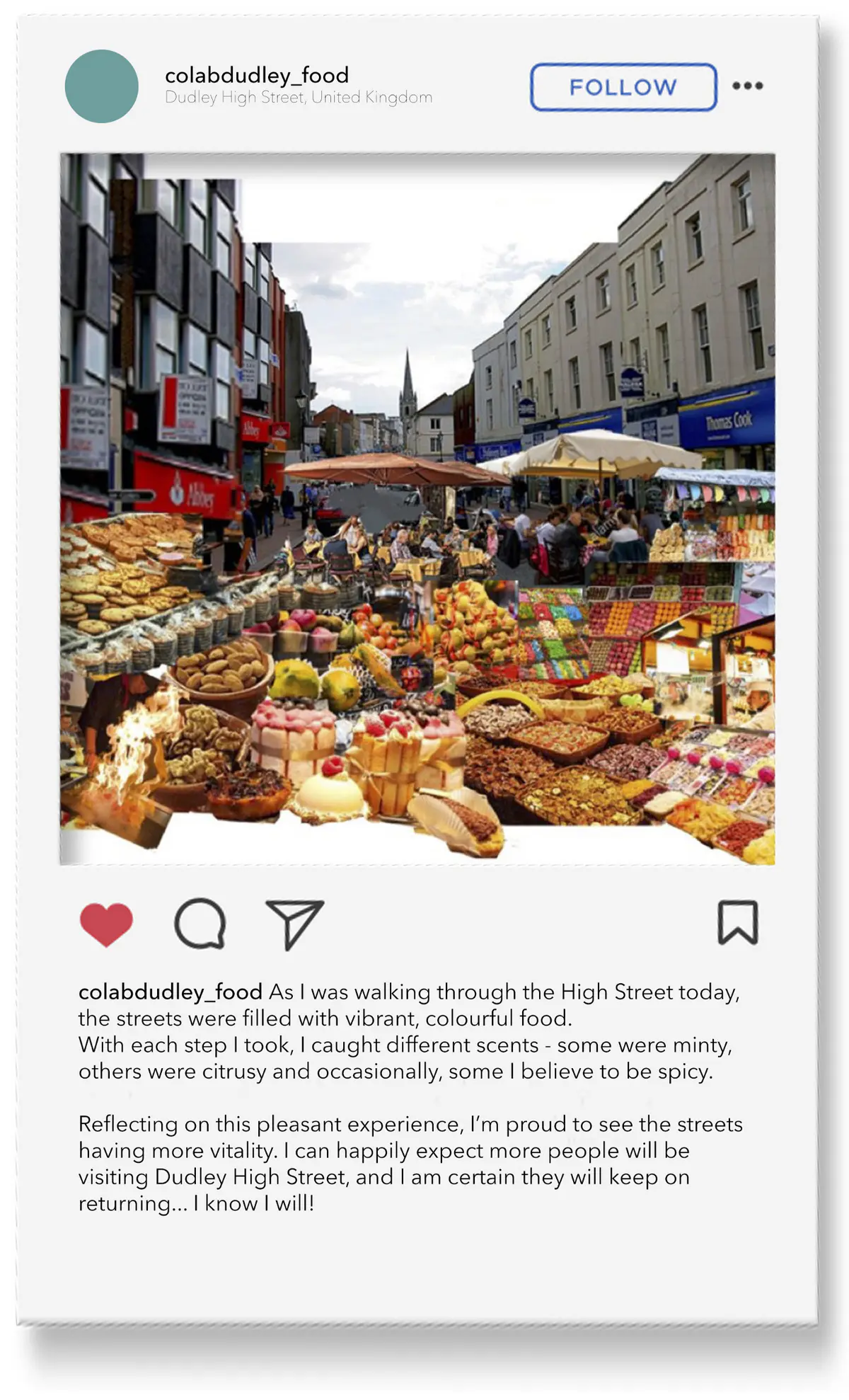
This post captures the street qualities where the visitors experience the colour and aromas of the food.
(We decided to present our narrative through social media and instagram posts as we wanted to showcase what individual experiences might be like when experiencing the future High Street. Each of our posts captures a different element of experience on the High Street to form a collective scenario.)
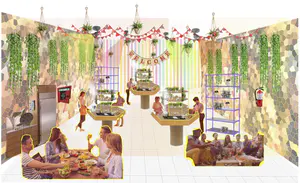
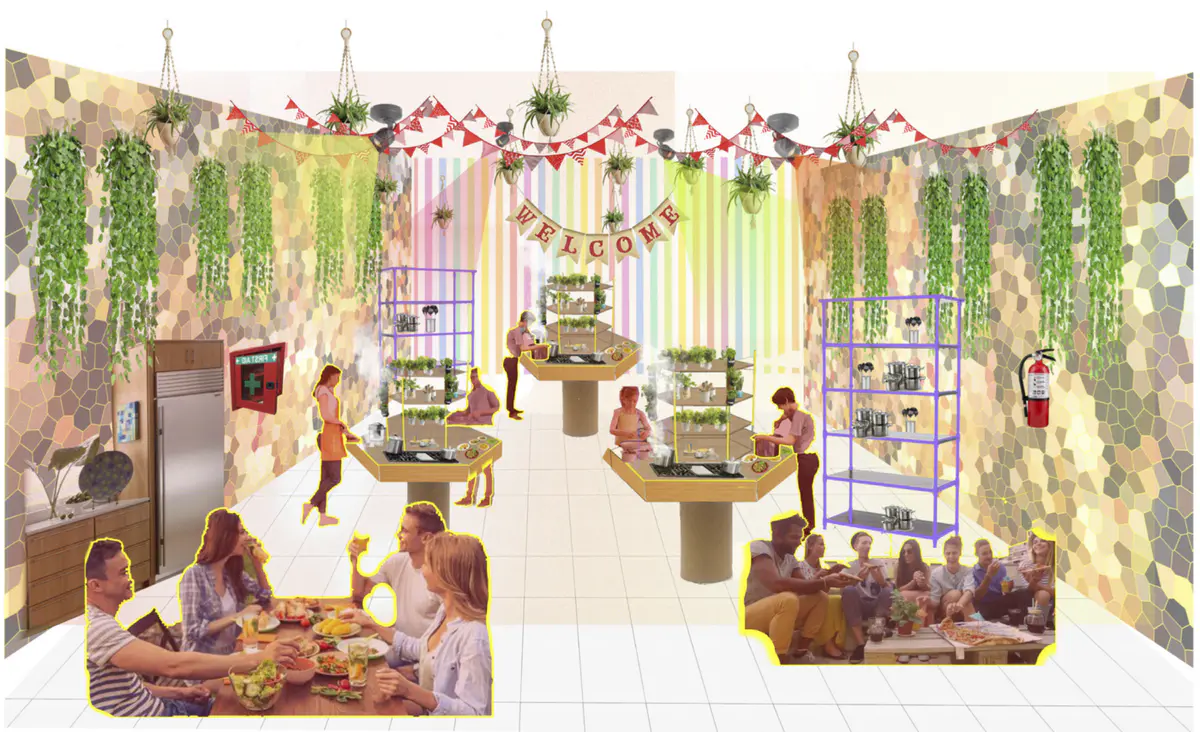
The interior of the community kitchen would be inviting and colourful to create a positive atmosphere. The colours were abstracted from one of our group collages of food. The kitchen counters are not considered as a back of house element; they have been combined with seating as we are trying to embrace the cooking process. The kitchen desk is designed in a way so multiple people can work together from all sides, with central storage for herbs.
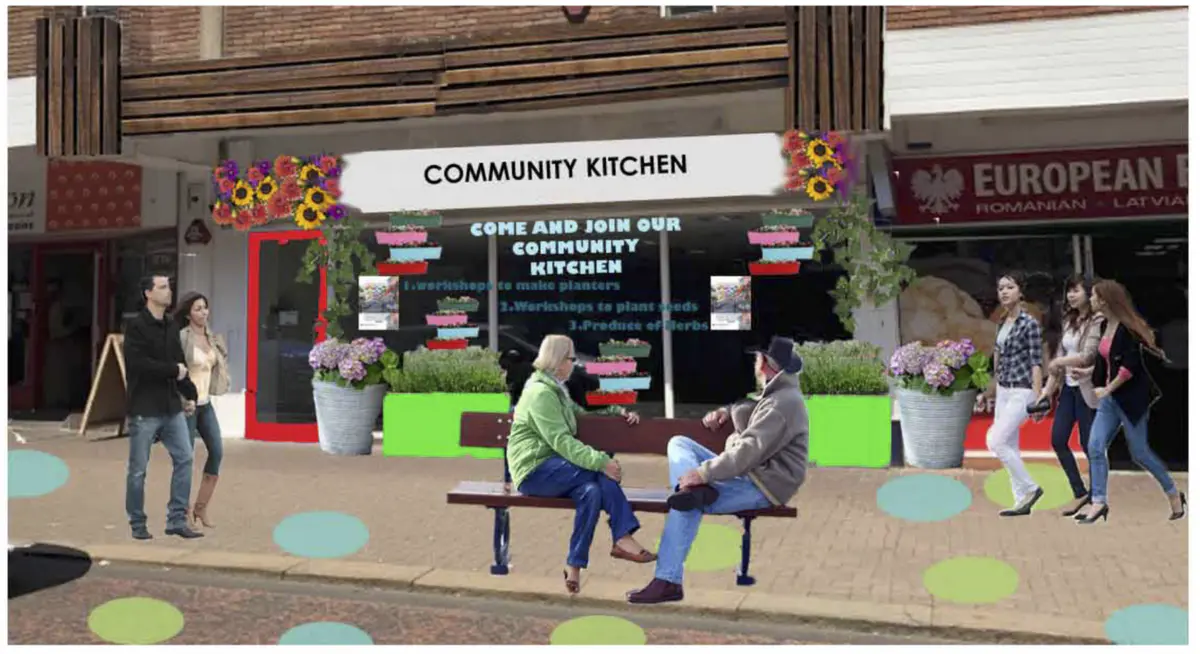
The facade of the kitchen contains a small window so food can be sold outside. We have also created a vertical herb garden so it can be used in the community kitchen. We wanted to keep these below eye-line so people outdoors have a clear view into what’s going on inside.
This street section shows activity from the back of the community kitchen to the other end of the street and how all these elements are working coherently. The street is filled more with people rather than cars. We believe that the outdoor seating, more trees, canopies and street lights can attract people to connect with the High Street.
Provision
I invite you to stand in my shoes
In the space between dark and light
To imagine a room laid bare
Where you sleep in the bath
In the clothes you wear every day
Because you don’t have a bed or
Even a mattress on the floor
To rest your tired frame.
You are in crisis
Slipped through the cracks It doesn’t matter how or why Just that you are here
Needing help
Needing compassion
Practical support
To get back on your feet
To feel cared for
Provided for
Prayers answered.
I sit here listening to Blur
On the CD player I have just bought from Provision House
A beacon-topped Aladdin’s cave of treasures
That occupies a space right opposite
It’s higher calling
Old Co-op
Old shoe shop
New lease of life
For this art-deco giant
Three floors of stepping back in time
Down history rich stairs
Through formica inlaid doors
Its belly stuffed with
Furniture and bedding
Tables and lamps
Wardrobes and kitchenware
The things that we take for granted
Destined for those that have nothing
Absolutely nothing
A lifeline.
In the shop I can still buy a pair of shoes
Anything an old department store may well have stocked
Ironic I feel.
They save the sleeping bags
To hand to homeless folk
Health-packs and new socks
Whatever helps.
The Food Club caters for those
That need to feed themselves
Their families
On budgets stretched to breaking
They mind the gap that governments should fill
By remembering that everybody counts Black Country rules.
Kim chats to a woman
Buying sticker-books for her granddaughter
Laughter slips through this conversation
Two books for a pound and you know
The girl will have a fun filled afternoon.
I ask about the future
Plans for expansion
Rooms to hire
Office space
Training programmes on their way
Perhaps a life for the room upstairs and I see progress
New from old
Right from wrong.
So, step through this door and lend a hand
To those that need it more than
You and I will ever understand.
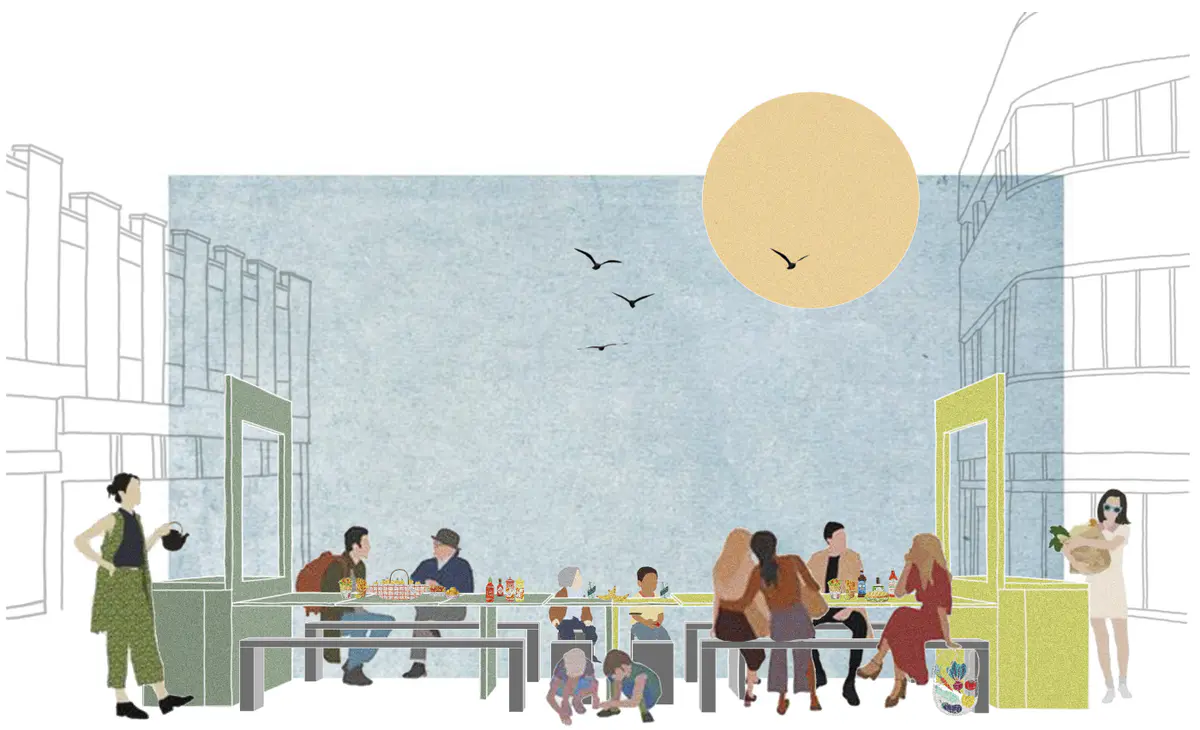
The first Stepping Stone project looks into designing multifunctional furniture for Dudley High Street to provide opportunities for a regenerative community, focusing on how the high street can be occupied with resilience. Initially, the stalls act as market stalls to provide opportunities for enterprises and small businesses to begin thriving and encouraging the High Street to become a place of inclusivity.
However, the stalls can extend out into outdoor seating arrangements, which can become an extension of the community kitchen and during events can become a part of the whole atmosphere.
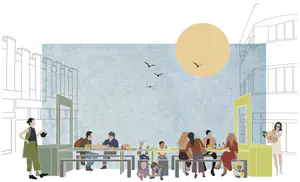
By extending the furniture, they can connect together and become a large spread where people can sit together and enjoy company. It creates a lowered centre space so children can sit together, or paint on the surfaces. We decided to focus on furniture because we felt the importance of it can go unrecognised. We felt through the design of this market stall, many memories can be created and attached to these items, and become valuable assets within the community.
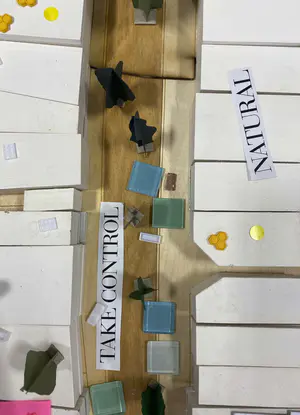
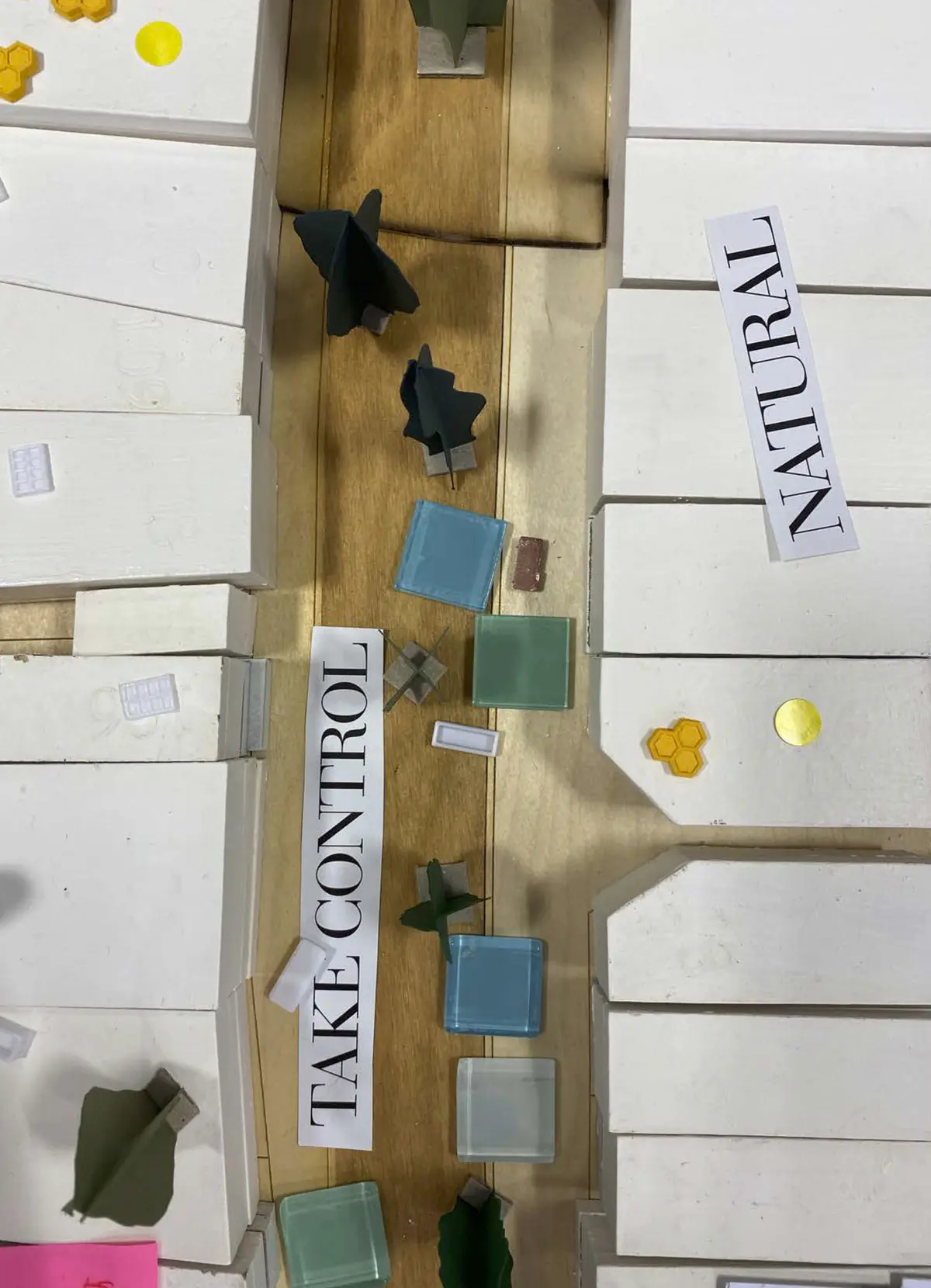
Looking to be the centrepiece of our exhibition, we proposed to create a site model of Dudley Highstreet at 1:200 scale with buildings modelled in a simple form. Local residents and visitors to the exhibition are then invited to decorate a chosen building to how they would envision it sat within the context of a greener Highstreet. We want to tie in our themes of biodiversity and materials by proposing that buildings can, and do, have the potential to be a lot healthier, sustainable, and interactive on the street. This site model also helps gain vital public opinions on the Highstreet and prompts discussion of areas most in need of attention.
To ensure that the model is utilising the MDF to the most efficient standard possible. First, the centres of the massing blocks have been hollowed out. This allows a reduction in materials used as other buildings can be cut in the centres of the model. Then the top is finished with a solid piece.
The waste material is placed into the recycling rack where other students can reuse it; otherwise, if the material left cannot be used for another project, it is recycled correctly by the university.
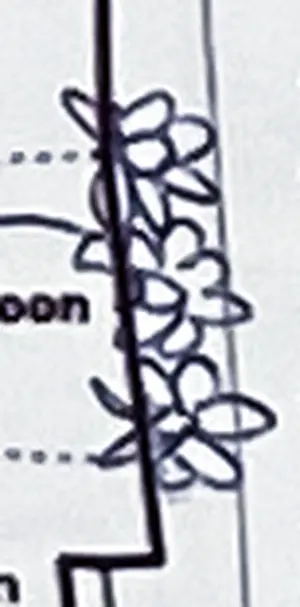
The model spanned just over 3.4m long and over 50cm wide. With the majority being cut from scrap woods that would fit the jigsaw of the shape, we were able to drastically cut down on waste. We also got some small benches and bee hives printed from recycled plastics, and used dried flowers as trees to represent the green spaces. Ultimately, the model seemed like a huge success, and really helped portray our ideas about Dudley High Street to those who came by. Everyone from Dudley who saw the model knew that it was the High Street, and interacted well with it. The size did make it difficult to move, especially to carry to the site, but it sat nicely in the centre of the the room and really drew people in to interact with it.
The model brought people in from outside to play with, write on, interact with. It became a spectacle for the public to come in and see what was happening and offer their ideas about what could be done.
The event was a success. Many people from the public (those who heard about the event, and those who just happened across it on the day) came in to interact with the model, which sat as the centre piece in the room. Kids liked to play with the pieces while the adults talked about things that could come from actions to help the High Street, not just leave it as is.
SOME OF THE KEY IDEAS WERE:
- The Shops need to be inviting for everyone. It’s no good having these places to go if people would rather take a bus to the next town.
- Just putting up boards across the windows is awful. Paint, Posters, Graffiti: Anything that actually makes the High Street look still alive is better than just wooden boards.
- More Green is needed. While it is obvious that there is a lack of Trees, many people wanted to push for these small bushes or planting spaces that could easily be implemented across the street.
- Spaces for public events or for people to at least gather at. While there is the Market and Fountain, it is not enough for the people of Dudley.
- Something needs to be done about the cars on the High Street. Some were Pro-Removal of all Cars, while some just wanted to limit when they could access the High Street.
Following the exhibition we created a series of drawings with our own interpretation of Sarah Wigglesworth ‘The Dining Table’ drawing. The drawings are a perfect representation of the our interactive model at the ERA Environmental Exhibition and Event. Showing the interaction the public had with the model, as well as the conversations that were held around the model.
This post develops what the community kitchen has to offer with street grown resources and community engagement.
(We decided to present our narrative through social media and instagram posts as we wanted to showcase what individual experiences might be like when experiencing the future High Street. Each of our posts captures a different element of experience on the High Street to form a collective scenario.)
LAYERS TO THE HIGH STREET - To introduce covered, sheltered areas on the high street. Making the high street welcoming for the entire family and adding topographical value to the high street that is visually interesting. Adding another layer to the high street that will encourage exploring spaces for children as well as adults.
The third Stepping Stone project attempted to design the community kitchen in one of the empty shops on Dudley High Street. We all know that food is an essential factor in our life and eating and cooking the food is not an abstract activity we do, it is part of our everyday routine. In our initial research, we found that many people live alone in compact housing on the High Street. We thought the kitchen connect the residents with society. We decided to make the process of preparing food more enjoyable. As our aim was to grow food on the street wherever possible, we can use these vegetables for the community kitchen. This will encourage residents to come down onto the street and engage with it. This could also be a new experience for the visitors of the High Street.
The second Stepping Stone project focused on the representation of colour and revitalising frontages. During our group discussions, we recognised the negligence of existing colour on Dudley High Street. Colour is a key element we believe can bring a sense of brightness into the High Street, and an element that should be of focus when revitalising the frontages.
In this example, we have approached the frontage for the community kitchen we envision. The visual showcases a Community Kitchen in which different herbs and spices can be grown. These can then be used to cook the many dishes respective to the different cultures existing on the High Street. Each frontage can respond to the different uses of the buildings to promote individuality across the street.
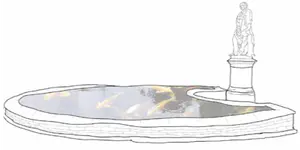
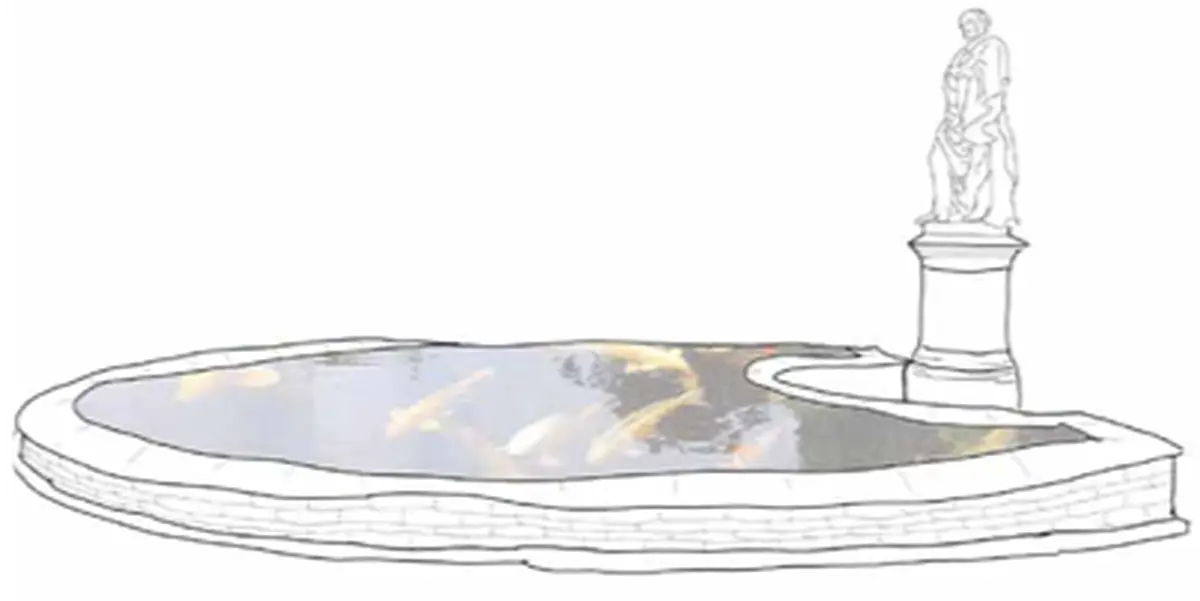
Pond — At the northern reaches of the High Street lies a raised bed with nothing but a sterile patch of grass. We suggest as a miniature stepping stone, we replace the grass with a pond. The sounds of water can soften the noise of the traffic and it will invite pedestrians onto the high street by having this point of interest. It also works with the plans for re-wilding and growing food along the High Street as it aids pollination.
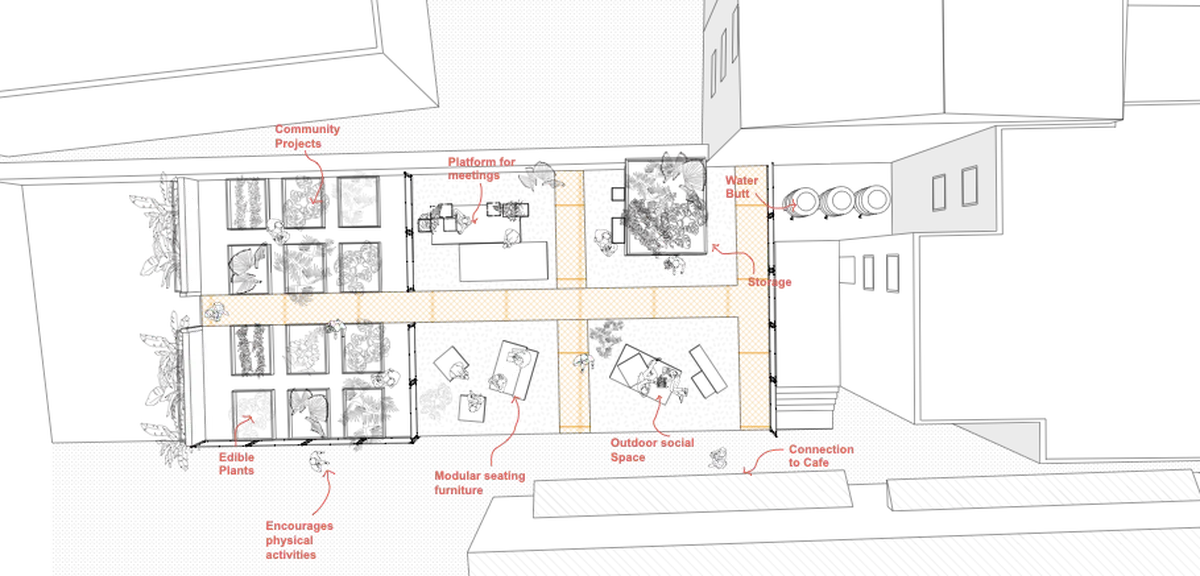
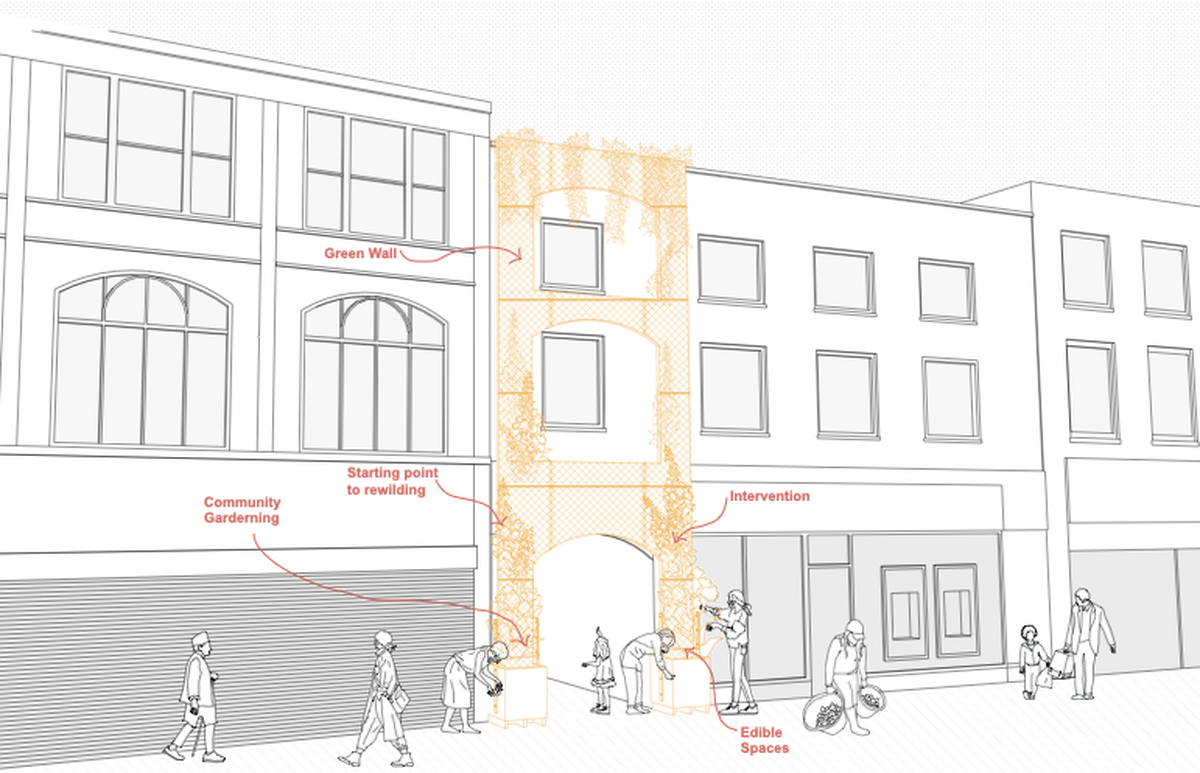
By placing a community garden in this space space you can learn how to plant food and it will lead to more edible spaces on the High Street that will then lead to the re-wilding of Dudley.
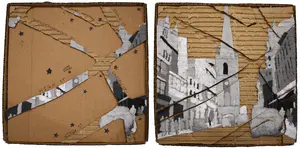
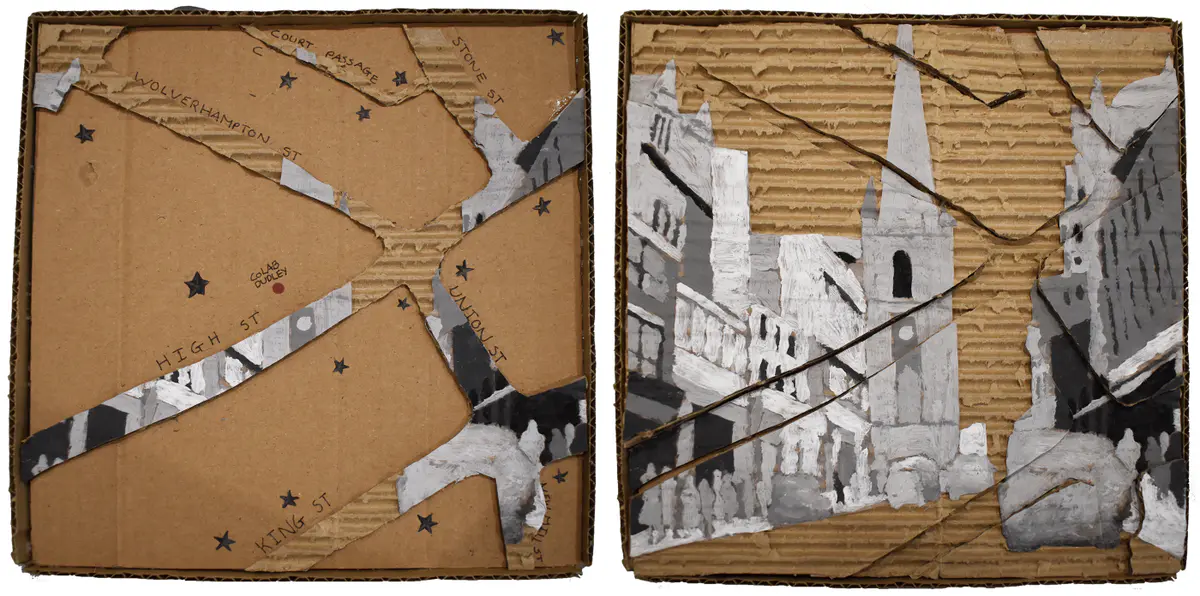
This gift aims to address the disconnect between Dudley and its industrial history. Once the ‘Capital of the Black Country’ its high street now looks like any other. With the intention of public engagement, this gift could be handed out at CoLab Dudley’s base. Starting from there, people would be able to follow the map and visit the places marked by stars — all of which hold some historical significance whether it be the location of an old factory or school — where one missing puzzle piece may be located. Only after visiting these locations would they be able to complete the puzzle and see the final image of Dudley’s high street.