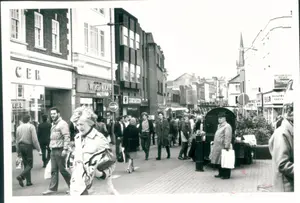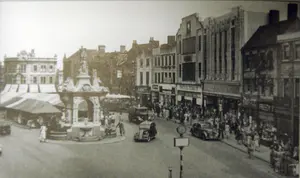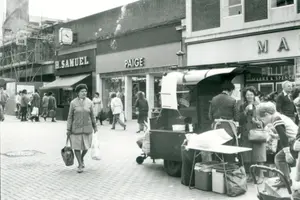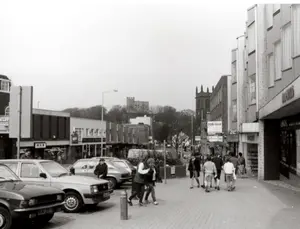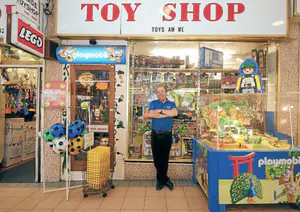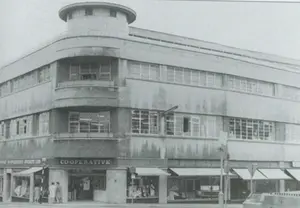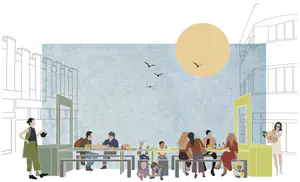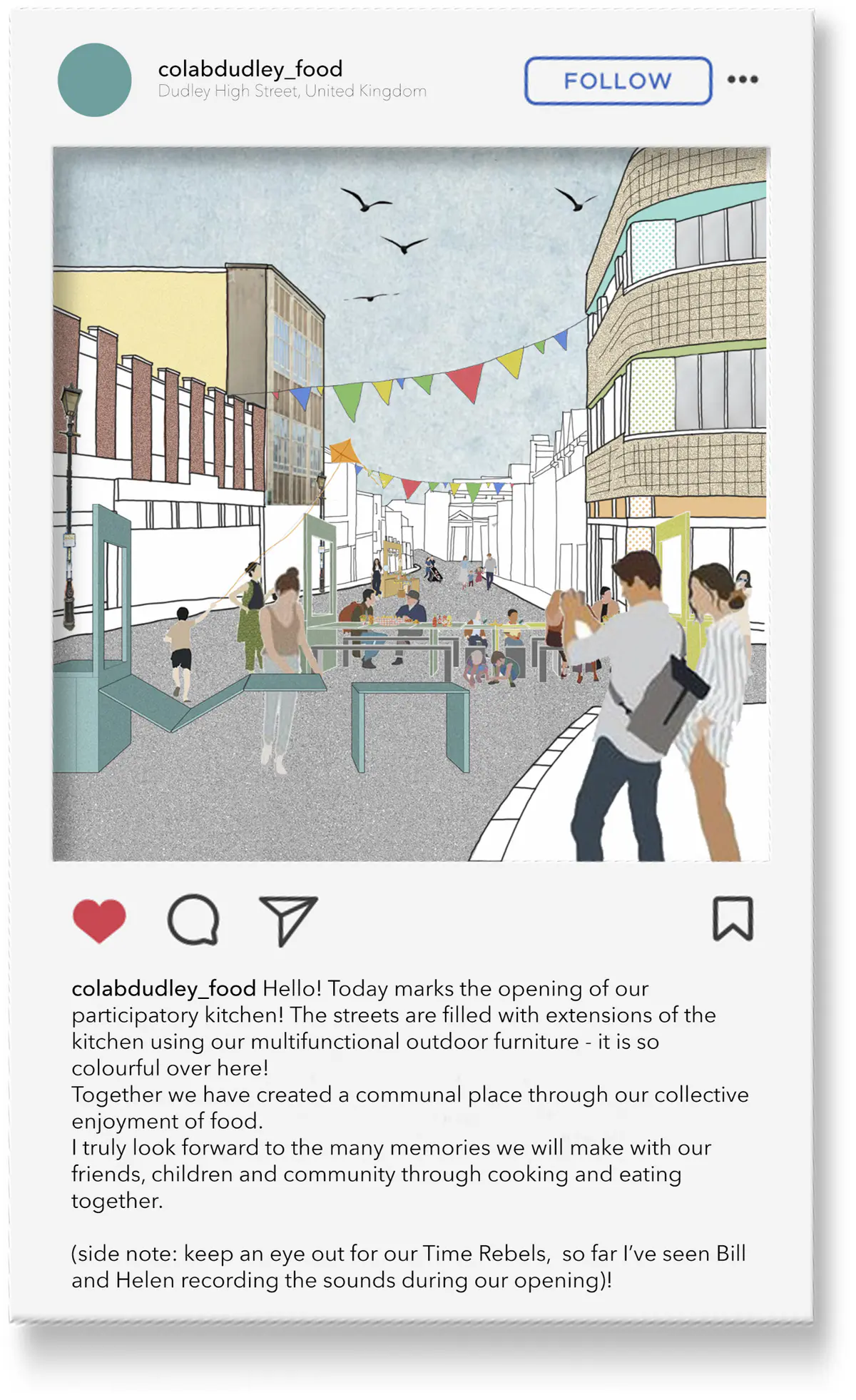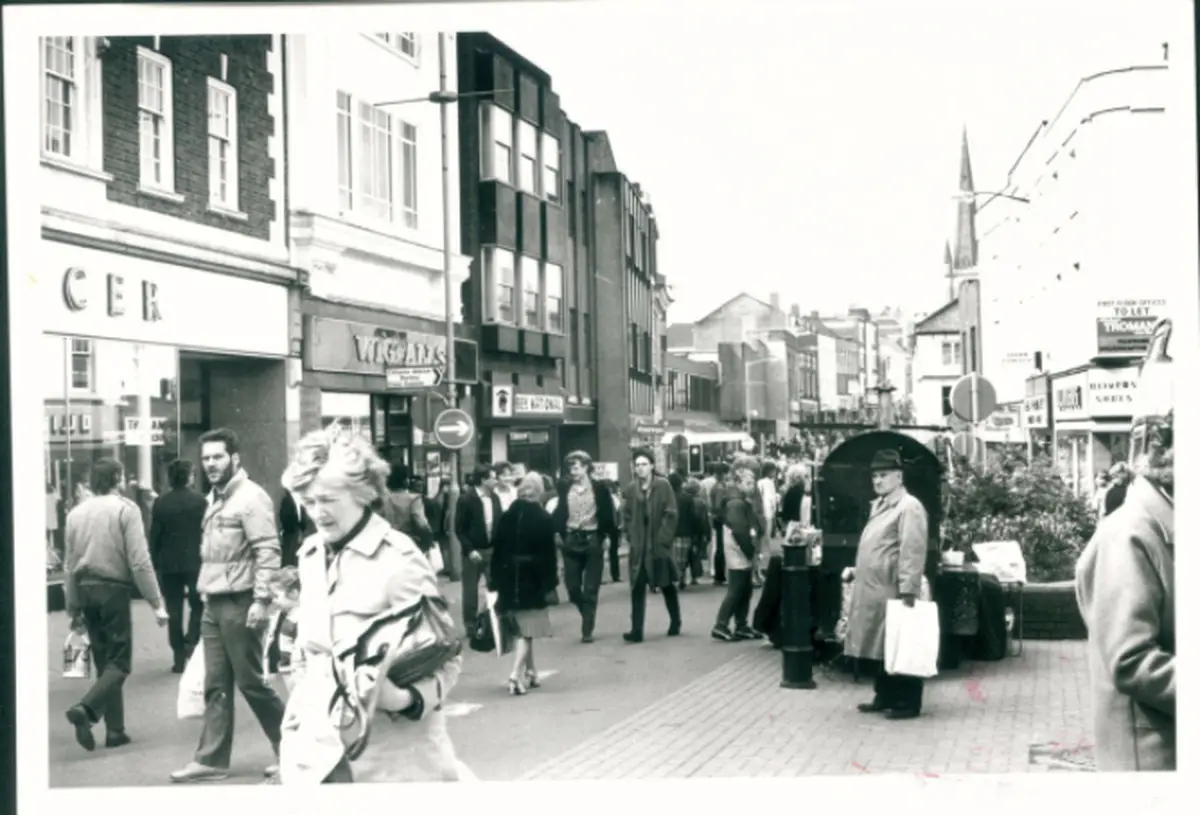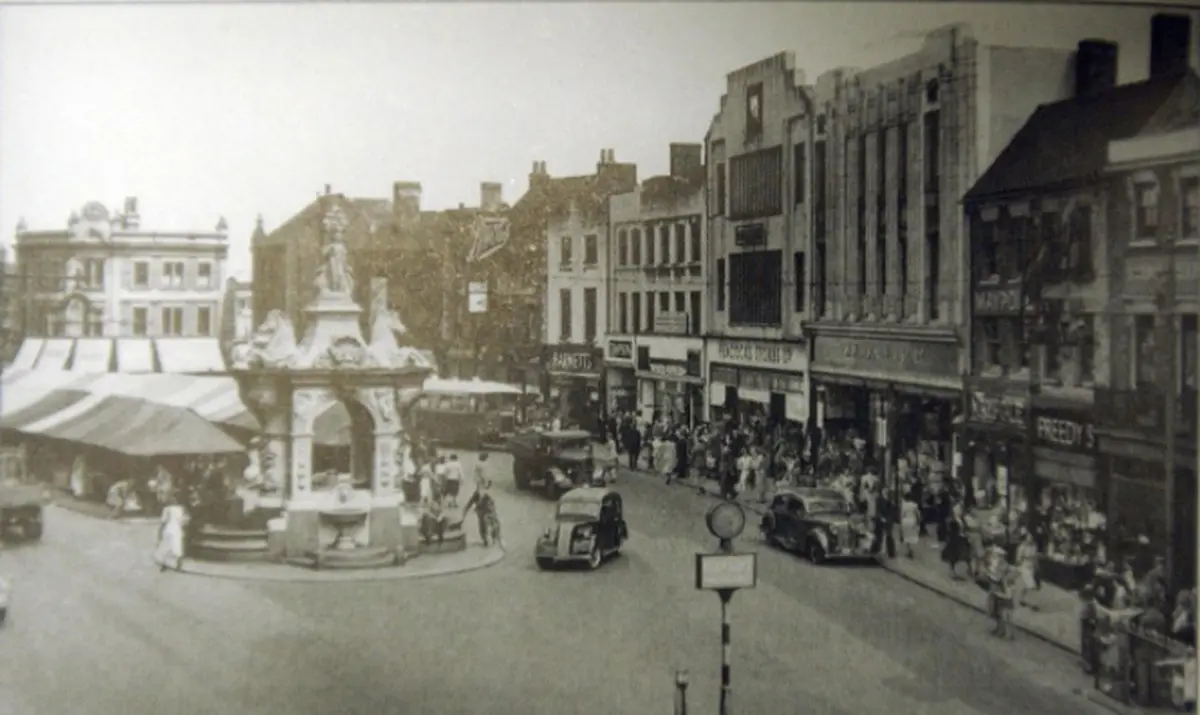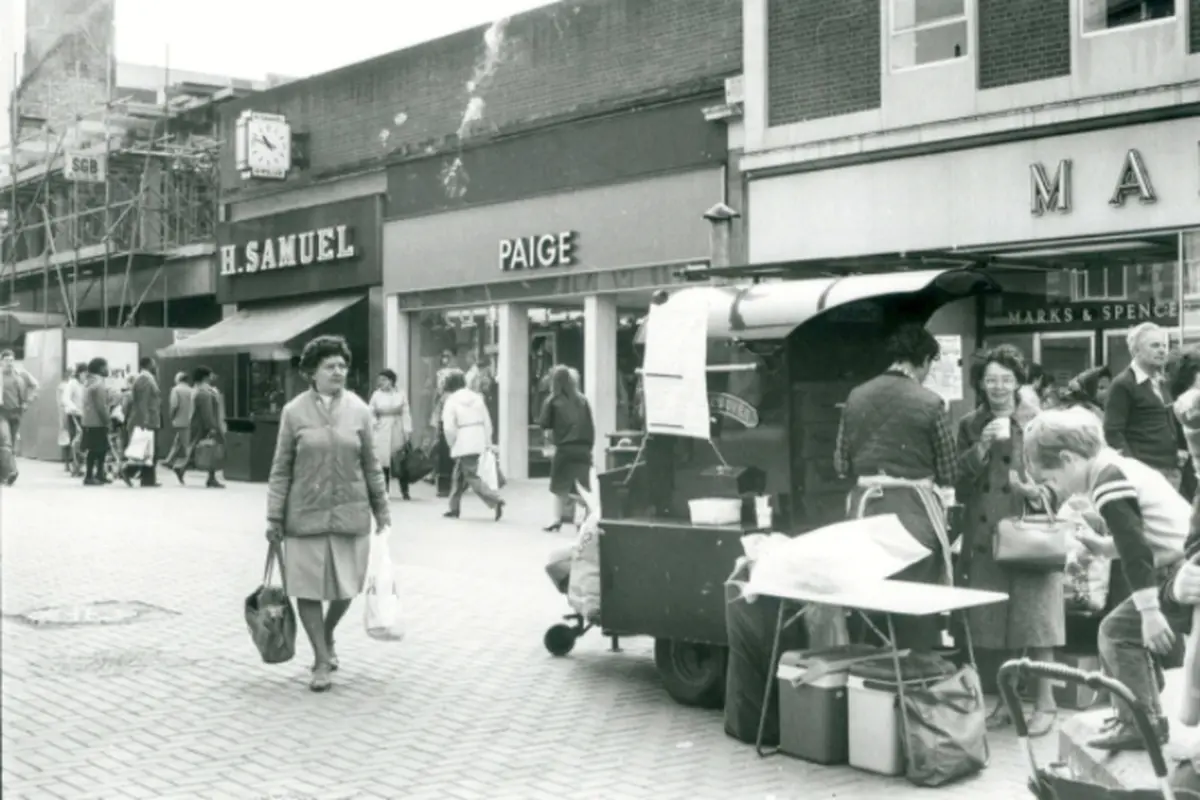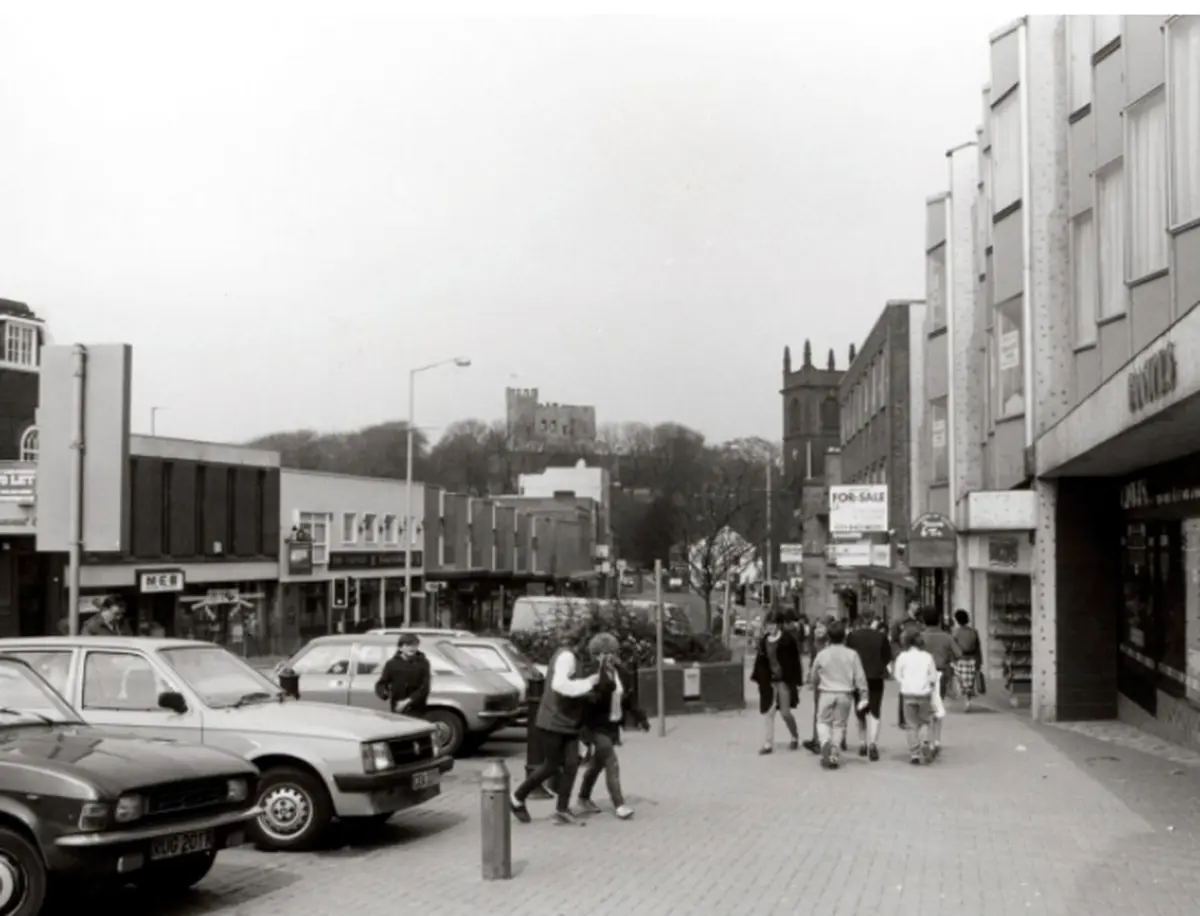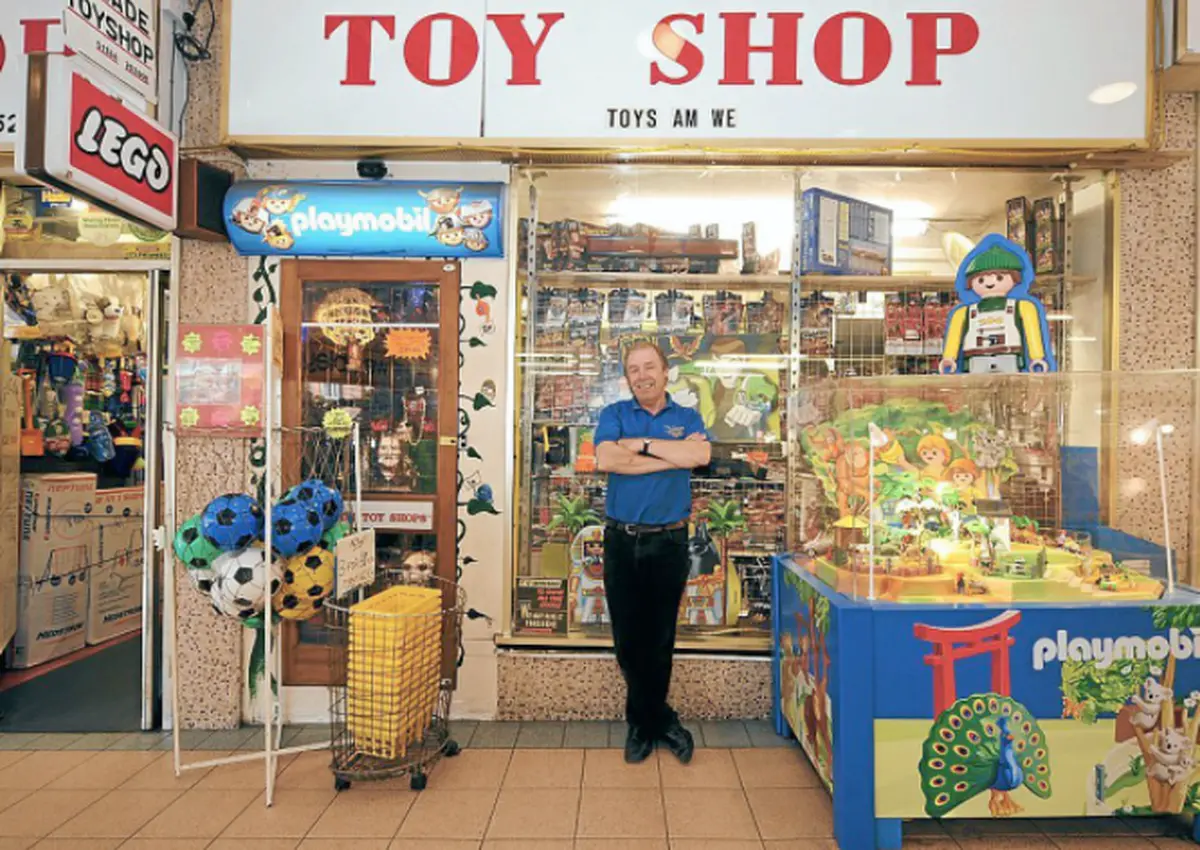
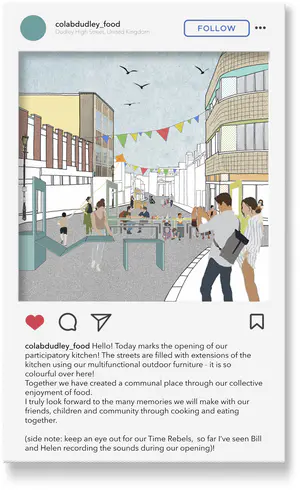
In this post, we captured the street’s atmosphere filled with colour, activity, and pedestrianised streets.
(We decided to present our narrative through social media and instagram posts as we wanted to showcase what individual experiences might be like when experiencing the future High Street. Each of our posts captures a different element of experience on the High Street to form a collective scenario.)
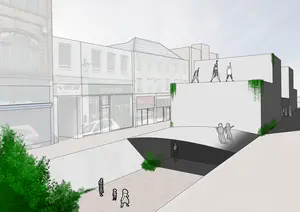
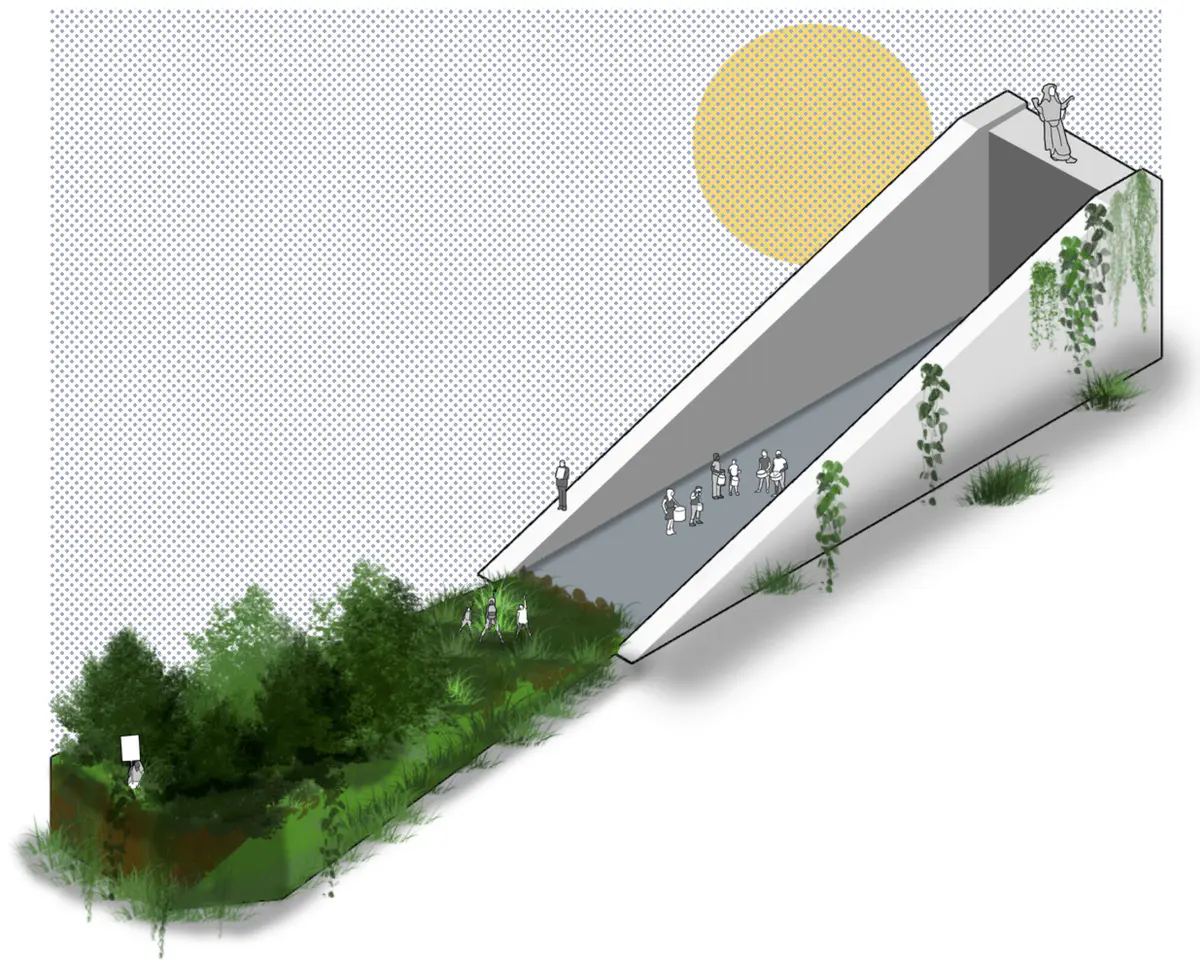
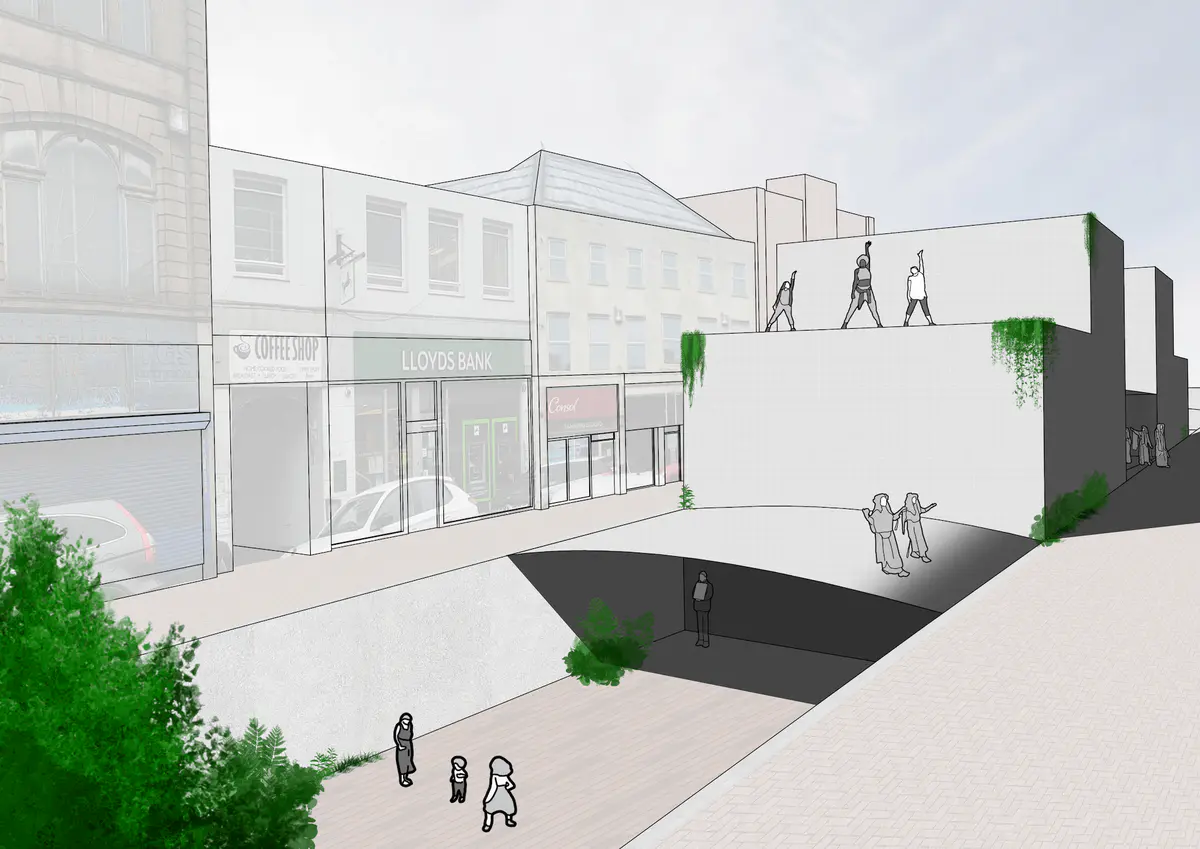
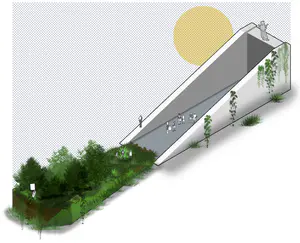
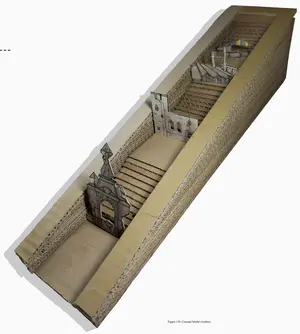
The whole High Street would be dug out to make way for this new kind of “street”. The idea, as stated, is to alter the way that people use this street, so that they can learn about the legacy of Dudley. This would mean that there would be a canopy that sits on top of the cut, that would also act as a means to shelter everything underneath, but would also be made in Dudley to promote local craftsmans. This canopy can then hold something like Theatre Curtains with the history of Dudley presented on them. As you walk through the cut, you go through all the different parts of Dudley’s Legacy - Saxon, Middle Ages, Industrial Revolution, Modern, and you would end the walk on the “Future”. You would start at one end, up by the top church, and as you walk through towards the market place, you would walk through the eras in chronological order. Then, once you exit the tunnel, you would leave the Modern era, and come out into the reclaimed green space, which would represent the future of Dudley’s Legacy. This would be a Miyawaki Forest that would be expanded out through the streets, taking over the spots where cars used to drive, to now benefit Dudley, it’s people, and the world as a whole.
Dudley’s High Street is about 240 metres long, about 9 metres wide, and rises about 8 metres. This would provided a very prominent feature for the High Street if it was dug out and recommissioned.
An added aspect to the dug out street would be that of the canopy that would reside above it. While thinking of the design, two ideas stood out - one that would stand raised, at about the same level as the end of the street, which would create this arcade styled archway that would reside high above the street. The second was having the canopy be flush with the pavement all the way up, except at the end that would then provide a small increase around the steps.
Both ideas serve the same purpose, but provide drastically different means of doing so.
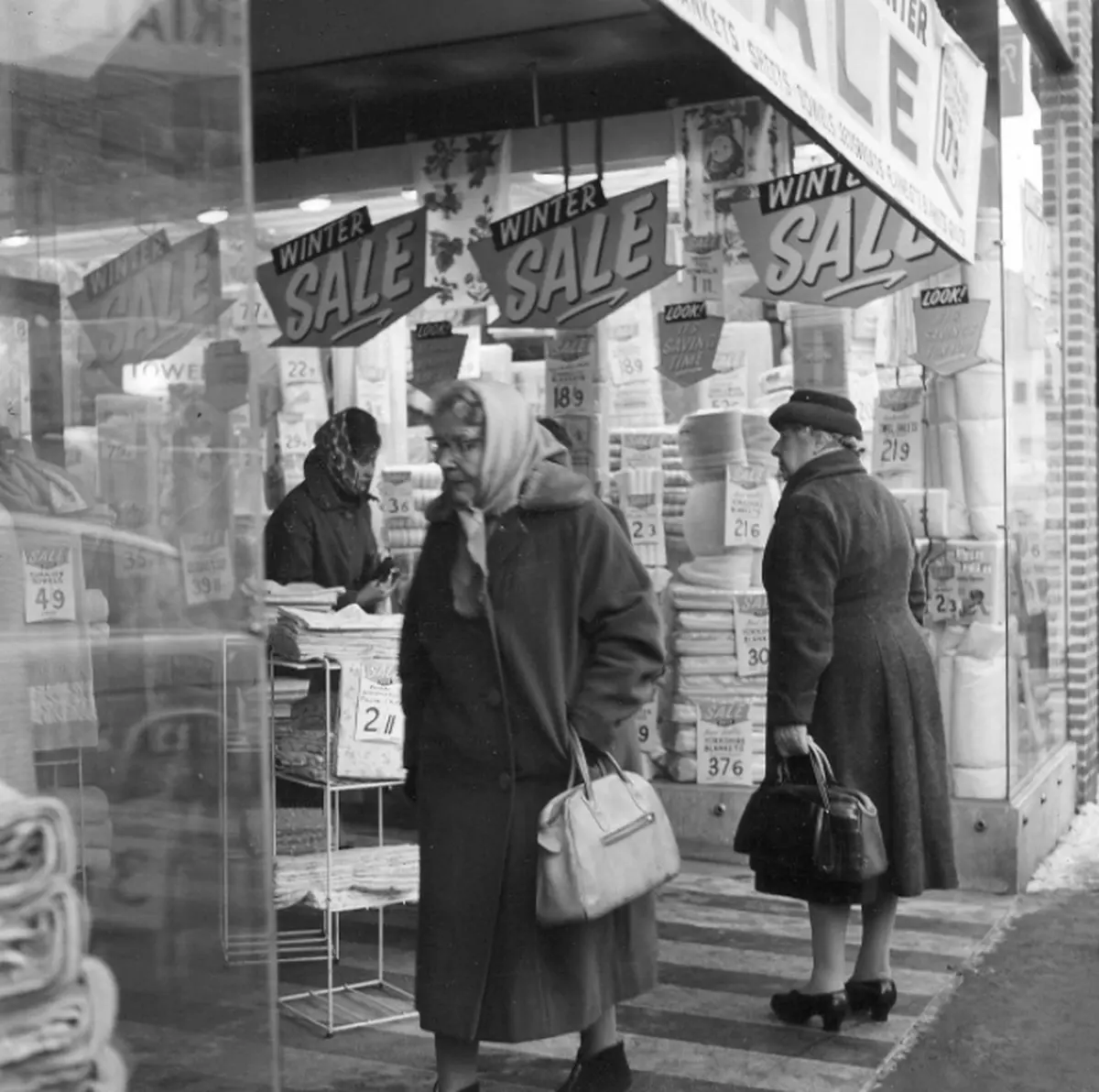
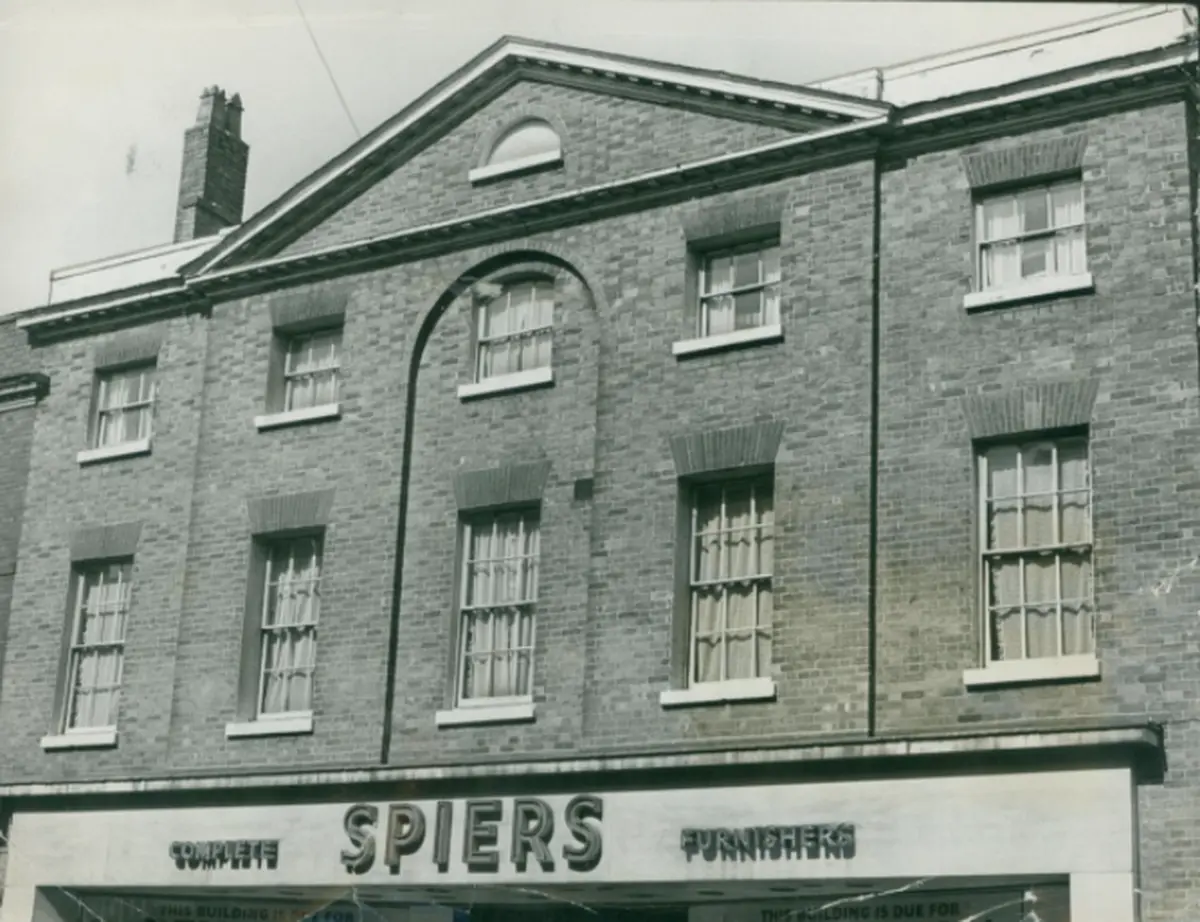
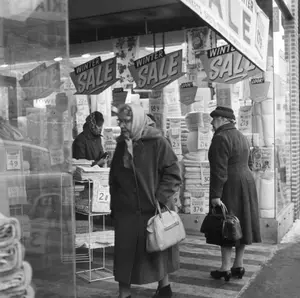
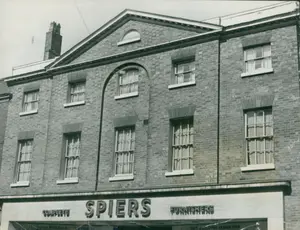
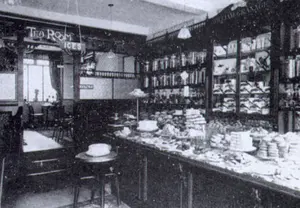
The Spiers home furnishing store in Dudley High Street in April 1970 - "Plans to demolish the Spiers home furnishing store in Dudley High Street were met with opposition in April 1970, with campaigners voicing fears the town would become subject to rectangular uniformity and called for the building to be preserved."
Golden Touch
It’s my wedding anniversary
Ari is cutting my hair
“To make you look younger”
He says
We guess each other’s age
A trick he’s pretty good at
We talk about daughters
Sons
Families
How he goes back every year
When he can
To northern Iran
But really his family’s here now
Round the houses in Brum
From a young age
Now his home is Dudley
Four years in the shop
Cutting
Blending
Trimming
The heat from the hair dryer
Beats the sweepings to the floor and
I escape for twenty minutes
In the stories
In the swift hands
The mirrors
Posters from a bygone age
Product on the shelves
The smell of wax and leather
Scissors sweep over the comb and
I learn that the skills are hard taught
From the first time with the razor
To the years later
Efficient
Precise
Art in my eyes
Soon his brother will join him
From Manchester
Where he’s currently learning
To catch up
The future is all about the family and
I hope the shop is still here
For when his son
Picks up the scissors
For the first time
Thanks for the haircut Ari
It took years off me
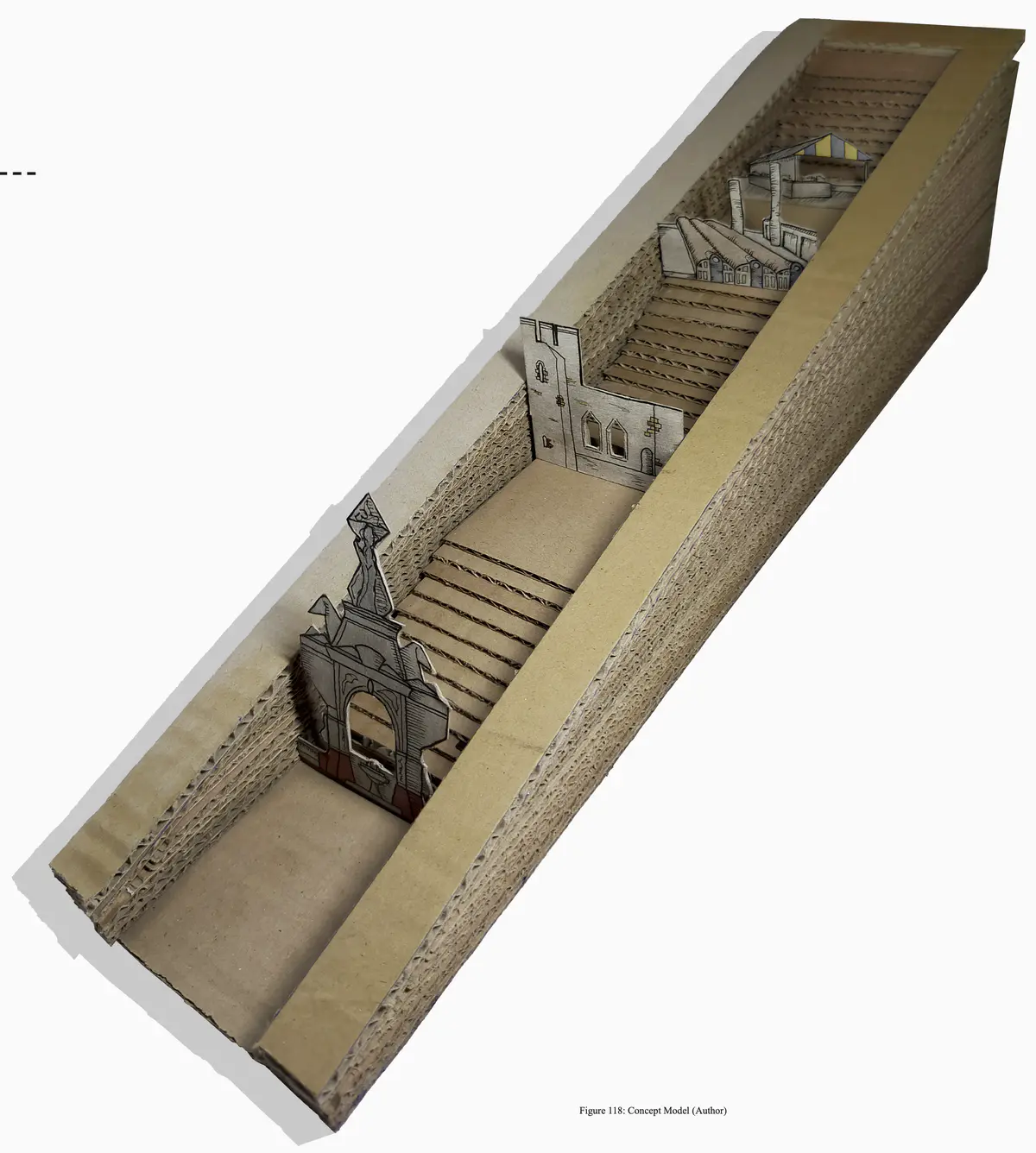
Concept Model - The model represents the idea of digging into the High Street itself. The idea was to drastically alter the form of the High Street to a point that it altered the ways that people in Dudley would live their day-to- day, changing the theatre of their lives, so that they could learn about their own history, their legacy, and about the endless possibilities of Dudley’s future. The idea was inspired by the word “Cut”, which in Black Country Dialect means “Canals”, as they were long cuts through the land.
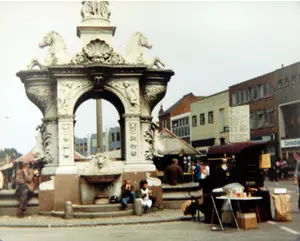
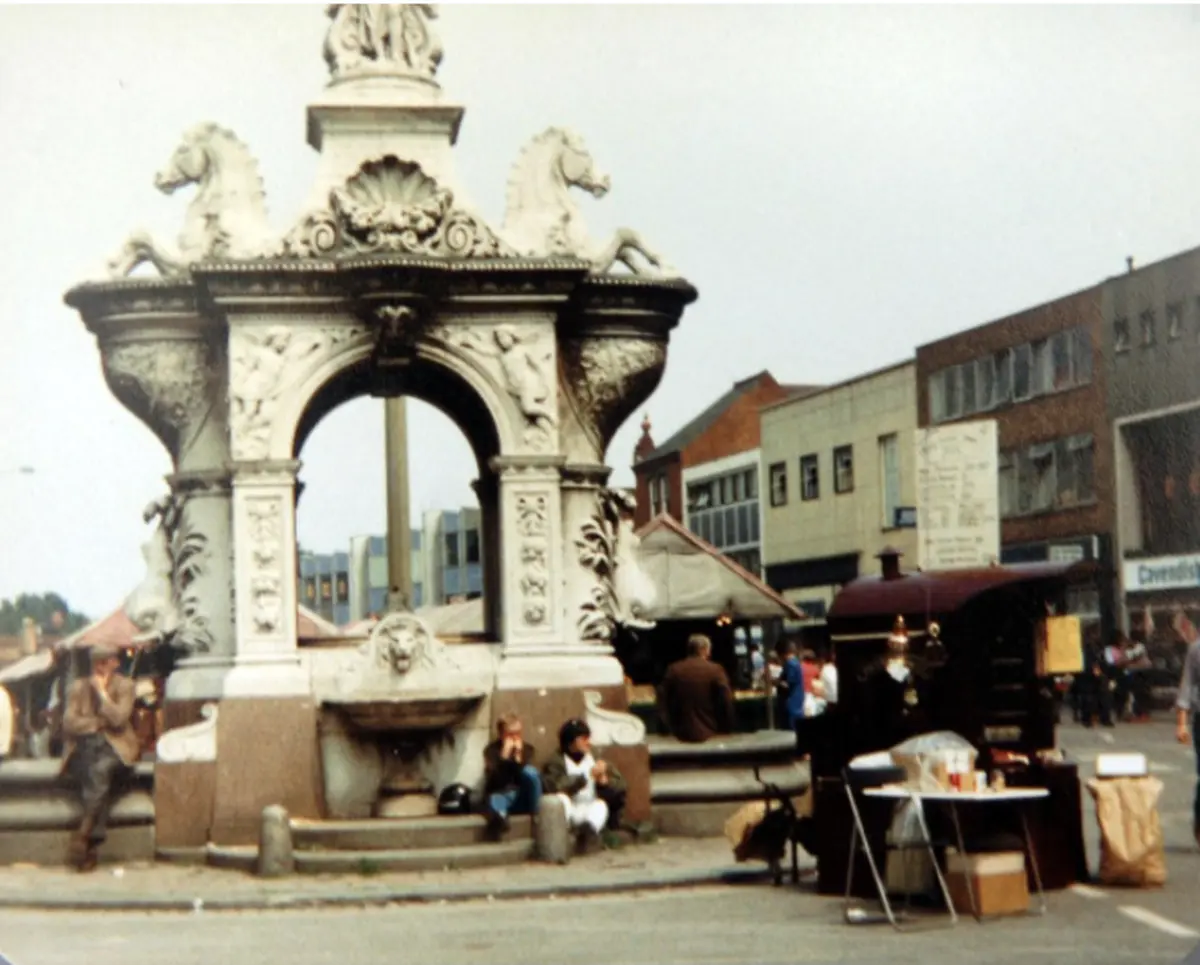
Dudley’s fountain represents the Middle Ages, showing the growth of Dudley over time. While it was the Capital of the Black Country (and still is), the Middle Ages is when Dudley saw itself come into it’s own place, being recognised as a big market town, and slowly expanding it’s territories and influence.
The Castle represents the Dudley Castle, built in the 11th Century. Ruling over the land, the Castle is a key component of the Legacy of Dudley, sitting on the highest point for miles around, rich with history, from Being demolished twice, to the civil war, to now watching over the Zoo.
The factories represent the Industrial Revolution era of Dudley, a time when Dudley was the king of England, and basically ran the entire process. It was an important aspect of Dudley’s Legacy, and sits as probably its crowning glory - even if today we can recognise the disastrous affects it had on the world in the short period of time the era passed.
The Market represents the modern day. Dudley has seen better years, but it is with this project that I propose that even better ones are just around the corner. While people don’t look fondly at Dudley, those from there have a fierce dedication to the legacy of Dudley, which hopefully will burn to a brighter future.
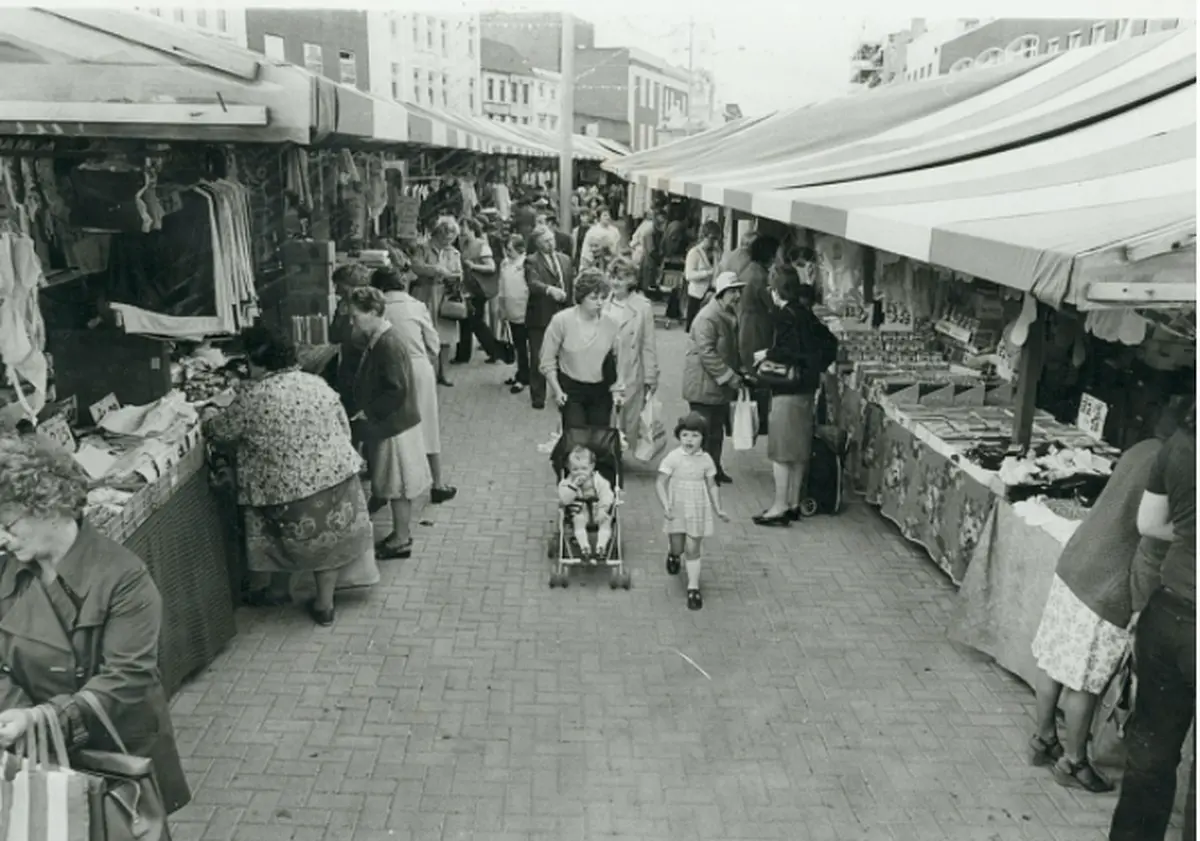
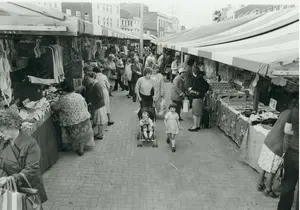
"The new market in Dudley market place in 1983 had a little more aisle space between the stalls, making shopping easier for customers. The market had just reopened after three months spent in Stone Street while it was refurbished. Traditionalists had bitterly attacked the replacing of wooden stalls with metal and the removal of the old-fashioned cobbles. This was taken on May 15, 1983."
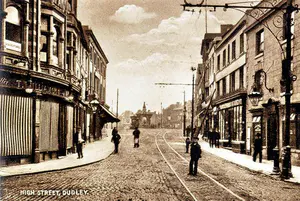
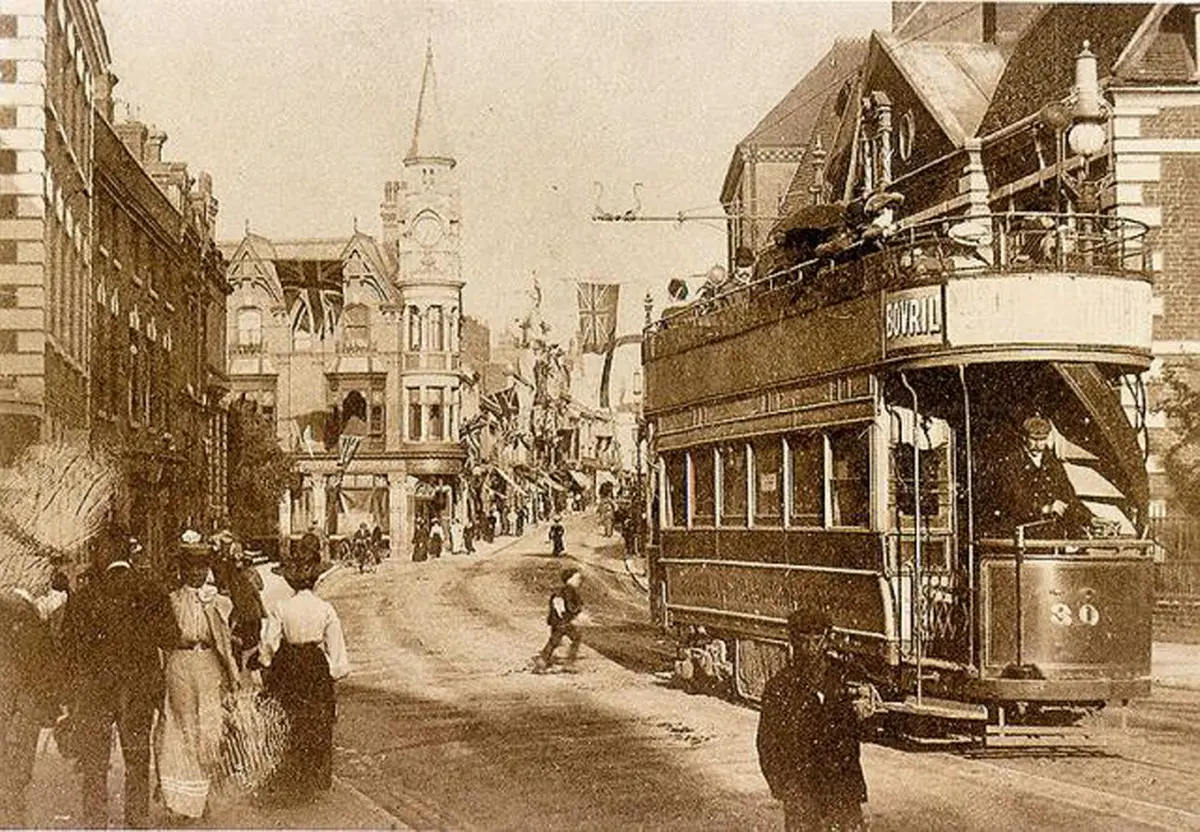
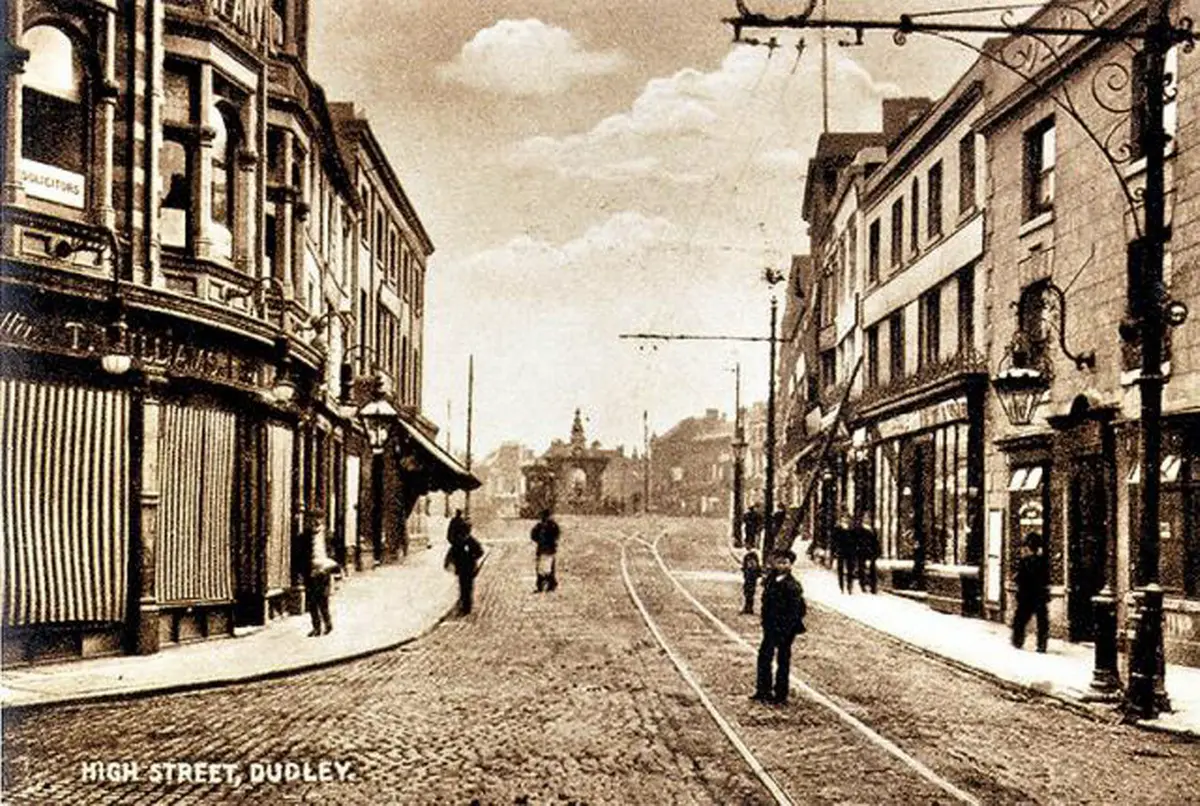
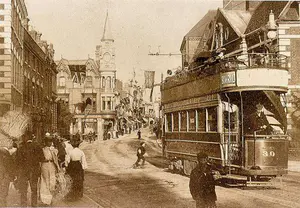
In this picture from 1914 in Dudley, you can just make out my grandfather. He's the small boy with the cap running across Wolverhampton Street in the days when the trams were still running. Years later we worked out that this day was probably a defining moment in his life, the day he chose never to have a second thought or to be bullied by others. You can see him running. This is because he had stolen the ham you can see him carrying under his arm. This one action started a chain of events for my grandfather that would go on to dominate his formative years. Petty larceny, theft, criminal activity that would shape him, turn him into one of the most notorious villains in the Black Country.
When he died in 1972, this photograph turned up amongst his possessions, in a locked drawer of his bureau. We agreed amongst us that no one in the family had ever seen this photo before, curious as to its importance to him. On the back of the photo he had written the date and time, together with a brief note - "Me stealing ham from W.Smiths, butcher". He would have been 10 years old and this was perhaps his first, or at least one of his first criminal acts.
We have no idea who took the photograph or how he had come to have the original print in his possession, but it appears that it held some significance for him as he kept it all of his life locked away in his bureau drawer.
Caribbean One Stop
The sign above the door
Shows a tropical island
But in Dudley Town
There’s a chill in the air
As Earl runs nine miles
Before jam and toast and
A cup of tea with nine sugars
To recharge batteries.
He’s not getting any younger but
Age is just a mindset.
When you’ve worked forty years
On the wholesale markets
Grafting and providing
Your perspective shifts
To what is really important.
We talk family
Community
Among plantain and yams
We talk heritage
Education
Among chopped hake and Jamaican pears.
Gloria can’t find any mangos
Because Earl has stashed them
Behind the counter
Too soft and sweet for handling.
When he gets a ripe breadfruit
Earl thinks of Gloria
“Know your customers”
He tells me
“Know a little bit about everything”.
I ask Gloria about
Triple Blue Cross
She tells me about white shirts
Bed linen
Drying under a Jamaican sun
This shop is an education
If you just ask the right questions.
Earl’s father came in 1954
Bloodlines stretched
Across continents
Across boundaries
Nigeria
Scotland
Jamaica
Germany
A mix Earl’s grown into
Via Handsworth
Birmingham
England.
He knows a Bristol accent
When he hears one
They talk about Montpelier
Meat markets in Newport
Veg markets in St Pauls
She comes from Tipton each month
To get the things she needs
It’s personal
She likes personal.
The freezer is full of
Chicken feet
Ox tail
Turkey neck
Cow foot
Flavour is the thing
Even water gets spiced
For mash Earl tells me
As he trims Ghanian yam
With a very sharp knife
To just the right size.
There is barely anything
I recognise in this shop
But I’m drawn to the colours
The stories
The journey
The difference
Halfway around the world or
Baked up the road
For customers who bang on the window and wave
Who stand in the doorway
Giving back the banter
Who leave with the Caribbean
In a blue plastic bag.
I leave with a bag of Zoomers
Earl tells me
“That once I taste Jamaica
I’ll be back”
I stand in the High Street
Cheesy snacks in hand
Reminding myself
To buy two packets next time.
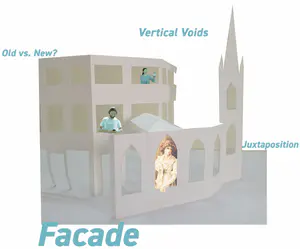
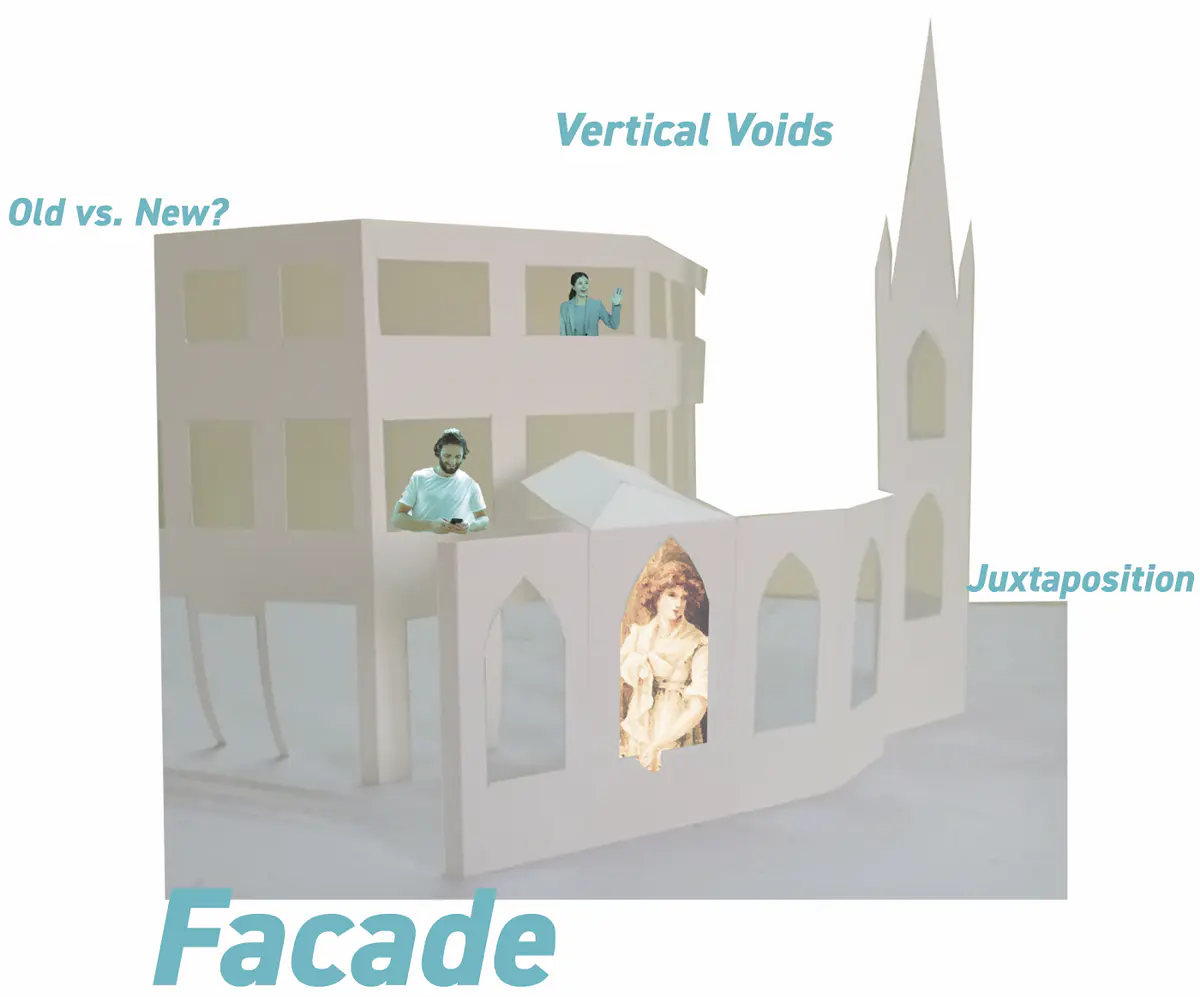
The Gift represents the two different typologies of building and its facade located on the High Street. One resembles St. Thomas Top Church and the other is the common modern building facade. The design of High Street buildings has evolved throughout the period. Its use, materiality, construction technique etc.
The High Street has always represented a role as a commercial and social hub. The concentration of public on the High Street provides the opportunities to designers to showcase creativity and innovation in design which impacts on visitors. We can say in other words, an ‘Exhibition’ of evolution of buildings in a row. So, facade plays a key role as it reflects the local identity of the town and its culture. So I did a little experiment to understand the street in the form of juxtaposition of facade by placing two different typologies of buildings located on the street. The voids on the facade have changed and adapted to more convenient rectilinear shapes during the past few decades.
The model made of plain paper can represent the periodical difference in buildings to which people of the High Street can easily relate and take a place within their memory.
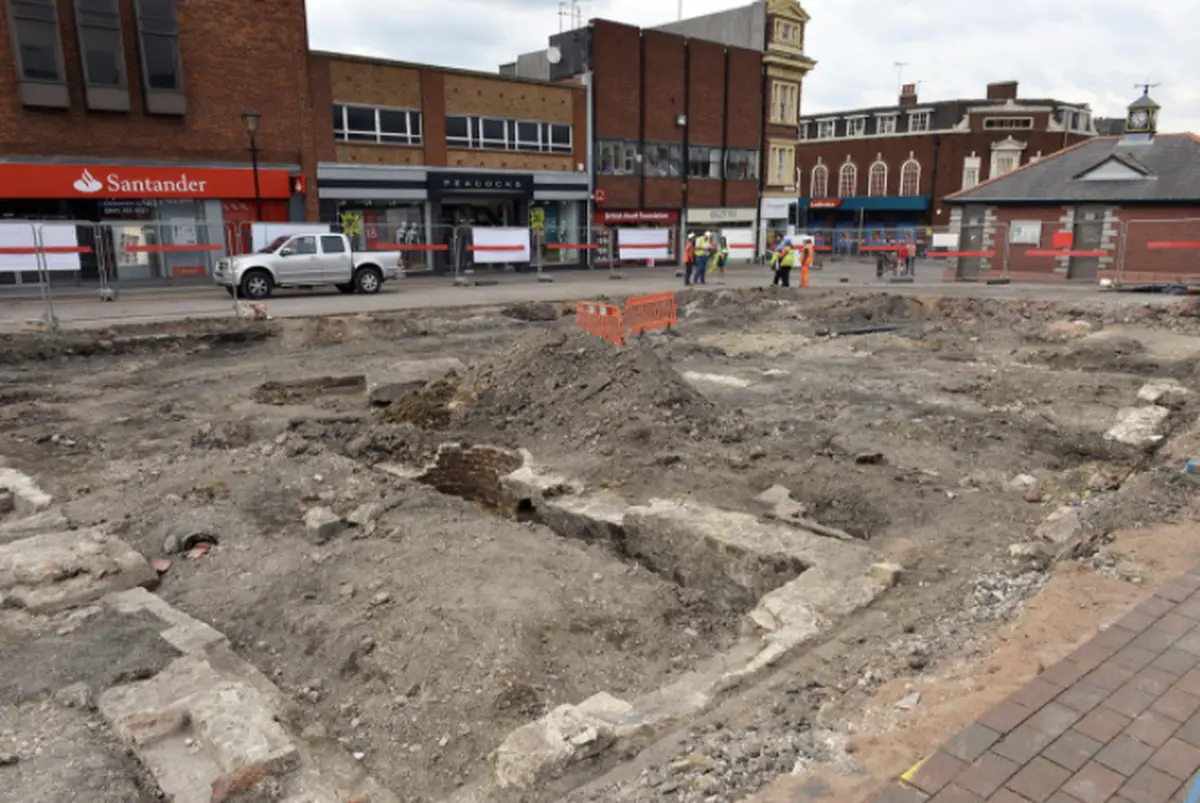
"Dudley Market Place where archaeologists found the foundations of old market buildings while preparing for the redevelopment of the area in April 2014."
Caffe Min
Breakfast
Lunch
Meal deal
Everything you would expect
Fresh from the takeaway menu
Ham baguette
With a little bit of mayonnaise
Jacket potato
Hot cup of coffee
Bacon sarnie
Brown sauce
Not red
Tikka mint mayo panini
Something you might not expect
Sunglasses!
I sit on a long bench
Listening to Tainted Love
Over the radio
Reading one of the many signs
About coffee and good vibes
Jayne and Mustafa
Serve the steady flow of regulars
Some sit outside most of the day
Watching
Chatting
Taking it all in
There’s always a spot for them
As others come and go
Mustafa hopes that more regulars
Will return
From offices
When they can
The future seems uncertain
Until normality returns
Since West Brom
27 years ago
Jayne and Mustafa
Have been working together
She says she “has a thick skin to have put up with him for so long”
He says “she’s the second woman in his life”
Cheerful banter
From a lifetime of serving
Cooking
Cleaning
Managing
This is their third café in Dudley
23 years and still going
Opposite the Full Moon
Tables and chairs on the pavement
Watching the comings and goings
I end up chatting to Kath
Over a cup of tea
As she gets a sausage baguette
For the lady she volunteers with
Kath comes every Friday
For breakfast with her friends and
I see how this all takes shape
Regular
Reliable
Dependable
I say goodbye
Head back up the town
As Magic FM fades in the distance
I think I’ll probably pop in again
For a cup of tea
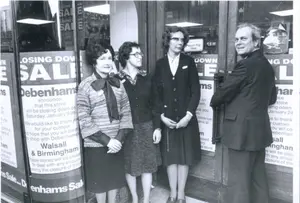
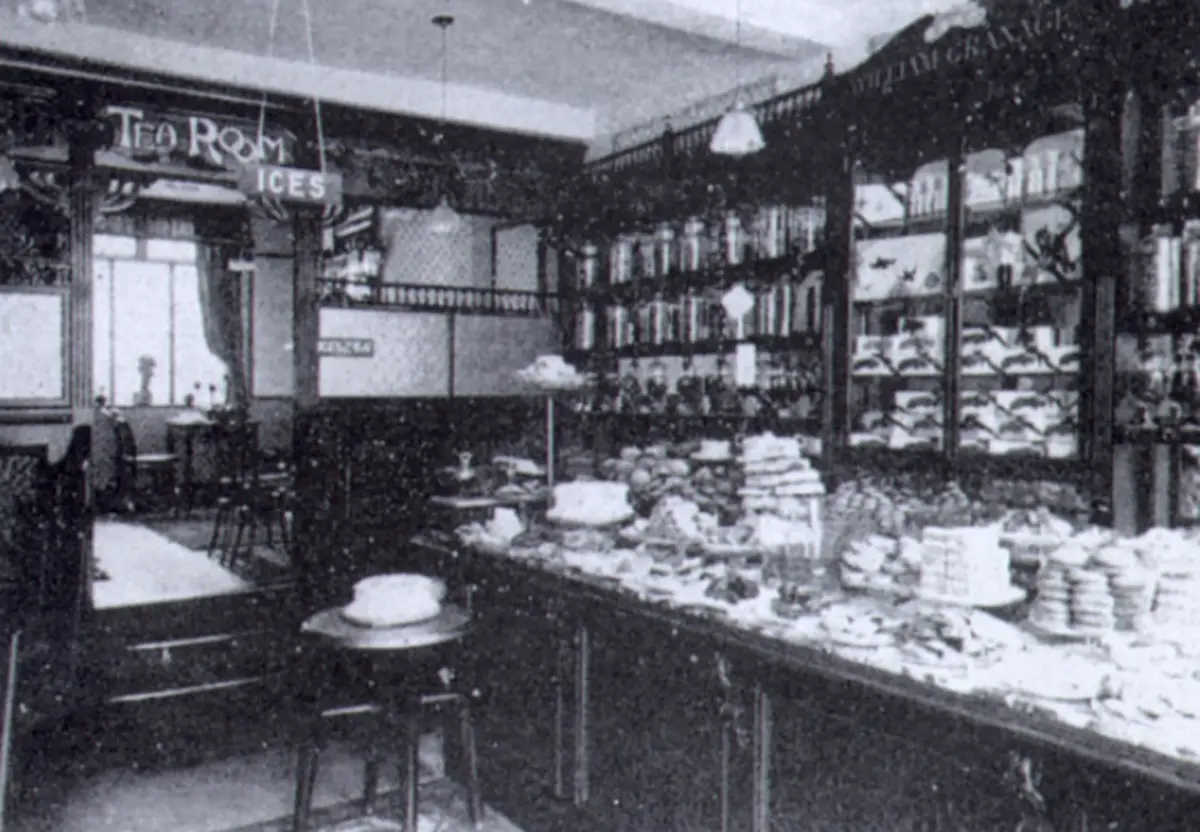
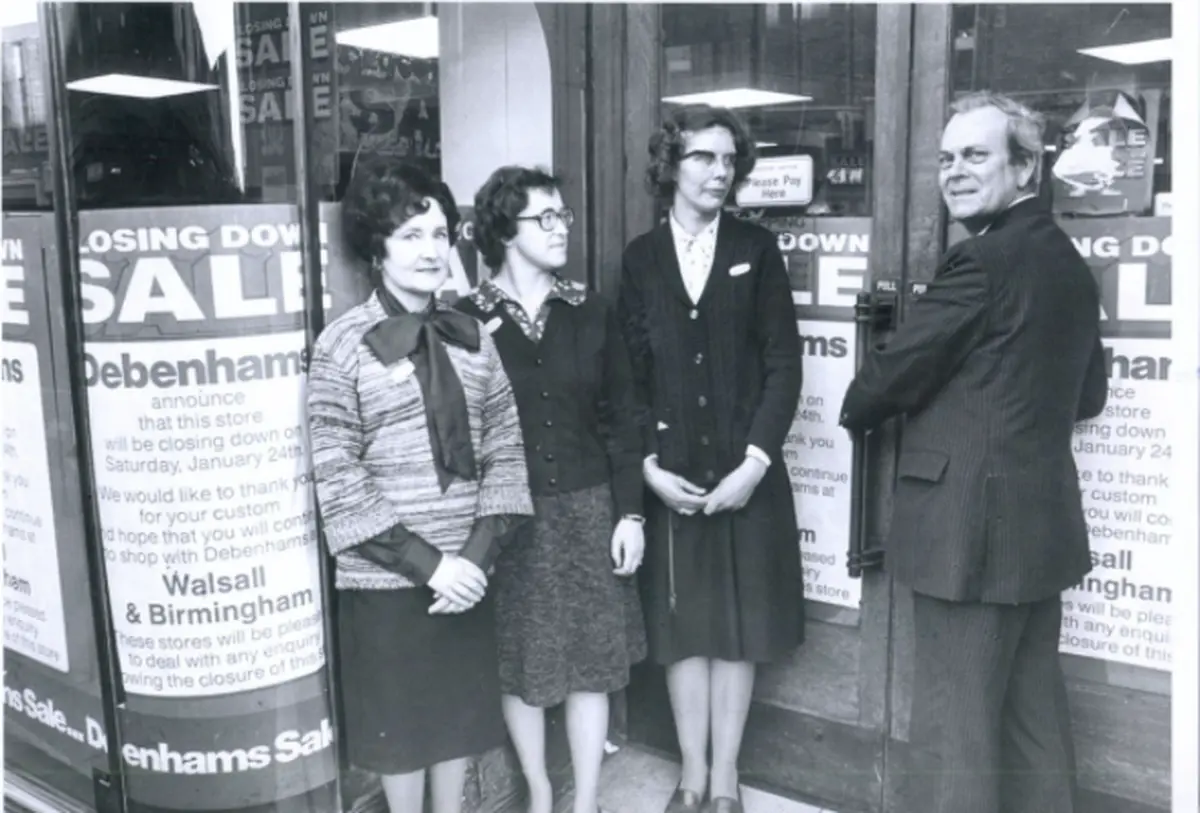
"Four Debenhams staff with 100-years service between them were bidding a fond farewell as the store in Dudley High Street closed for the last time in January 1981. Manager Douglas Spalding, who was with the company for 26 years, was photographed with Nancy Robinson, Kathleen Jackson and Marion Sutton."
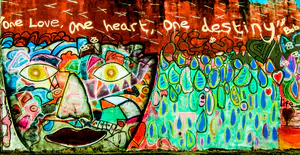
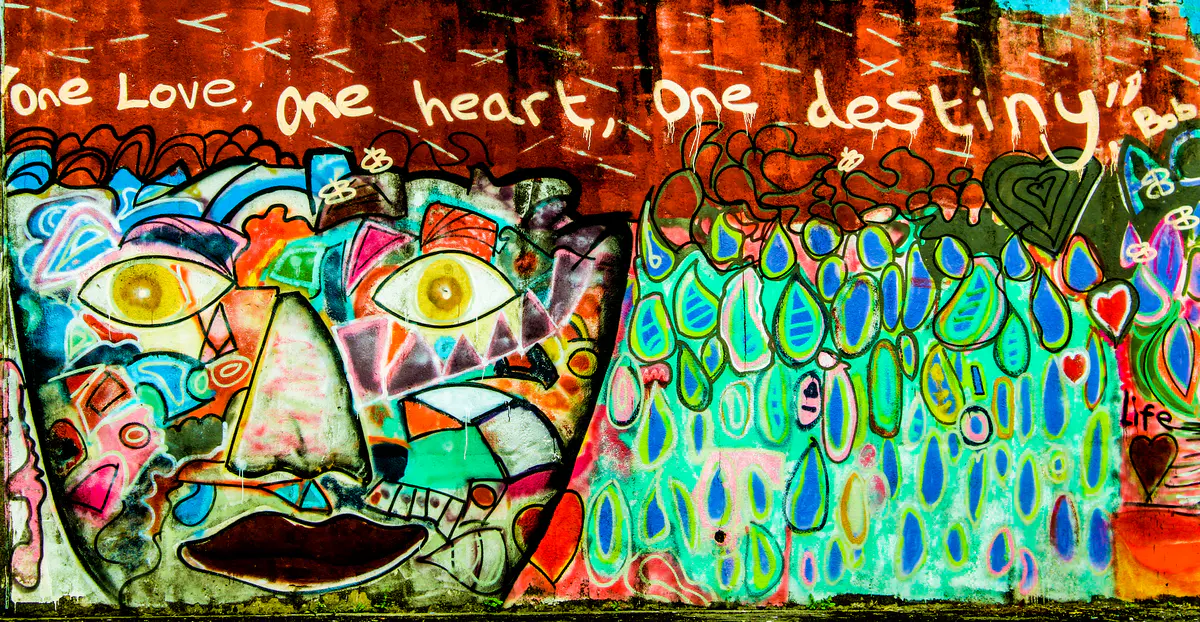
This graffiti image is on the wall at ACCN- Dudley African Caribbean Network, I would like to know how and when this was created. One Love is a reference to a Bob Marley song and is written in the image.
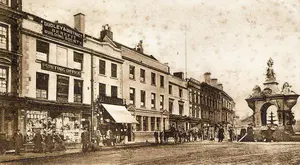
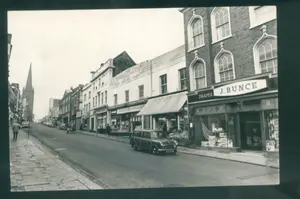
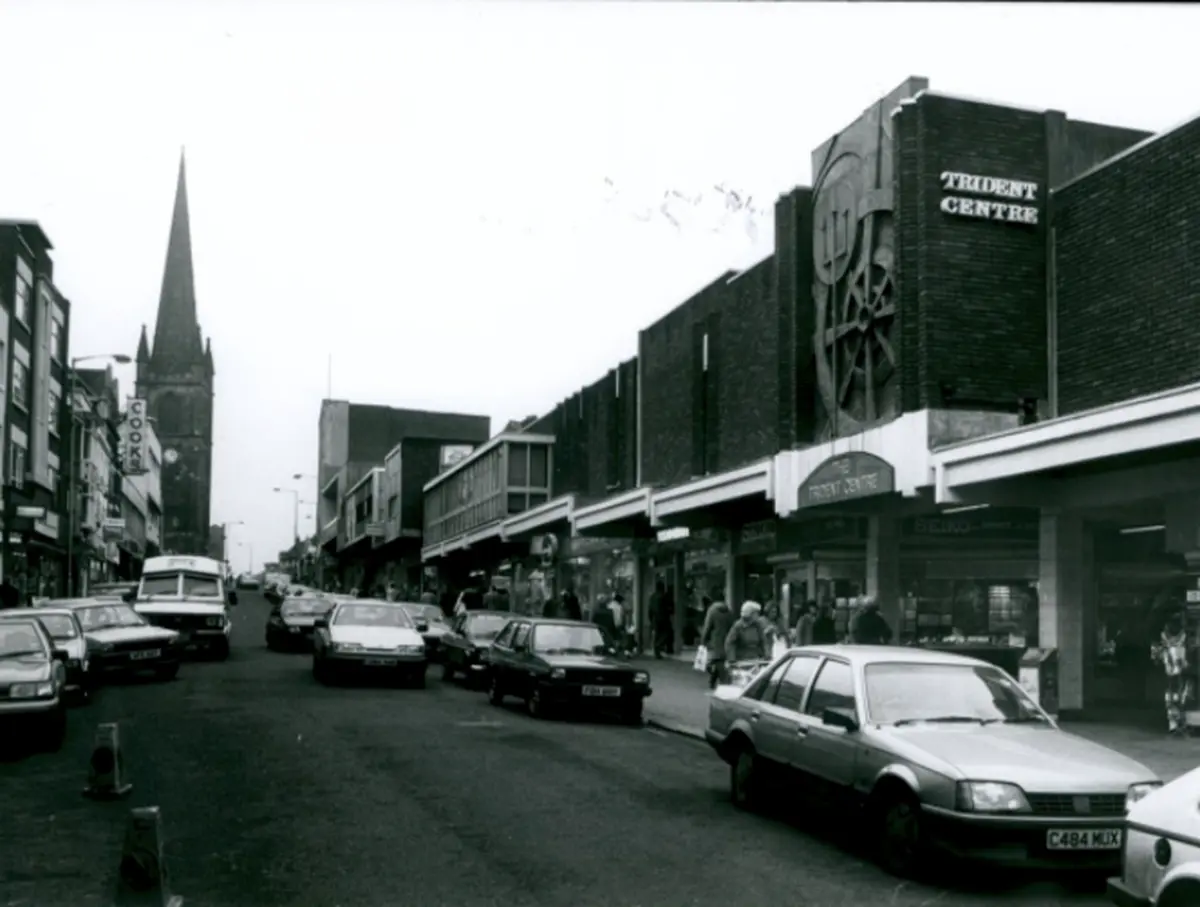
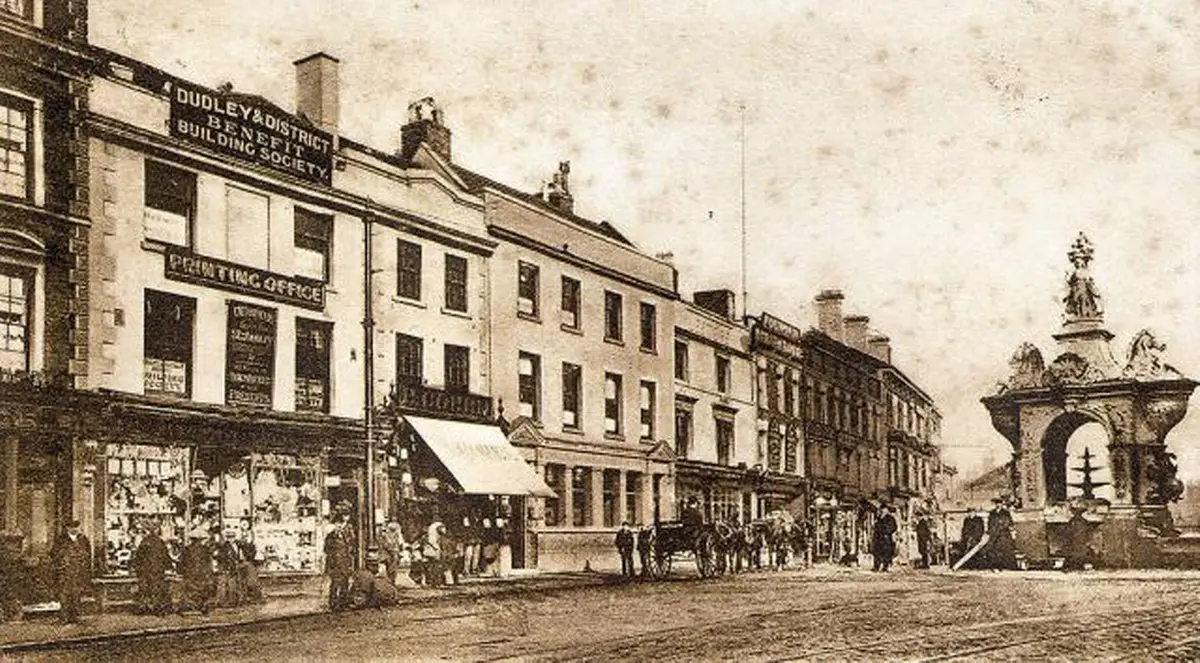
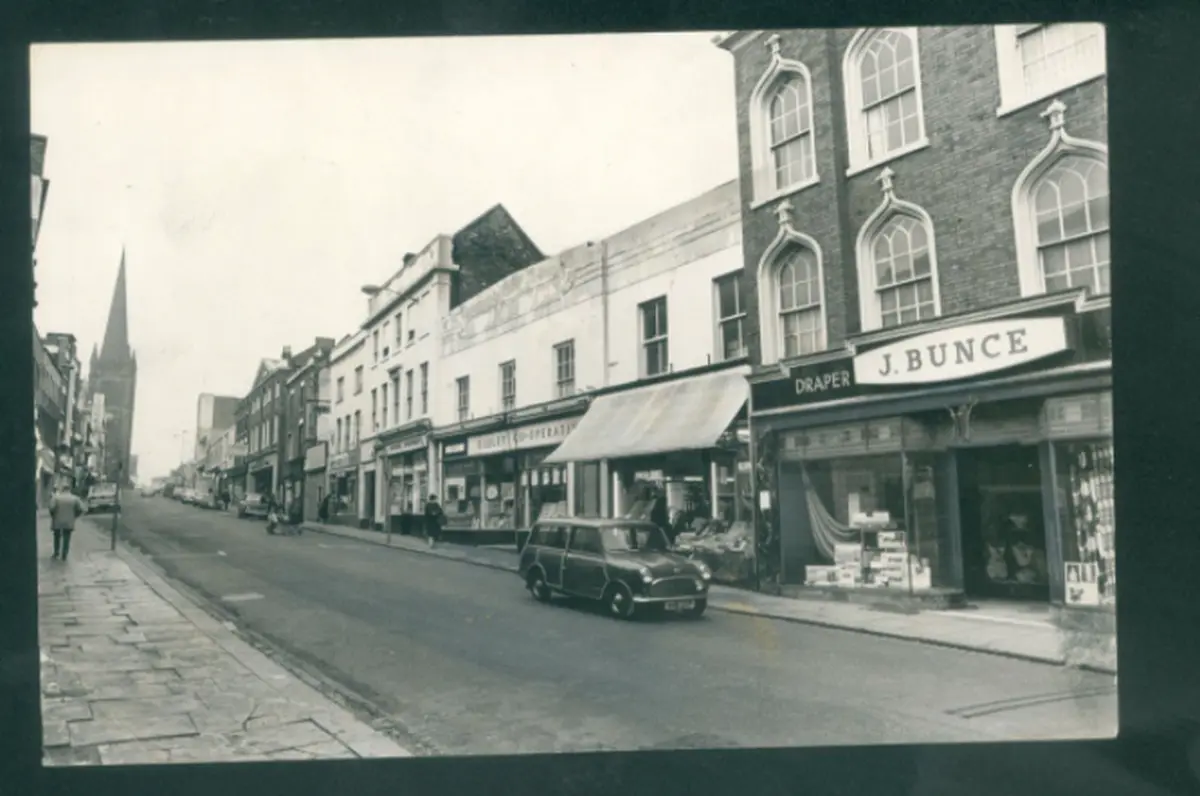
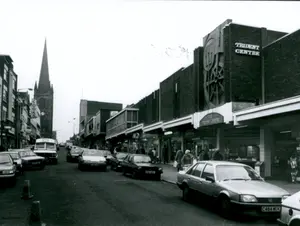
"The days were numbered for these historic buildings when this picture of Dudley High Street was taken in November 1970. A public inquiry was being held to decide whether five listed buildings in the street could be demolished to make way for the new Trident Centre shopping complex. Permission was granted, and it was discovered during demolition that parts of these buildings dated back to the Middle Ages."
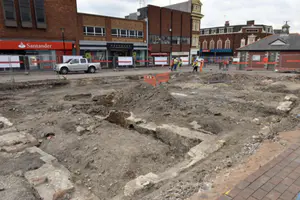
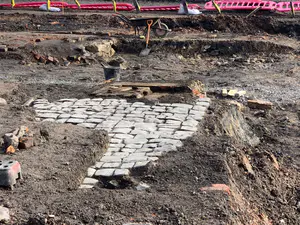
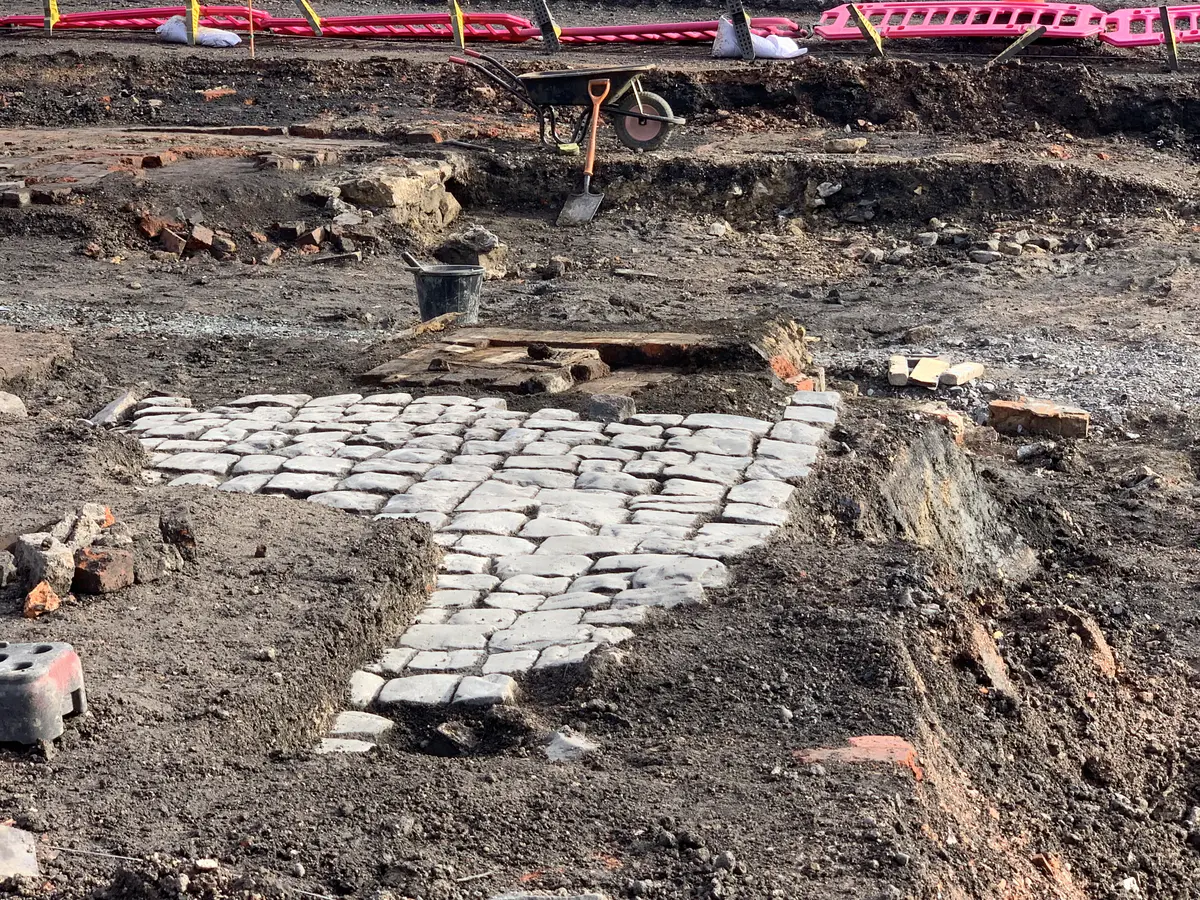
Here are a few pics from some Archeology taking place adjacent to Flood Street. Sadly the fencing wouldn't allow me closer to take better pictures. The excavations show the evidence of former back to back housing, floor tiling laid directly onto the earth, street or yard cobblestones, a coal hole/cellar and possibly a garden path? Then there's a mysterious line of embossed bricks. Tho' not to be seen there'd have been outside WC's. All rather romantic as the past is often portrayed but such housing tended to create insanitary conditions with rising damp, open indoor fires & lack of ventilation.
The main structure would have various spaces such as the Museum space, possibly a place that people can pin up local activities, and maybe rooms for either changing or for performance practice. As the street is 11m wide on average, there is plenty of space to have the building
fill the space. As the sunlight comes from mainly the south, the south side buildings often shadow the street entirely, which would mean that something being built (especially as it will be dug down a bit) would not shadow out the other buildings. The biggest hurdle to tackle is
that the space shouldn’t not feel overwhelming to the other shops or those who walk down the pavement. Because of this, most of the building’s structure would be in the underneath area, and only parts of it would pop out over the pavement. As the design would be flush
with the pavement, there are also opportunities to have crossing bridges that are both useful by the public, but also incorporated with the design of the new street.
The back of the street would create a unique space for social activities. The space is wide enough and long enough for a performance theatre space to be erected there, but it also has the possibility of having some kind of altered shape to the area, like a raised platform that could house
seating and other social activities. However, the space can also perfectly fit a fully regulated tennis court, badminton court, and volley ball court. People have mentioned that there is also a lack of sport engagement in the area, so this could be used to provide that kind of space.
A collage response to a Co.LAB gift for the High St - “It was nice to be able to use the image for something else. It made me think about placing the cut-out roadmap onto a slightly brighter future version, with colour, vibrancy and plantlife, so that it reminds me what we are heading towards, but still with a hark back to the people and the industry that made Dudley the town it is...”
Provision
I invite you to stand in my shoes
In the space between dark and light
To imagine a room laid bare
Where you sleep in the bath
In the clothes you wear every day
Because you don’t have a bed or
Even a mattress on the floor
To rest your tired frame.
You are in crisis
Slipped through the cracks It doesn’t matter how or why Just that you are here
Needing help
Needing compassion
Practical support
To get back on your feet
To feel cared for
Provided for
Prayers answered.
I sit here listening to Blur
On the CD player I have just bought from Provision House
A beacon-topped Aladdin’s cave of treasures
That occupies a space right opposite
It’s higher calling
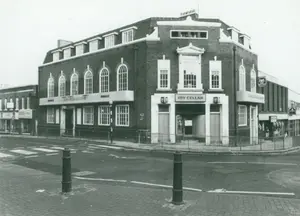
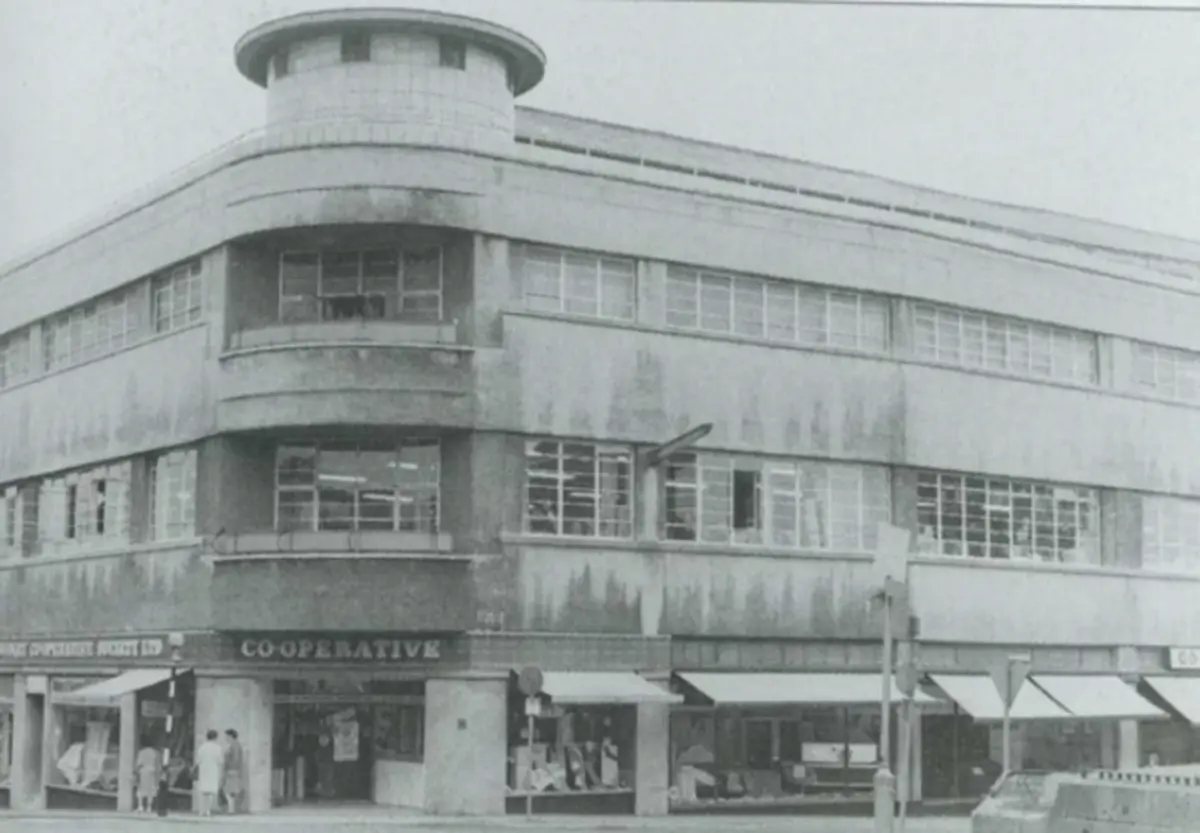
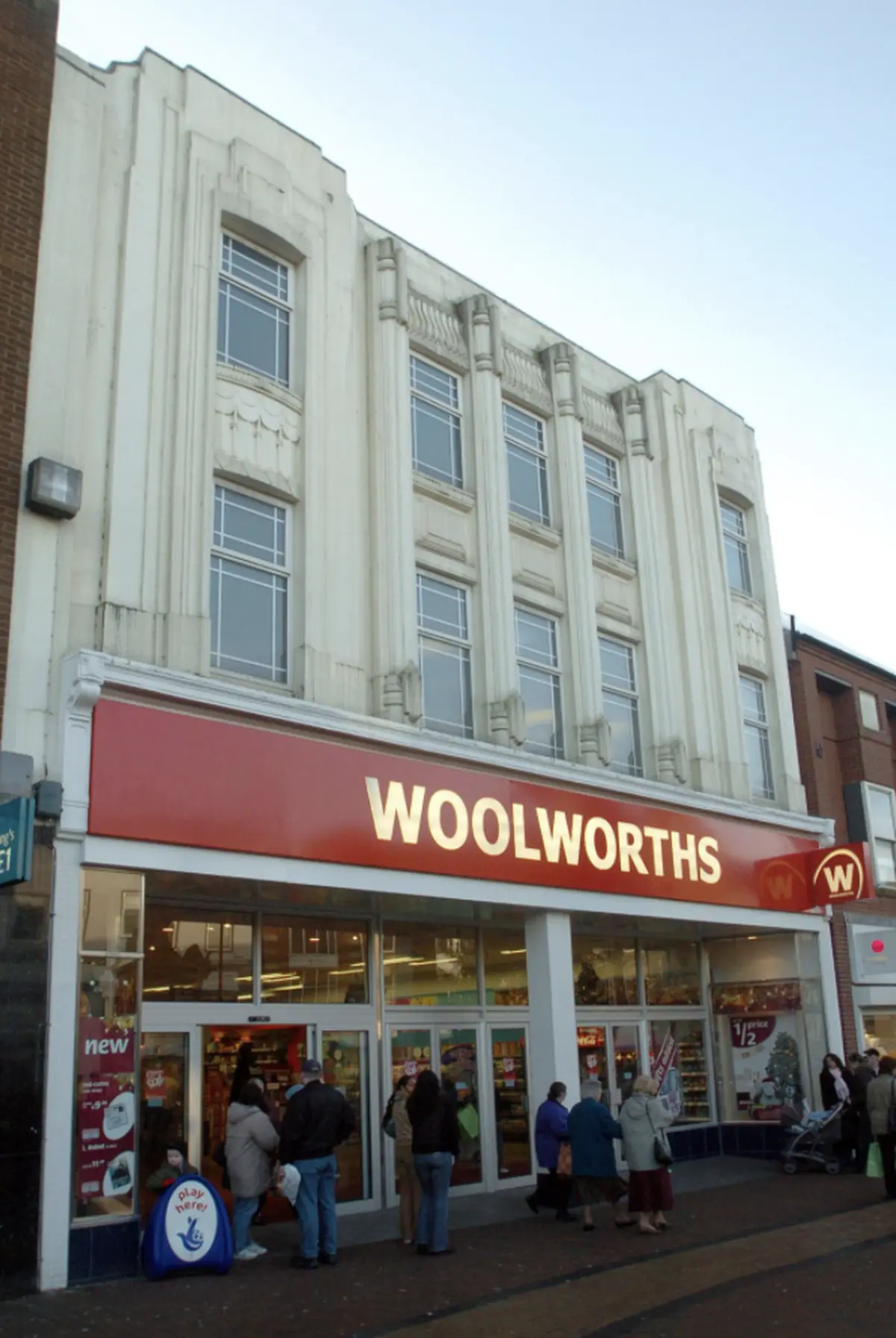
Old Co-op
Old shoe shop
New lease of life
For this art-deco giant
Three floors of stepping back in time
Down history rich stairs
Through formica inlaid doors
Its belly stuffed with
Furniture and bedding
Tables and lamps
Wardrobes and kitchenware
The things that we take for granted
Destined for those that have nothing
Absolutely nothing
A lifeline.
In the shop I can still buy a pair of shoes
Anything an old department store may well have stocked
Ironic I feel.
They save the sleeping bags
To hand to homeless folk
Health-packs and new socks
Whatever helps.
The Food Club caters for those
That need to feed themselves
Their families
On budgets stretched to breaking
They mind the gap that governments should fill
By remembering that everybody counts Black Country rules.
Kim chats to a woman
Buying sticker-books for her granddaughter
Laughter slips through this conversation
Two books for a pound and you know
The girl will have a fun filled afternoon.
I ask about the future
Plans for expansion
Rooms to hire
Office space
Training programmes on their way
Perhaps a life for the room upstairs and I see progress
New from old
Right from wrong.
So, step through this door and lend a hand
To those that need it more than
You and I will ever understand.
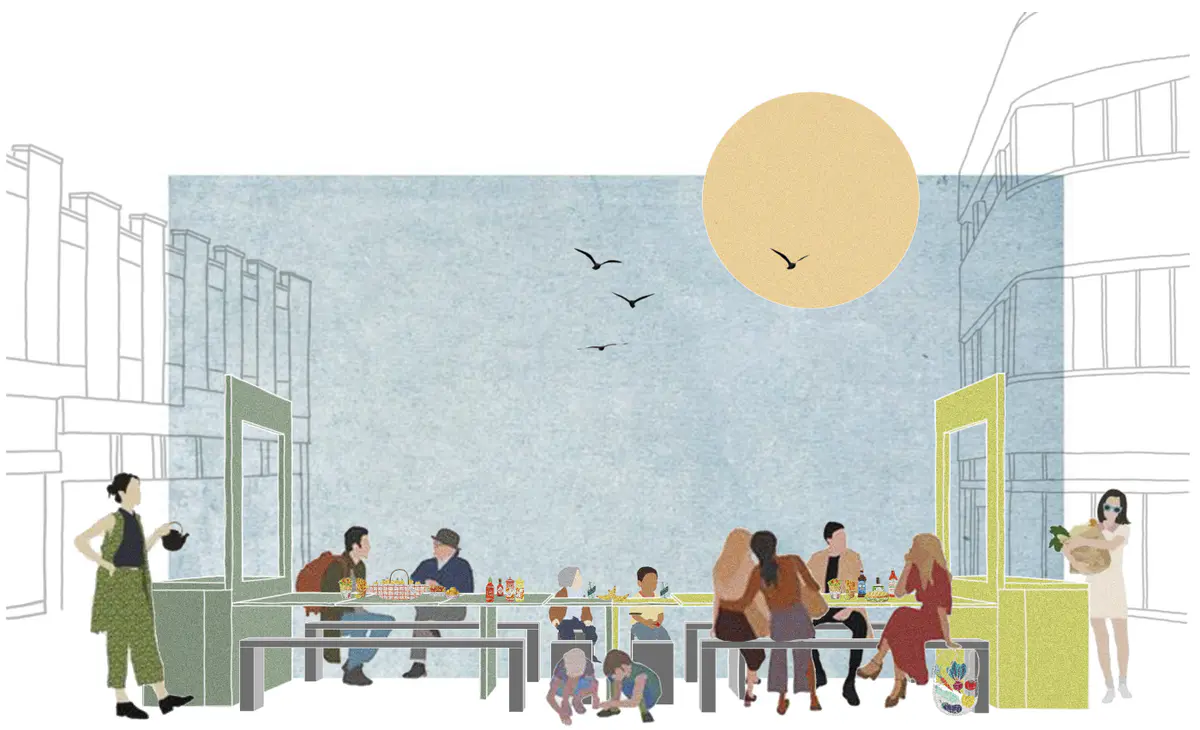
The first Stepping Stone project looks into designing multifunctional furniture for Dudley High Street to provide opportunities for a regenerative community, focusing on how the high street can be occupied with resilience. Initially, the stalls act as market stalls to provide opportunities for enterprises and small businesses to begin thriving and encouraging the High Street to become a place of inclusivity.
However, the stalls can extend out into outdoor seating arrangements, which can become an extension of the community kitchen and during events can become a part of the whole atmosphere.
By extending the furniture, they can connect together and become a large spread where people can sit together and enjoy company. It creates a lowered centre space so children can sit together, or paint on the surfaces. We decided to focus on furniture because we felt the importance of it can go unrecognised. We felt through the design of this market stall, many memories can be created and attached to these items, and become valuable assets within the community.
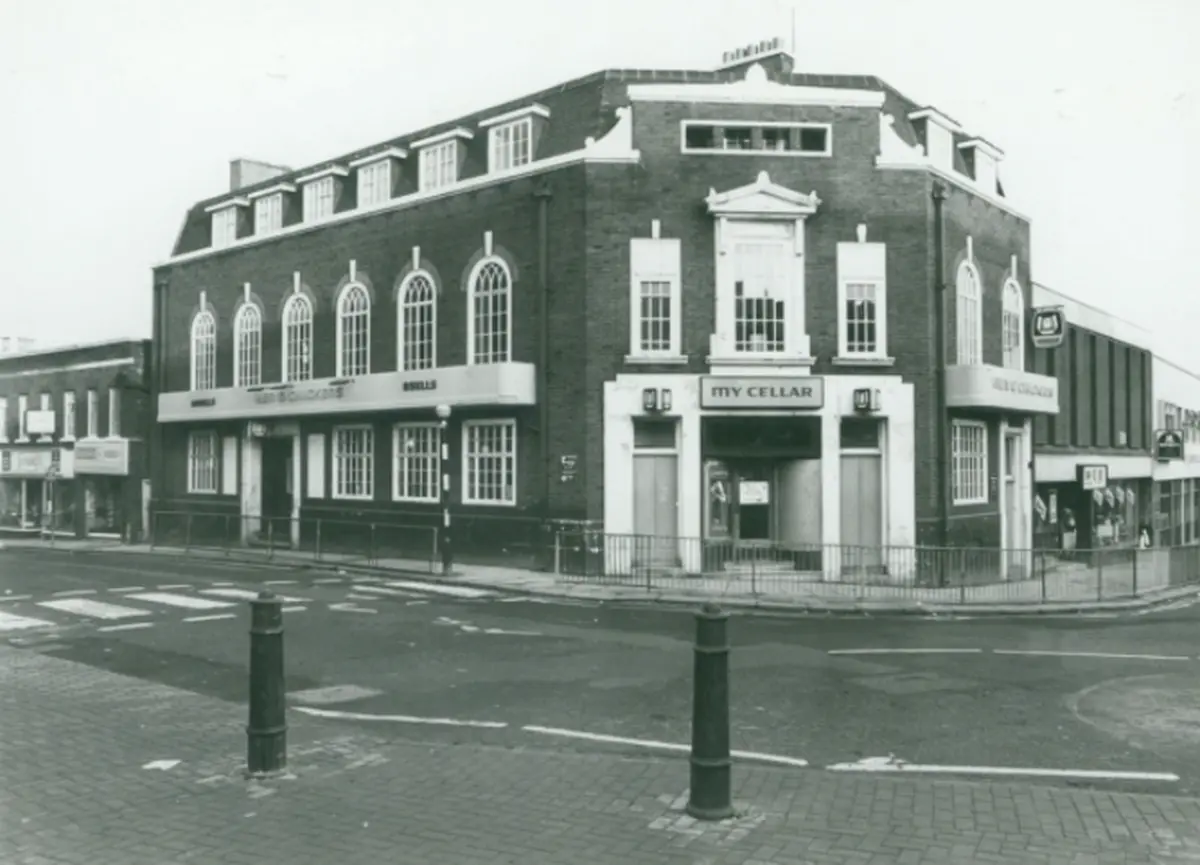
"Locals would pop into The Hen and Chickens Hotel for a quick pint and a chat in December 1982. The popular watering hole dominated the corner of New Street and Castle Street in Dudley Market Place."
A More-Than-Human Story of Dudley High Street
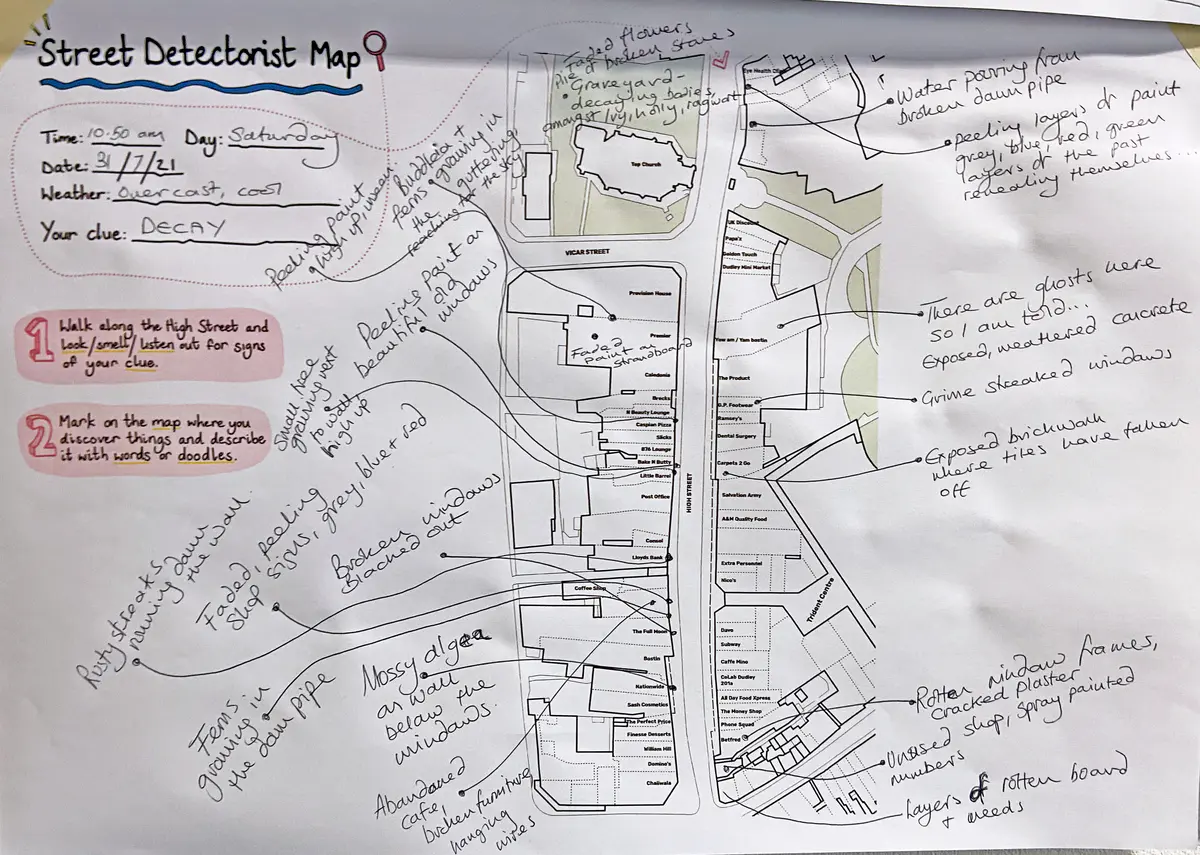
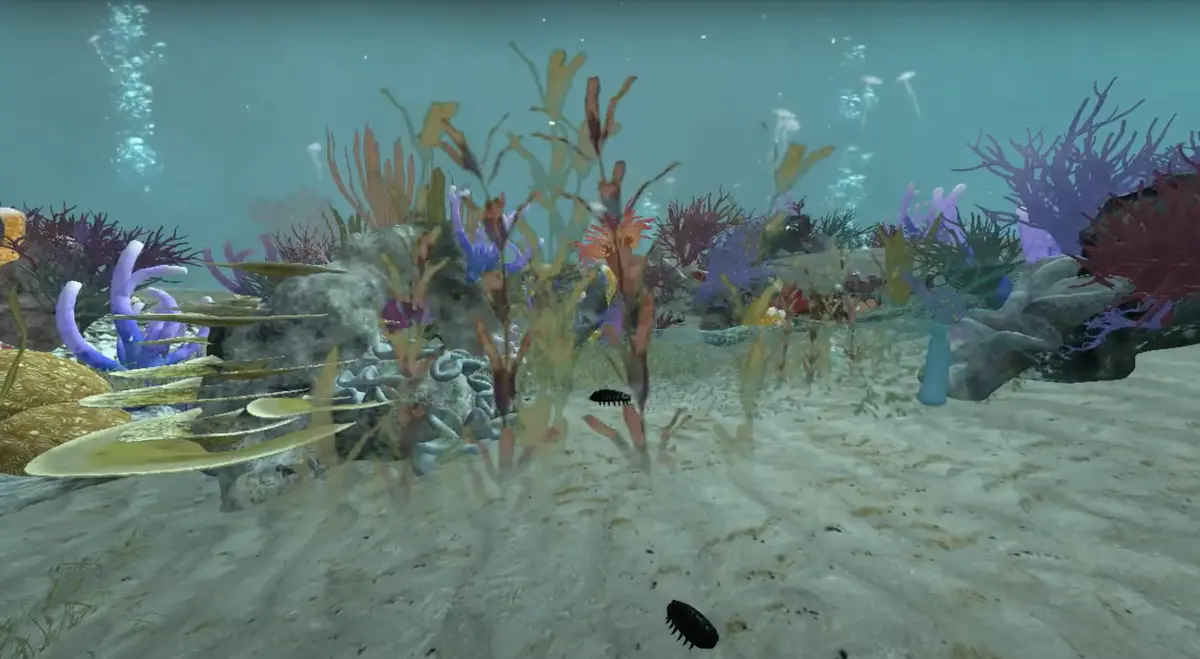
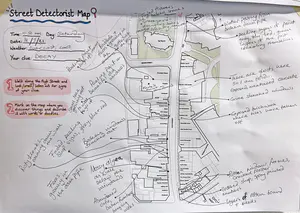
This story is a collective outcome after utilising completed Street Detectorism maps, and More-Than-Human findings to create of 'A More-Than-Human Story of Dudley High Street'.
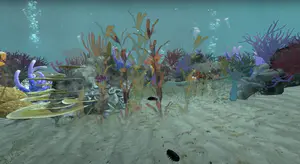
As part of a dissertation study, this workshop invited participants to share their imagination and develop stories from the previous findings on Dudley High Street. This story creatively archives nature on Dudley High Street, with emphasis for the value of storytelling and nature at the forefront of this task.
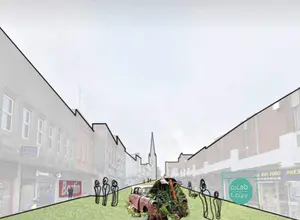
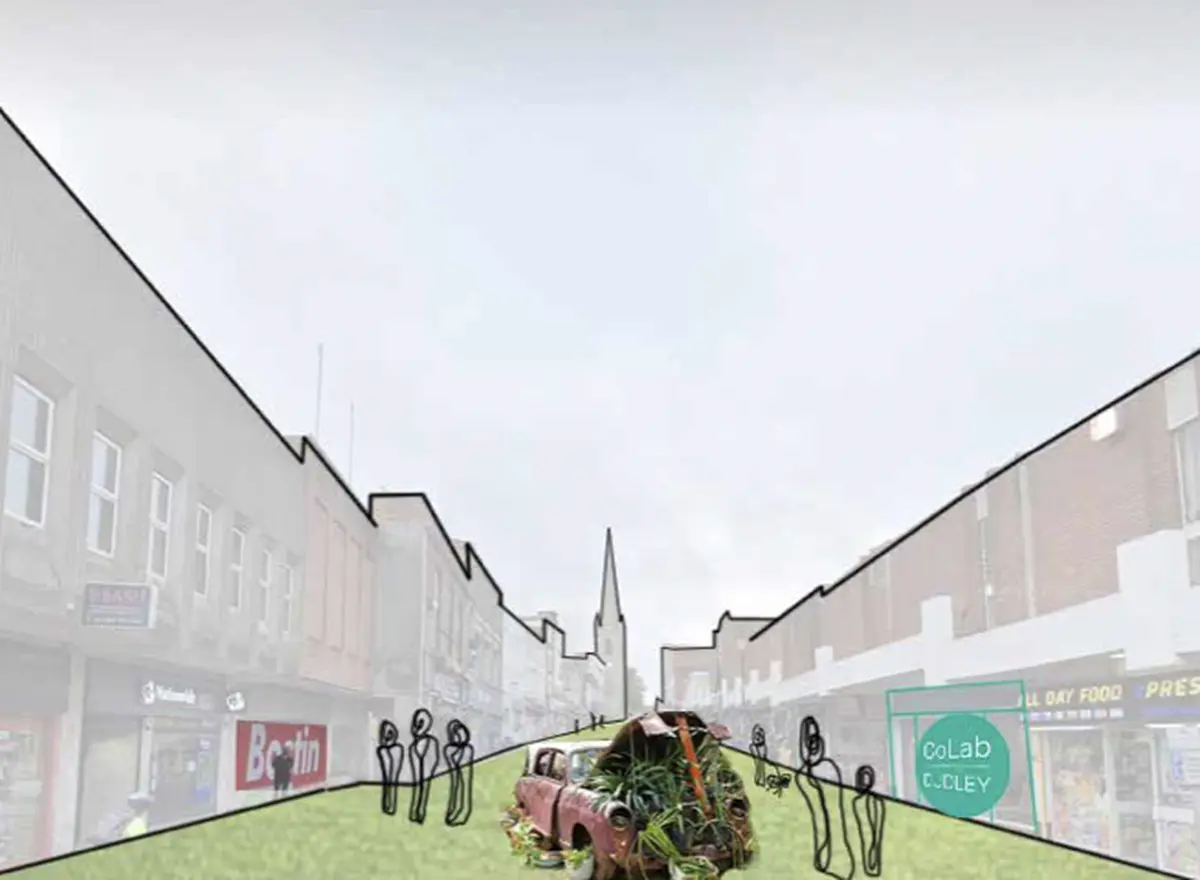
New use for cars — As part of pedestrianisation we would like to suggest a memorial of sorts to cars. The feature would sit in the middle of the High Street and would consist of an old out-of-use car, being used as a planter and being filled with plants. This gesture symbolises the movement of the High Street’s priorities shifting from the automobile to plants, people and food.
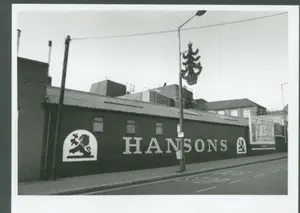
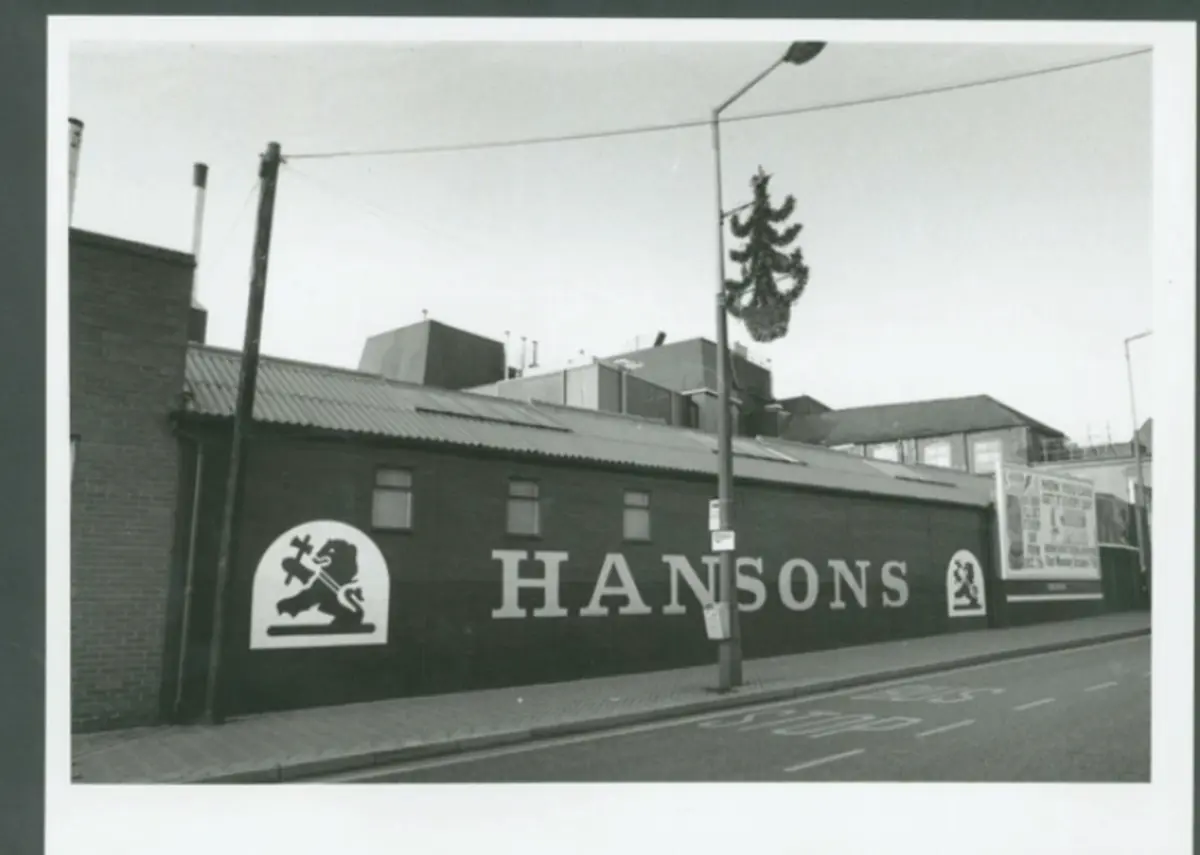
"Hanson's Brewery at the top of Dudley High Street, pictured here in November 1991, shortly before it closed. An Asda supermarket now stands on the site."
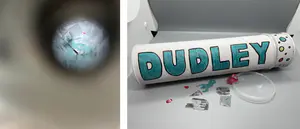
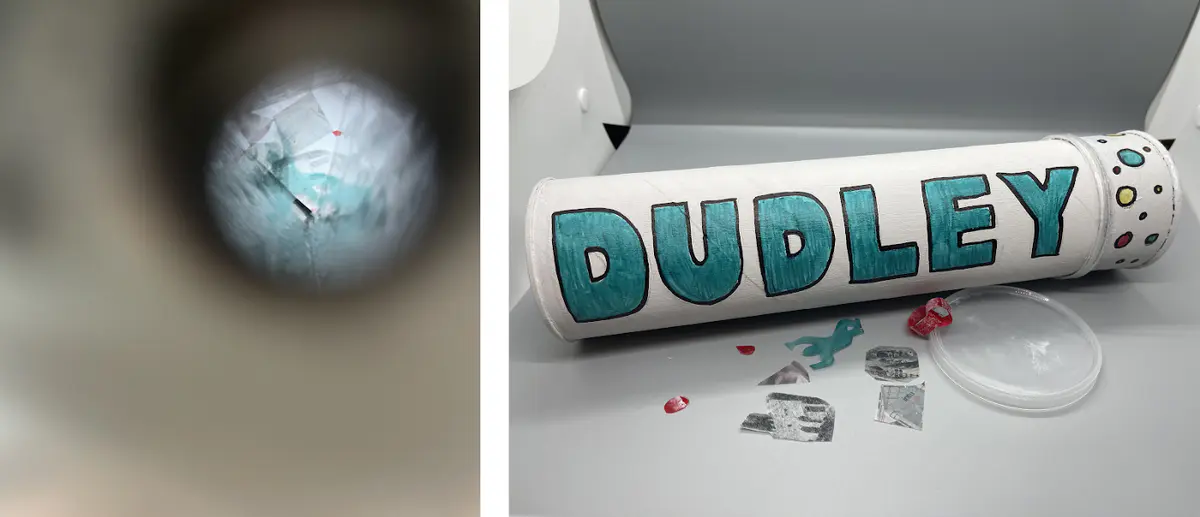
After investigating the history, heritage, culture and institutions of Dudley and its High street, I made a kaleidoscope gift based around the themes ‘overlooked’, ‘resilience’ and ‘layered’. Although sight is the most immediate sense in which many people engage with their surroundings, it’s not until you look beneath the surface and start to see things from a new perspective that you fully appreciate what is there and the potential beyond. I wanted people to engage with my gift, have fun and evoke a sense of nostalgia, whilst also using it as a way to look forward to what the High Street could be, all the while embodying the CoLab Dudley principle of allowing this object to be a co-op piece. The gift relates to the people and allows for each user to interpret and express their own thoughts.